

704
A. E. Stetsko and Y. T. Stetsko
Hµ100,MPa
L,µm
0
2000
4000
6000
8000
10000
12000
50 100 150 200 250 300 350 400
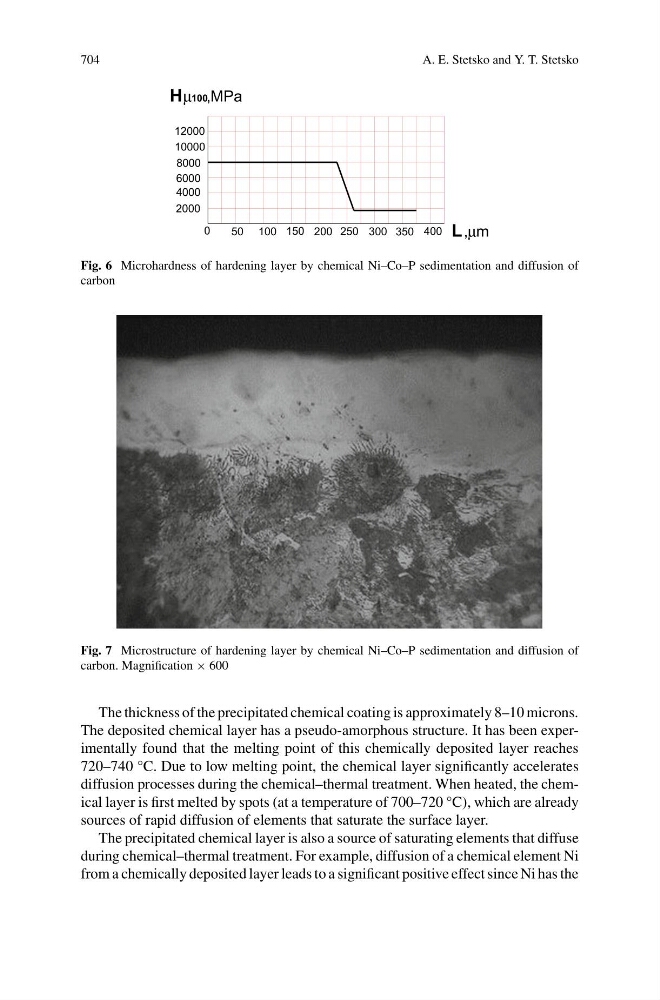
Fig. 6 Microhardness of hardening layer by chemical Ni–Co–P sedimentation and diffusion of
carbon
Fig. 7 Microstructure of hardening layer by chemical Ni–Co–P sedimentation and diffusion of
carbon. Magnification × 600
The thickness of the precipitated chemical coating is approximately 8–10 microns.
The deposited chemical layer has a pseudo-amorphous structure. It has been experimentally found that the melting point of this chemically deposited layer reaches
720–740 °C. Due to low melting point, the chemical layer significantly accelerates
diffusion processes during the chemical–thermal treatment. When heated, the chemical layer is first melted by spots (at a temperature of 700–720 °C), which are already
sources of rapid diffusion of elements that saturate the surface layer.
The precipitated chemical layer is also a source of saturating elements that diffuse
during chemical–thermal treatment. For example, diffusion of a chemical element Ni
from a chemically deposited layer leads to a significant positive effect since Ni has the