

534
A. Nosal-Wierci´ nska and W. Kaliszczak
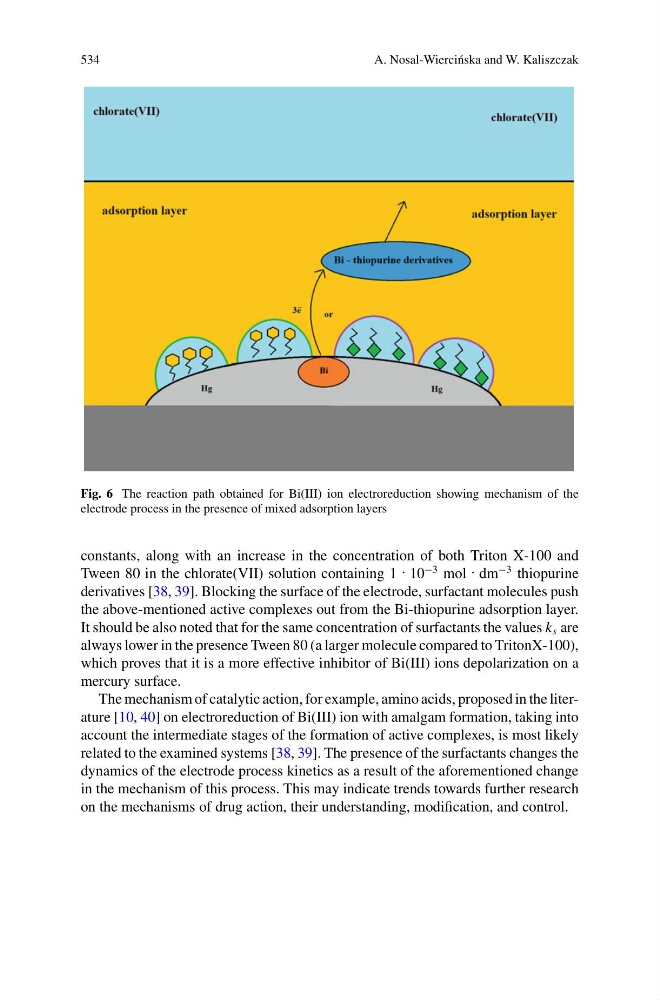
Fig. 6 The reaction path obtained for Bi(III) ion electroreduction showing mechanism of the
electrode process in the presence of mixed adsorption layers
constants, along with an increase in the concentration of both Triton X-100 and
Tween 80 in the chlorate(VII) solution containing 1 : 10
−3 mol : dm
−3 thiopurine
derivatives [38, 39]. Blocking the surface of the electrode, surfactant molecules push
the above-mentioned active complexes out from the Bi-thiopurine adsorption layer.
It should be also noted that for the same concentration of surfactants the values k s are
always lower in the presence Tween 80 (a larger molecule compared to TritonX-100),
which proves that it is a more effective inhibitor of Bi(III) ions depolarization on a
mercury surface.
The mechanism of catalytic action, for example, amino acids, proposed in the literature [10, 40] on electroreduction of Bi(III) ion with amalgam formation, taking into
account the intermediate stages of the formation of active complexes, is most likely
related to the examined systems [38, 39]. The presence of the surfactants changes the
dynamics of the electrode process kinetics as a result of the aforementioned change
in the mechanism of this process. This may indicate trends towards further research
on the mechanisms of drug action, their understanding, modification, and control.
A. Nosal-Wierci´ nska and W. Kaliszczak
Fig. 6 The reaction path obtained for Bi(III) ion electroreduction showing mechanism of the
electrode process in the presence of mixed adsorption layers
constants, along with an increase in the concentration of both Triton X-100 and
Tween 80 in the chlorate(VII) solution containing 1 : 10
−3 mol : dm
−3 thiopurine
derivatives [38, 39]. Blocking the surface of the electrode, surfactant molecules push
the above-mentioned active complexes out from the Bi-thiopurine adsorption layer.
It should be also noted that for the same concentration of surfactants the values k s are
always lower in the presence Tween 80 (a larger molecule compared to TritonX-100),
which proves that it is a more effective inhibitor of Bi(III) ions depolarization on a
mercury surface.
The mechanism of catalytic action, for example, amino acids, proposed in the literature [10, 40] on electroreduction of Bi(III) ion with amalgam formation, taking into
account the intermediate stages of the formation of active complexes, is most likely
related to the examined systems [38, 39]. The presence of the surfactants changes the
dynamics of the electrode process kinetics as a result of the aforementioned change
in the mechanism of this process. This may indicate trends towards further research
on the mechanisms of drug action, their understanding, modification, and control.