

Thermodynamic Calculation of Vortex Granulator Operation …
215
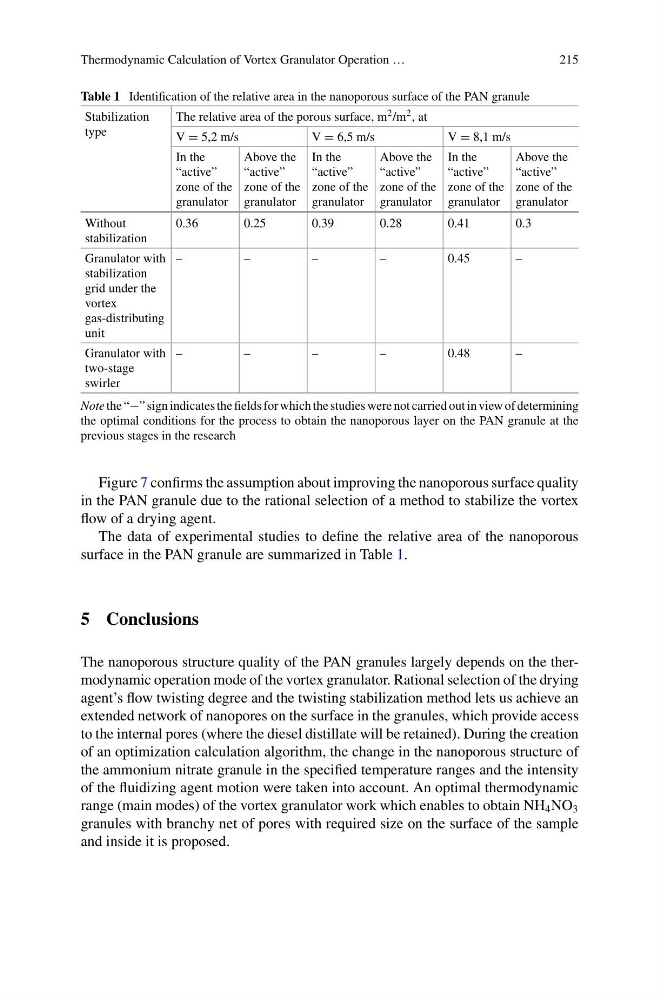
Table 1 Identification of the relative area in the nanoporous surface of the PAN granule
Stabilization
type
The relative area of the porous surface, m 2 /m 2 , at
V = 5,2 m/s
V = 6,5 m/s
V = 8,1 m/s
In the
“active”
zone of the
granulator
Above the
“active”
zone of the
granulator
In the
“active”
zone of the
granulator
Above the
“active”
zone of the
granulator
In the
“active”
zone of the
granulator
Above the
“active”
zone of the
granulator
Without
stabilization
0.36
0.25
0.39
0.28
0.41
0.3
Granulator with
stabilization
grid under the
vortex
gas-distributing
unit
–
–
–
–
0.45
–
Granulator with
two-stage
swirler
–
–
–
–
0.48
–
Note the “−” sign indicates the fields for which the studies were not carried out in view of determining
the optimal conditions for the process to obtain the nanoporous layer on the PAN granule at the
previous stages in the research
Figure 7 confirms the assumption about improving the nanoporous surface quality
in the PAN granule due to the rational selection of a method to stabilize the vortex
flow of a drying agent.
The data of experimental studies to define the relative area of the nanoporous
surface in the PAN granule are summarized in Table 1.
5 Conclusions
The nanoporous structure quality of the PAN granules largely depends on the thermodynamic operation mode of the vortex granulator. Rational selection of the drying
agent’s flow twisting degree and the twisting stabilization method lets us achieve an
extended network of nanopores on the surface in the granules, which provide access
to the internal pores (where the diesel distillate will be retained). During the creation
of an optimization calculation algorithm, the change in the nanoporous structure of
the ammonium nitrate granule in the specified temperature ranges and the intensity
of the fluidizing agent motion were taken into account. An optimal thermodynamic
range (main modes) of the vortex granulator work which enables to obtain NH 4 NO 3
granules with branchy net of pores with required size on the surface of the sample
and inside it is proposed.
215
Table 1 Identification of the relative area in the nanoporous surface of the PAN granule
Stabilization
type
The relative area of the porous surface, m 2 /m 2 , at
V = 5,2 m/s
V = 6,5 m/s
V = 8,1 m/s
In the
“active”
zone of the
granulator
Above the
“active”
zone of the
granulator
In the
“active”
zone of the
granulator
Above the
“active”
zone of the
granulator
In the
“active”
zone of the
granulator
Above the
“active”
zone of the
granulator
Without
stabilization
0.36
0.25
0.39
0.28
0.41
0.3
Granulator with
stabilization
grid under the
vortex
gas-distributing
unit
–
–
–
–
0.45
–
Granulator with
two-stage
swirler
–
–
–
–
0.48
–
Note the “−” sign indicates the fields for which the studies were not carried out in view of determining
the optimal conditions for the process to obtain the nanoporous layer on the PAN granule at the
previous stages in the research
Figure 7 confirms the assumption about improving the nanoporous surface quality
in the PAN granule due to the rational selection of a method to stabilize the vortex
flow of a drying agent.
The data of experimental studies to define the relative area of the nanoporous
surface in the PAN granule are summarized in Table 1.
5 Conclusions
The nanoporous structure quality of the PAN granules largely depends on the thermodynamic operation mode of the vortex granulator. Rational selection of the drying
agent’s flow twisting degree and the twisting stabilization method lets us achieve an
extended network of nanopores on the surface in the granules, which provide access
to the internal pores (where the diesel distillate will be retained). During the creation
of an optimization calculation algorithm, the change in the nanoporous structure of
the ammonium nitrate granule in the specified temperature ranges and the intensity
of the fluidizing agent motion were taken into account. An optimal thermodynamic
range (main modes) of the vortex granulator work which enables to obtain NH 4 NO 3
granules with branchy net of pores with required size on the surface of the sample
and inside it is proposed.