

84
the evaluation exercise stated that the project
empowered them because it enabled them to
acknowledge the conditions in which they find
themselves and then take action to enhance access
to resources (human, financial and natural) to
transform their well-being by changing their
beliefs, values and attitudes. Table 5.2 shows the
effectiveness of the bottom-up capacity development training when compared with conventional
training.
Leaders from the local community participated in the identification and selection of participants for the capacity-building programme.
The implementation of the project was comprehensively tied to the contextual factors in the
local implementing community. Based on the
analysis of the table above, one can deduce that a
bottom-up approach to capacity development is a
better alternative to the delivery of conventional
training.
Community Engagement in Climate
Change Adaptation
After the successful implementation of the
Community and National Capacity Development
Training Programme, JEMS requested the communities and NGOs to submit CCA projects for
funding. A set of criteria was sent out along with
an advertisement on radio, TV and social networks. Information was also sent directly to the
120 youth and community leaders who had
participated in the capacity-building training
programme.
Over 20 groups submitted project proposals to
JEMS for financial and technical support. After
assessing the project proposals, seven community groups received financial and technical assistance to implement CCA projects in their
communities. The organisation provided $20,000
to fund the projects which include community
clean-up campaigns, tree planting projects and
community consultations on how to enhance the
knowledge and skills of residents to build their
resilience to adapt to climate change. JEMS identified and provided mentors to work with
community- based organisations to assist them
with the overall management and implementation of the project (McNamara and Buggy 2016).
The community participated in all aspects of the
project.
The Effectiveness of the Community
Engagement
Over three-quarters of the residents of the communities were fully engaged in the development
and implementation of the CCA projects.
Although there was only a core group representing the various organisations in the initial training and preparation of project proposals, the
residents were mobilised through cultural wakes
and other education awareness-building activities
implemented in these villages. Steelpan music,
calypsos, African drumming and other cultural
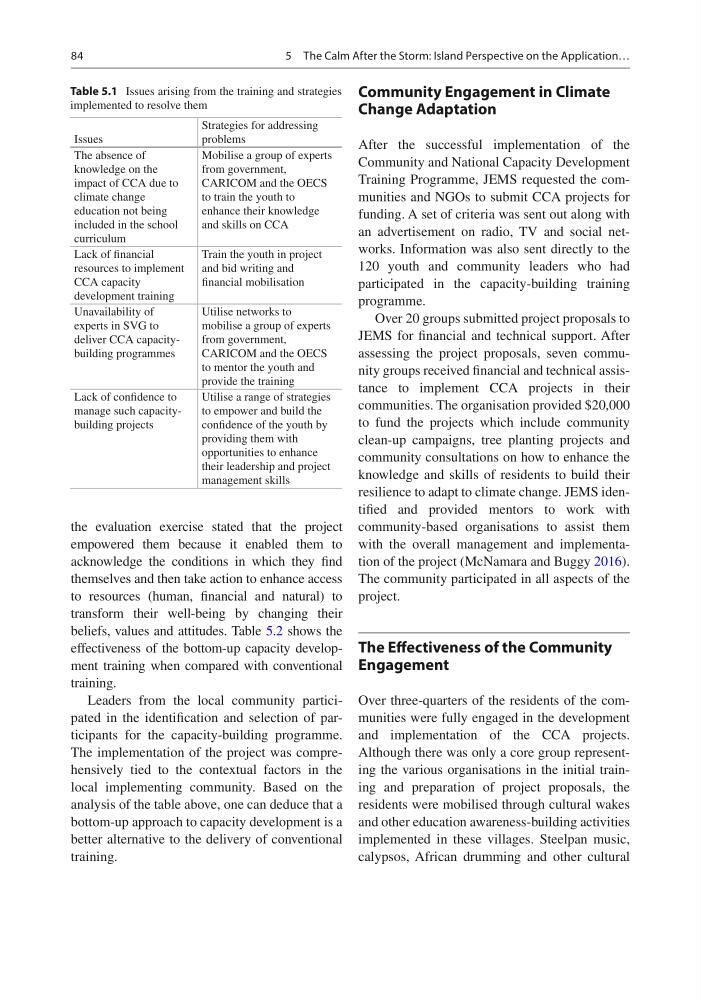
Table 5.1 Issues arising from the training and strategies
implemented to resolve them
Issues
Strategies for addressing
problems
The absence of
knowledge on the
impact of CCA due to
climate change
education not being
included in the school
curriculum
Mobilise a group of experts
from government,
CARICOM and the OECS
to train the youth to
enhance their knowledge
and skills on CCA
Lack of financial
resources to implement
CCA capacity
development training
Train the youth in project
and bid writing and
financial mobilisation
Unavailability of
experts in SVG to
deliver CCA capacitybuilding programmes
Utilise networks to
mobilise a group of experts
from government,
CARICOM and the OECS
to mentor the youth and
provide the training
Lack of confidence to
manage such capacitybuilding projects
Utilise a range of strategies
to empower and build the
confidence of the youth by
providing them with
opportunities to enhance
their leadership and project
management skills
5 The Calm After the Storm: Island Perspective on the Application…
the evaluation exercise stated that the project
empowered them because it enabled them to
acknowledge the conditions in which they find
themselves and then take action to enhance access
to resources (human, financial and natural) to
transform their well-being by changing their
beliefs, values and attitudes. Table 5.2 shows the
effectiveness of the bottom-up capacity development training when compared with conventional
training.
Leaders from the local community participated in the identification and selection of participants for the capacity-building programme.
The implementation of the project was comprehensively tied to the contextual factors in the
local implementing community. Based on the
analysis of the table above, one can deduce that a
bottom-up approach to capacity development is a
better alternative to the delivery of conventional
training.
Community Engagement in Climate
Change Adaptation
After the successful implementation of the
Community and National Capacity Development
Training Programme, JEMS requested the communities and NGOs to submit CCA projects for
funding. A set of criteria was sent out along with
an advertisement on radio, TV and social networks. Information was also sent directly to the
120 youth and community leaders who had
participated in the capacity-building training
programme.
Over 20 groups submitted project proposals to
JEMS for financial and technical support. After
assessing the project proposals, seven community groups received financial and technical assistance to implement CCA projects in their
communities. The organisation provided $20,000
to fund the projects which include community
clean-up campaigns, tree planting projects and
community consultations on how to enhance the
knowledge and skills of residents to build their
resilience to adapt to climate change. JEMS identified and provided mentors to work with
community- based organisations to assist them
with the overall management and implementation of the project (McNamara and Buggy 2016).
The community participated in all aspects of the
project.
The Effectiveness of the Community
Engagement
Over three-quarters of the residents of the communities were fully engaged in the development
and implementation of the CCA projects.
Although there was only a core group representing the various organisations in the initial training and preparation of project proposals, the
residents were mobilised through cultural wakes
and other education awareness-building activities
implemented in these villages. Steelpan music,
calypsos, African drumming and other cultural
Table 5.1 Issues arising from the training and strategies
implemented to resolve them
Issues
Strategies for addressing
problems
The absence of
knowledge on the
impact of CCA due to
climate change
education not being
included in the school
curriculum
Mobilise a group of experts
from government,
CARICOM and the OECS
to train the youth to
enhance their knowledge
and skills on CCA
Lack of financial
resources to implement
CCA capacity
development training
Train the youth in project
and bid writing and
financial mobilisation
Unavailability of
experts in SVG to
deliver CCA capacitybuilding programmes
Utilise networks to
mobilise a group of experts
from government,
CARICOM and the OECS
to mentor the youth and
provide the training
Lack of confidence to
manage such capacitybuilding projects
Utilise a range of strategies
to empower and build the
confidence of the youth by
providing them with
opportunities to enhance
their leadership and project
management skills
5 The Calm After the Storm: Island Perspective on the Application…