

89
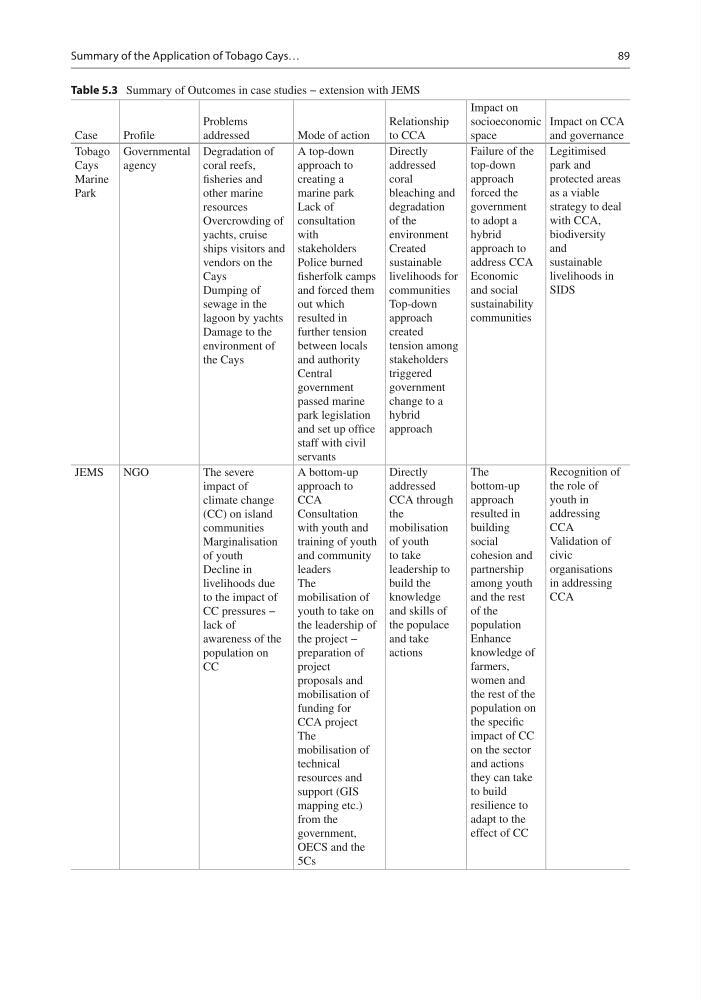
Table 5.3 Summary of Outcomes in case studies − extension with JEMS
Case
Profile
Problems
addressed
Mode of action
Relationship
to CCA
Impact on
socioeconomic
space
Impact on CCA
and governance
Tobago
Cays
Marine
Park
Governmental
agency
Degradation of
coral reefs,
fisheries and
other marine
resources
Overcrowding of
yachts, cruise
ships visitors and
vendors on the
Cays
Dumping of
sewage in the
lagoon by yachts
Damage to the
environment of
the Cays
A top-down
approach to
creating a
marine park
Lack of
consultation
with
stakeholders
Police burned
fisherfolk camps
and forced them
out which
resulted in
further tension
between locals
and authority
Central
government
passed marine
park legislation
and set up office
staff with civil
servants
Directly
addressed
coral
bleaching and
degradation
of the
environment
Created
sustainable
livelihoods for
communities
Top-down
approach
created
tension among
stakeholders
triggered
government
change to a
hybrid
approach
Failure of the
top-down
approach
forced the
government
to adopt a
hybrid
approach to
address CCA
Economic
and social
sustainability
communities
Legitimised
park and
protected areas
as a viable
strategy to deal
with CCA,
biodiversity
and
sustainable
livelihoods in
SIDS
JEMS
NGO
The severe
impact of
climate change
(CC) on island
communities
Marginalisation
of youth
Decline in
livelihoods due
to the impact of
CC pressures −
lack of
awareness of the
population on
CC
A bottom-up
approach to
CCA
Consultation
with youth and
training of youth
and community
leaders
The
mobilisation of
youth to take on
the leadership of
the project −
preparation of
project
proposals and
mobilisation of
funding for
CCA project
The
mobilisation of
technical
resources and
support (GIS
mapping etc.)
from the
government,
OECS and the
5Cs
Directly
addressed
CCA through
the
mobilisation
of youth
to take
leadership to
build the
knowledge
and skills of
the populace
and take
actions
The
bottom-up
approach
resulted in
building
social
cohesion and
partnership
among youth
and the rest
of the
population
Enhance
knowledge of
farmers,
women and
the rest of the
population on
the specific
impact of CC
on the sector
and actions
they can take
to build
resilience to
adapt to the
effect of CC
Recognition of
the role of
youth in
addressing
CCA
Validation of
civic
organisations
in addressing
CCA
Summary of the Application of Tobago Cays…
Table 5.3 Summary of Outcomes in case studies − extension with JEMS
Case
Profile
Problems
addressed
Mode of action
Relationship
to CCA
Impact on
socioeconomic
space
Impact on CCA
and governance
Tobago
Cays
Marine
Park
Governmental
agency
Degradation of
coral reefs,
fisheries and
other marine
resources
Overcrowding of
yachts, cruise
ships visitors and
vendors on the
Cays
Dumping of
sewage in the
lagoon by yachts
Damage to the
environment of
the Cays
A top-down
approach to
creating a
marine park
Lack of
consultation
with
stakeholders
Police burned
fisherfolk camps
and forced them
out which
resulted in
further tension
between locals
and authority
Central
government
passed marine
park legislation
and set up office
staff with civil
servants
Directly
addressed
coral
bleaching and
degradation
of the
environment
Created
sustainable
livelihoods for
communities
Top-down
approach
created
tension among
stakeholders
triggered
government
change to a
hybrid
approach
Failure of the
top-down
approach
forced the
government
to adopt a
hybrid
approach to
address CCA
Economic
and social
sustainability
communities
Legitimised
park and
protected areas
as a viable
strategy to deal
with CCA,
biodiversity
and
sustainable
livelihoods in
SIDS
JEMS
NGO
The severe
impact of
climate change
(CC) on island
communities
Marginalisation
of youth
Decline in
livelihoods due
to the impact of
CC pressures −
lack of
awareness of the
population on
CC
A bottom-up
approach to
CCA
Consultation
with youth and
training of youth
and community
leaders
The
mobilisation of
youth to take on
the leadership of
the project −
preparation of
project
proposals and
mobilisation of
funding for
CCA project
The
mobilisation of
technical
resources and
support (GIS
mapping etc.)
from the
government,
OECS and the
5Cs
Directly
addressed
CCA through
the
mobilisation
of youth
to take
leadership to
build the
knowledge
and skills of
the populace
and take
actions
The
bottom-up
approach
resulted in
building
social
cohesion and
partnership
among youth
and the rest
of the
population
Enhance
knowledge of
farmers,
women and
the rest of the
population on
the specific
impact of CC
on the sector
and actions
they can take
to build
resilience to
adapt to the
effect of CC
Recognition of
the role of
youth in
addressing
CCA
Validation of
civic
organisations
in addressing
CCA
Summary of the Application of Tobago Cays…