

430
Iu. Gudyma et al.
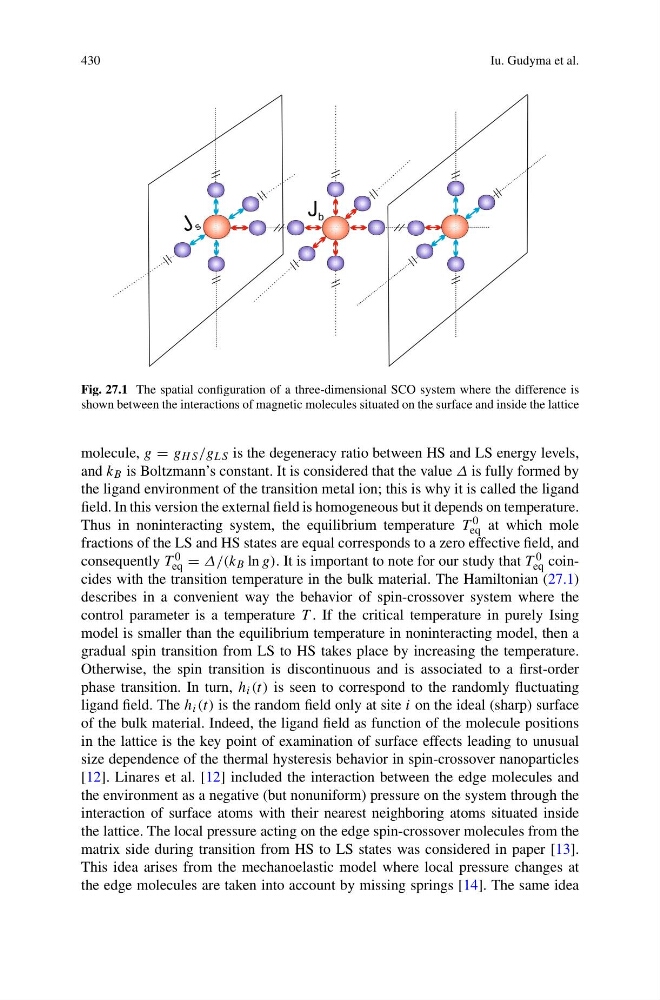
Fig. 27.1 The spatial configuration of a three-dimensional SCO system where the difference is
shown between the interactions of magnetic molecules situated on the surface and inside the lattice
molecule, g = g H S /g LS is the degeneracy ratio between HS and LS energy levels,
and k B is Boltzmann’s constant. It is considered that the value Δ is fully formed by
the ligand environment of the transition metal ion; this is why it is called the ligand
field. In this version the external field is homogeneous but it depends on temperature.
Thus in noninteracting system, the equilibrium temperature T 0
eq at which mole
fractions of the LS and HS states are equal corresponds to a zero effective field, and
consequently T 0
eq = Δ/(k B ln g). It is important to note for our study that T 0
eq coincides with the transition temperature in the bulk material. The Hamiltonian (27.1)
describes in a convenient way the behavior of spin-crossover system where the
control parameter is a temperature T . If the critical temperature in purely Ising
model is smaller than the equilibrium temperature in noninteracting model, then a
gradual spin transition from LS to HS takes place by increasing the temperature.
Otherwise, the spin transition is discontinuous and is associated to a first-order
phase transition. In turn, h i (t) is seen to correspond to the randomly fluctuating
ligand field. The h i (t) is the random field only at site i on the ideal (sharp) surface
of the bulk material. Indeed, the ligand field as function of the molecule positions
in the lattice is the key point of examination of surface effects leading to unusual
size dependence of the thermal hysteresis behavior in spin-crossover nanoparticles
[12]. Linares et al. [12] included the interaction between the edge molecules and
the environment as a negative (but nonuniform) pressure on the system through the
interaction of surface atoms with their nearest neighboring atoms situated inside
the lattice. The local pressure acting on the edge spin-crossover molecules from the
matrix side during transition from HS to LS states was considered in paper [13].
This idea arises from the mechanoelastic model where local pressure changes at
the edge molecules are taken into account by missing springs [14]. The same idea
Iu. Gudyma et al.
Fig. 27.1 The spatial configuration of a three-dimensional SCO system where the difference is
shown between the interactions of magnetic molecules situated on the surface and inside the lattice
molecule, g = g H S /g LS is the degeneracy ratio between HS and LS energy levels,
and k B is Boltzmann’s constant. It is considered that the value Δ is fully formed by
the ligand environment of the transition metal ion; this is why it is called the ligand
field. In this version the external field is homogeneous but it depends on temperature.
Thus in noninteracting system, the equilibrium temperature T 0
eq at which mole
fractions of the LS and HS states are equal corresponds to a zero effective field, and
consequently T 0
eq = Δ/(k B ln g). It is important to note for our study that T 0
eq coincides with the transition temperature in the bulk material. The Hamiltonian (27.1)
describes in a convenient way the behavior of spin-crossover system where the
control parameter is a temperature T . If the critical temperature in purely Ising
model is smaller than the equilibrium temperature in noninteracting model, then a
gradual spin transition from LS to HS takes place by increasing the temperature.
Otherwise, the spin transition is discontinuous and is associated to a first-order
phase transition. In turn, h i (t) is seen to correspond to the randomly fluctuating
ligand field. The h i (t) is the random field only at site i on the ideal (sharp) surface
of the bulk material. Indeed, the ligand field as function of the molecule positions
in the lattice is the key point of examination of surface effects leading to unusual
size dependence of the thermal hysteresis behavior in spin-crossover nanoparticles
[12]. Linares et al. [12] included the interaction between the edge molecules and
the environment as a negative (but nonuniform) pressure on the system through the
interaction of surface atoms with their nearest neighboring atoms situated inside
the lattice. The local pressure acting on the edge spin-crossover molecules from the
matrix side during transition from HS to LS states was considered in paper [13].
This idea arises from the mechanoelastic model where local pressure changes at
the edge molecules are taken into account by missing springs [14]. The same idea