

22 The Nanocomposite Diffusion Coating of Details Prepared of Boriding
353
Fig. 22.6 Sample steel
(0.45%C), reinforced
diffusion boriding with
heating microwave: 1, sleeve;
2, contains boron coating; 3,
skirting
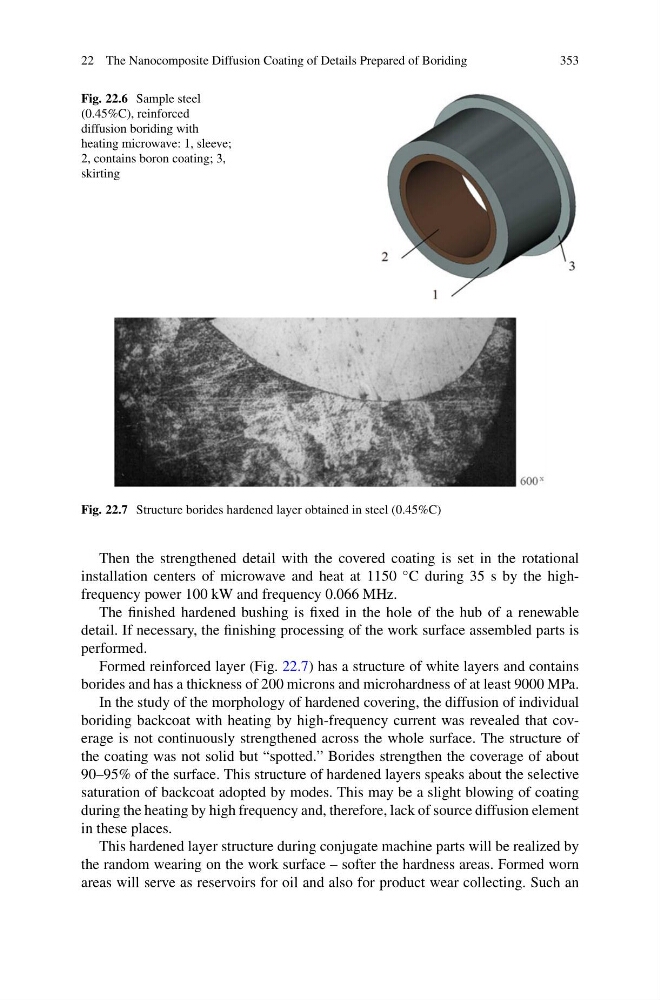
Fig. 22.7 Structure borides hardened layer obtained in steel (0.45%C)
Then the strengthened detail with the covered coating is set in the rotational
installation centers of microwave and heat at 1150 ◦ C during 35 s by the highfrequency power 100 kW and frequency 0.066 MHz.
The finished hardened bushing is fixed in the hole of the hub of a renewable
detail. If necessary, the finishing processing of the work surface assembled parts is
performed.
Formed reinforced layer (Fig. 22.7) has a structure of white layers and contains
borides and has a thickness of 200 microns and microhardness of at least 9000 MPa.
In the study of the morphology of hardened covering, the diffusion of individual
boriding backcoat with heating by high-frequency current was revealed that coverage is not continuously strengthened across the whole surface. The structure of
the coating was not solid but “spotted.” Borides strengthen the coverage of about
90–95% of the surface. This structure of hardened layers speaks about the selective
saturation of backcoat adopted by modes. This may be a slight blowing of coating
during the heating by high frequency and, therefore, lack of source diffusion element
in these places.
This hardened layer structure during conjugate machine parts will be realized by
the random wearing on the work surface – softer the hardness areas. Formed worn
areas will serve as reservoirs for oil and also for product wear collecting. Such an
353
Fig. 22.6 Sample steel
(0.45%C), reinforced
diffusion boriding with
heating microwave: 1, sleeve;
2, contains boron coating; 3,
skirting
Fig. 22.7 Structure borides hardened layer obtained in steel (0.45%C)
Then the strengthened detail with the covered coating is set in the rotational
installation centers of microwave and heat at 1150 ◦ C during 35 s by the highfrequency power 100 kW and frequency 0.066 MHz.
The finished hardened bushing is fixed in the hole of the hub of a renewable
detail. If necessary, the finishing processing of the work surface assembled parts is
performed.
Formed reinforced layer (Fig. 22.7) has a structure of white layers and contains
borides and has a thickness of 200 microns and microhardness of at least 9000 MPa.
In the study of the morphology of hardened covering, the diffusion of individual
boriding backcoat with heating by high-frequency current was revealed that coverage is not continuously strengthened across the whole surface. The structure of
the coating was not solid but “spotted.” Borides strengthen the coverage of about
90–95% of the surface. This structure of hardened layers speaks about the selective
saturation of backcoat adopted by modes. This may be a slight blowing of coating
during the heating by high frequency and, therefore, lack of source diffusion element
in these places.
This hardened layer structure during conjugate machine parts will be realized by
the random wearing on the work surface – softer the hardness areas. Formed worn
areas will serve as reservoirs for oil and also for product wear collecting. Such an