

53
Analysis and Design of a Bionic Fitness Cycle
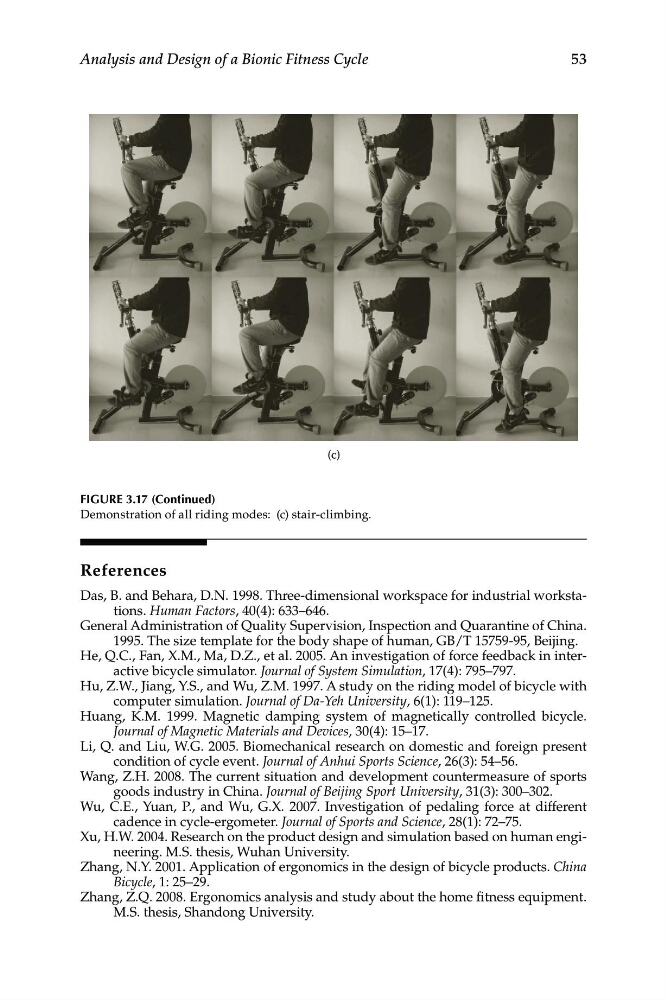
(c)
FIGURE 3.17 (Continued)
Demonstration of all riding modes: (c) stair-climbing.
References
Das, B. and Behara, D.N. 1998. Three-dimensional workspace for industrial workstations. Human Factors, 40(4): 633–646.
General Administration of Quality Supervision, Inspection and Quarantine of China.
1995. The size template for the body shape of human, GB/T 15759-95, Beijing.
He, Q.C., Fan, X.M., Ma, D.Z., et al. 2005. An investigation of force feedback in interactive bicycle simulator. Journal of System Simulation, 17(4): 795–797.
Hu, Z.W., Jiang, Y.S., and Wu, Z.M. 1997. A study on the riding model of bicycle with
computer simulation. Journal of Da-Yeh University, 6(1): 119–125.
Huang, K.M. 1999. Magnetic damping system of magnetically controlled bicycle.
Journal of Magnetic Materials and Devices, 30(4): 15–17.
Li, Q. and Liu, W.G. 2005. Biomechanical research on domestic and foreign present
condition of cycle event. Journal of Anhui Sports Science, 26(3): 54–56.
Wang, Z.H. 2008. The current situation and development countermeasure of sports
goods industry in China. Journal of Beijing Sport University, 31(3): 300–302.
Wu, C.E., Yuan, P., and Wu, G.X. 2007. Investigation of pedaling force at different
cadence in cycle-ergometer. Journal of Sports and Science, 28(1): 72–75.
Xu, H.W. 2004. Research on the product design and simulation based on human engineering. M.S. thesis, Wuhan University.
Zhang, N.Y. 2001. Application of ergonomics in the design of bicycle products. China
Bicycle, 1: 25–29.
Zhang, Z.Q. 2008. Ergonomics analysis and study about the home fitness equipment.
M.S. thesis, Shandong University.
Analysis and Design of a Bionic Fitness Cycle
(c)
FIGURE 3.17 (Continued)
Demonstration of all riding modes: (c) stair-climbing.
References
Das, B. and Behara, D.N. 1998. Three-dimensional workspace for industrial workstations. Human Factors, 40(4): 633–646.
General Administration of Quality Supervision, Inspection and Quarantine of China.
1995. The size template for the body shape of human, GB/T 15759-95, Beijing.
He, Q.C., Fan, X.M., Ma, D.Z., et al. 2005. An investigation of force feedback in interactive bicycle simulator. Journal of System Simulation, 17(4): 795–797.
Hu, Z.W., Jiang, Y.S., and Wu, Z.M. 1997. A study on the riding model of bicycle with
computer simulation. Journal of Da-Yeh University, 6(1): 119–125.
Huang, K.M. 1999. Magnetic damping system of magnetically controlled bicycle.
Journal of Magnetic Materials and Devices, 30(4): 15–17.
Li, Q. and Liu, W.G. 2005. Biomechanical research on domestic and foreign present
condition of cycle event. Journal of Anhui Sports Science, 26(3): 54–56.
Wang, Z.H. 2008. The current situation and development countermeasure of sports
goods industry in China. Journal of Beijing Sport University, 31(3): 300–302.
Wu, C.E., Yuan, P., and Wu, G.X. 2007. Investigation of pedaling force at different
cadence in cycle-ergometer. Journal of Sports and Science, 28(1): 72–75.
Xu, H.W. 2004. Research on the product design and simulation based on human engineering. M.S. thesis, Wuhan University.
Zhang, N.Y. 2001. Application of ergonomics in the design of bicycle products. China
Bicycle, 1: 25–29.
Zhang, Z.Q. 2008. Ergonomics analysis and study about the home fitness equipment.
M.S. thesis, Shandong University.