

244
P. Basnet and S. Chatterjee
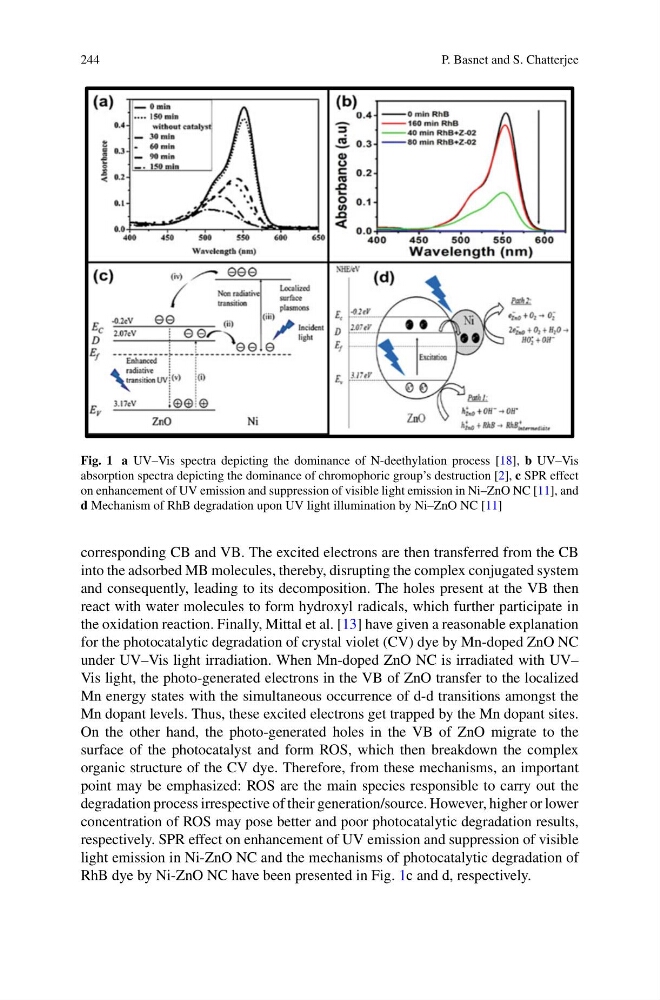
Fig. 1 a UV–Vis spectra depicting the dominance of N-deethylation process [18], b UV–Vis
absorption spectra depicting the dominance of chromophoric group’s destruction [2], c SPR effect
on enhancement of UV emission and suppression of visible light emission in Ni–ZnO NC [11], and
d Mechanism of RhB degradation upon UV light illumination by Ni–ZnO NC [11]
corresponding CB and VB. The excited electrons are then transferred from the CB
into the adsorbed MB molecules, thereby, disrupting the complex conjugated system
and consequently, leading to its decomposition. The holes present at the VB then
react with water molecules to form hydroxyl radicals, which further participate in
the oxidation reaction. Finally, Mittal et al. [13] have given a reasonable explanation
for the photocatalytic degradation of crystal violet (CV) dye by Mn-doped ZnO NC
under UV–Vis light irradiation. When Mn-doped ZnO NC is irradiated with UV–
Vis light, the photo-generated electrons in the VB of ZnO transfer to the localized
Mn energy states with the simultaneous occurrence of d-d transitions amongst the
Mn dopant levels. Thus, these excited electrons get trapped by the Mn dopant sites.
On the other hand, the photo-generated holes in the VB of ZnO migrate to the
surface of the photocatalyst and form ROS, which then breakdown the complex
organic structure of the CV dye. Therefore, from these mechanisms, an important
point may be emphasized: ROS are the main species responsible to carry out the
degradation process irrespective of their generation/source. However, higher or lower
concentration of ROS may pose better and poor photocatalytic degradation results,
respectively. SPR effect on enhancement of UV emission and suppression of visible
light emission in Ni-ZnO NC and the mechanisms of photocatalytic degradation of
RhB dye by Ni-ZnO NC have been presented in Fig. 1c and d, respectively.
P. Basnet and S. Chatterjee
Fig. 1 a UV–Vis spectra depicting the dominance of N-deethylation process [18], b UV–Vis
absorption spectra depicting the dominance of chromophoric group’s destruction [2], c SPR effect
on enhancement of UV emission and suppression of visible light emission in Ni–ZnO NC [11], and
d Mechanism of RhB degradation upon UV light illumination by Ni–ZnO NC [11]
corresponding CB and VB. The excited electrons are then transferred from the CB
into the adsorbed MB molecules, thereby, disrupting the complex conjugated system
and consequently, leading to its decomposition. The holes present at the VB then
react with water molecules to form hydroxyl radicals, which further participate in
the oxidation reaction. Finally, Mittal et al. [13] have given a reasonable explanation
for the photocatalytic degradation of crystal violet (CV) dye by Mn-doped ZnO NC
under UV–Vis light irradiation. When Mn-doped ZnO NC is irradiated with UV–
Vis light, the photo-generated electrons in the VB of ZnO transfer to the localized
Mn energy states with the simultaneous occurrence of d-d transitions amongst the
Mn dopant levels. Thus, these excited electrons get trapped by the Mn dopant sites.
On the other hand, the photo-generated holes in the VB of ZnO migrate to the
surface of the photocatalyst and form ROS, which then breakdown the complex
organic structure of the CV dye. Therefore, from these mechanisms, an important
point may be emphasized: ROS are the main species responsible to carry out the
degradation process irrespective of their generation/source. However, higher or lower
concentration of ROS may pose better and poor photocatalytic degradation results,
respectively. SPR effect on enhancement of UV emission and suppression of visible
light emission in Ni-ZnO NC and the mechanisms of photocatalytic degradation of
RhB dye by Ni-ZnO NC have been presented in Fig. 1c and d, respectively.