

224
R. L. Sahu et al.
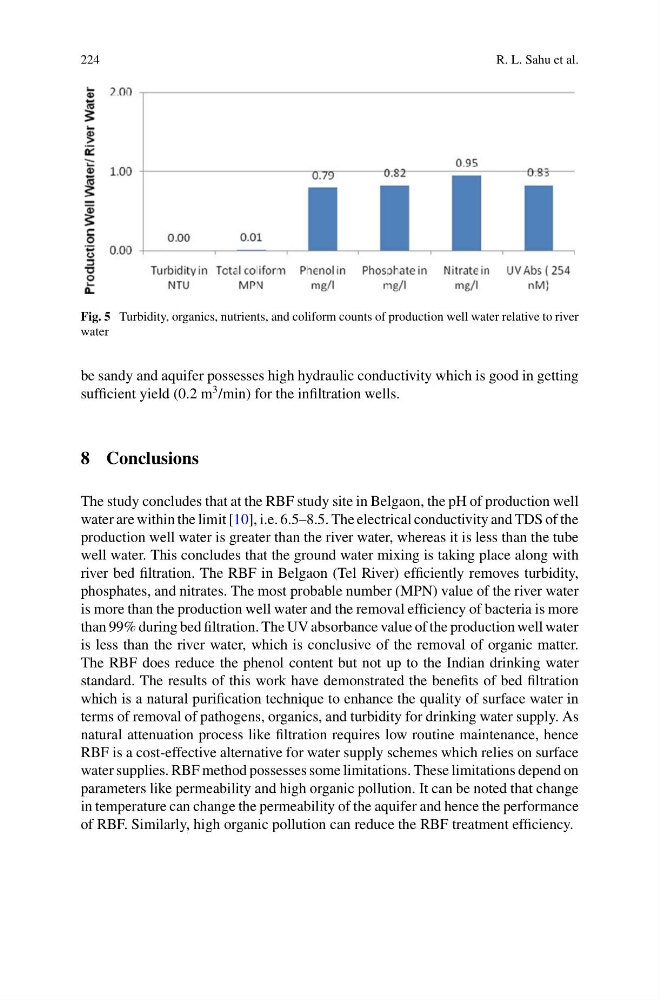
Fig. 5 Turbidity, organics, nutrients, and coliform counts of production well water relative to river
water
be sandy and aquifer possesses high hydraulic conductivity which is good in getting
sufficient yield (0.2 m
3 /min) for the infiltration wells.
8 Conclusions
The study concludes that at the RBF study site in Belgaon, the pH of production well
water are within the limit [10], i.e. 6.5–8.5. The electrical conductivity and TDS of the
production well water is greater than the river water, whereas it is less than the tube
well water. This concludes that the ground water mixing is taking place along with
river bed filtration. The RBF in Belgaon (Tel River) efficiently removes turbidity,
phosphates, and nitrates. The most probable number (MPN) value of the river water
is more than the production well water and the removal efficiency of bacteria is more
than 99% during bed filtration. The UV absorbance value of the production well water
is less than the river water, which is conclusive of the removal of organic matter.
The RBF does reduce the phenol content but not up to the Indian drinking water
standard. The results of this work have demonstrated the benefits of bed filtration
which is a natural purification technique to enhance the quality of surface water in
terms of removal of pathogens, organics, and turbidity for drinking water supply. As
natural attenuation process like filtration requires low routine maintenance, hence
RBF is a cost-effective alternative for water supply schemes which relies on surface
water supplies. RBF method possesses some limitations. These limitations depend on
parameters like permeability and high organic pollution. It can be noted that change
in temperature can change the permeability of the aquifer and hence the performance
of RBF. Similarly, high organic pollution can reduce the RBF treatment efficiency.
R. L. Sahu et al.
Fig. 5 Turbidity, organics, nutrients, and coliform counts of production well water relative to river
water
be sandy and aquifer possesses high hydraulic conductivity which is good in getting
sufficient yield (0.2 m
3 /min) for the infiltration wells.
8 Conclusions
The study concludes that at the RBF study site in Belgaon, the pH of production well
water are within the limit [10], i.e. 6.5–8.5. The electrical conductivity and TDS of the
production well water is greater than the river water, whereas it is less than the tube
well water. This concludes that the ground water mixing is taking place along with
river bed filtration. The RBF in Belgaon (Tel River) efficiently removes turbidity,
phosphates, and nitrates. The most probable number (MPN) value of the river water
is more than the production well water and the removal efficiency of bacteria is more
than 99% during bed filtration. The UV absorbance value of the production well water
is less than the river water, which is conclusive of the removal of organic matter.
The RBF does reduce the phenol content but not up to the Indian drinking water
standard. The results of this work have demonstrated the benefits of bed filtration
which is a natural purification technique to enhance the quality of surface water in
terms of removal of pathogens, organics, and turbidity for drinking water supply. As
natural attenuation process like filtration requires low routine maintenance, hence
RBF is a cost-effective alternative for water supply schemes which relies on surface
water supplies. RBF method possesses some limitations. These limitations depend on
parameters like permeability and high organic pollution. It can be noted that change
in temperature can change the permeability of the aquifer and hence the performance
of RBF. Similarly, high organic pollution can reduce the RBF treatment efficiency.