

697
resultant sugar solution further carbonized at 40 bar by varying temperature
(160–200 °C) and time (6–10 h) to produce carbon microsphere. The conversion of
carbon microsphere has been 0.1019 g/g dry WH when processed at 200 °C for
10 h. The product was then activated using KOH solution and microwave radiation
to get a better porosity and specific surface area. A higher specific surface area and
electrochemical stability have been obtained at 1:1 impregnation ratio (KOH/carbon) [36].
4.7.3 Enzyme
Eichhornia crassipes was employed as a substrate for production of cellulase, and
Aspergillus niger was used as a microbe. The maximum cellulose activity of
1.035 IU/mL and 0.535 IU/mL with moisture content of 75% and 80%, respectively, at pH 5 and temperature 30 °C has been observed after 7 days of incubation
period [33]. The production of cellulase enzyme using Trichoderma reesei and
water hyacinth as a substrate has also been studied. The cellulose activity of 0.22 IU/
mL after 15 days of incubation period at pH 6 and temperature 30 °C was
obtained [92].
4.7.4 Brick Manufacturing
Goel and Kalamdhad [35] employed water hyacinth in brick manufacturing. The
binary mix of 10% (wt) water hyacinth with rest soil was used and set at firing temperature of 900 °C. Durability of brick improved at this temperature. Water hyacinth
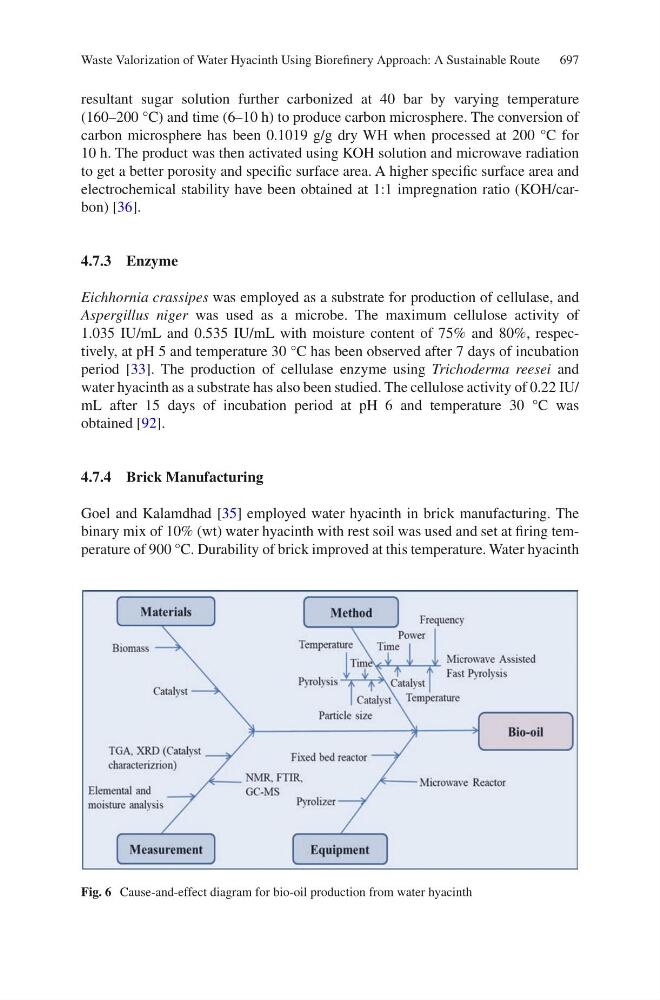
Fig. 6 Cause-and-effect diagram for bio-oil production from water hyacinth
Waste Valorization of Water Hyacinth Using Biorefinery Approach: A Sustainable Route