

631
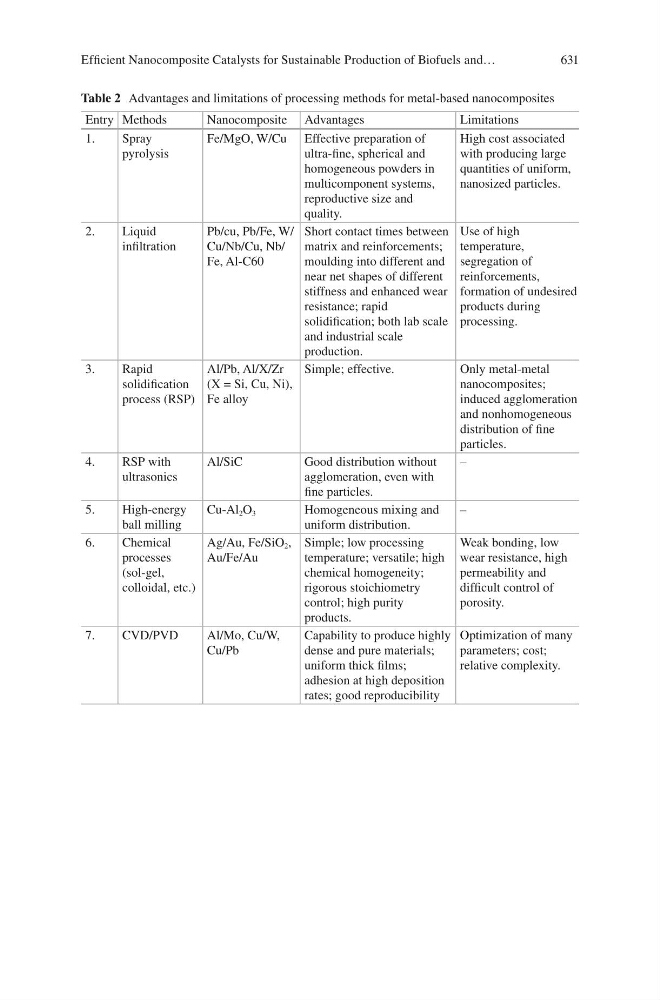
Table 2 Advantages and limitations of processing methods for metal-based nanocomposites
Entry Methods
Nanocomposite Advantages
Limitations
1.
Spray
pyrolysis
Fe/MgO, W/Cu Effective preparation of
ultra-fine, spherical and
homogeneous powders in
multicomponent systems,
reproductive size and
quality.
High cost associated
with producing large
quantities of uniform,
nanosized particles.
2.
Liquid
infiltration
Pb/cu, Pb/Fe, W/
Cu/Nb/Cu, Nb/
Fe, Al-C60
Short contact times between
matrix and reinforcements;
moulding into different and
near net shapes of different
stiffness and enhanced wear
resistance; rapid
solidification; both lab scale
and industrial scale
production.
Use of high
temperature,
segregation of
reinforcements,
formation of undesired
products during
processing.
3.
Rapid
solidification
process (RSP)
Al/Pb, Al/X/Zr
(X = Si, Cu, Ni),
Fe alloy
Simple; effective.
Only metal-metal
nanocomposites;
induced agglomeration
and nonhomogeneous
distribution of fine
particles.
4.
RSP with
ultrasonics
Al/SiC
Good distribution without
agglomeration, even with
fine particles.
–
5.
High-energy
ball milling
Cu-Al 2 O 3
Homogeneous mixing and
uniform distribution.
–
6.
Chemical
processes
(sol-gel,
colloidal, etc.)
Ag/Au, Fe/SiO 2 ,
Au/Fe/Au
Simple; low processing
temperature; versatile; high
chemical homogeneity;
rigorous stoichiometry
control; high purity
products.
Weak bonding, low
wear resistance, high
permeability and
difficult control of
porosity.
7.
CVD/PVD
Al/Mo, Cu/W,
Cu/Pb
Capability to produce highly
dense and pure materials;
uniform thick films;
adhesion at high deposition
rates; good reproducibility
Optimization of many
parameters; cost;
relative complexity.
Efficient Nanocomposite Catalysts for Sustainable Production of Biofuels and…