

626
1 General Introduction
1.1 Biomass-Derived Platform Chemicals
The lignocellulosic biomass is the most significant renewable feedstock consisting
of lignin and carbohydrates, which could be effectively converted into biofuels and
fine chemicals in integrated biorefinery. The biomass-derived platform molecules,
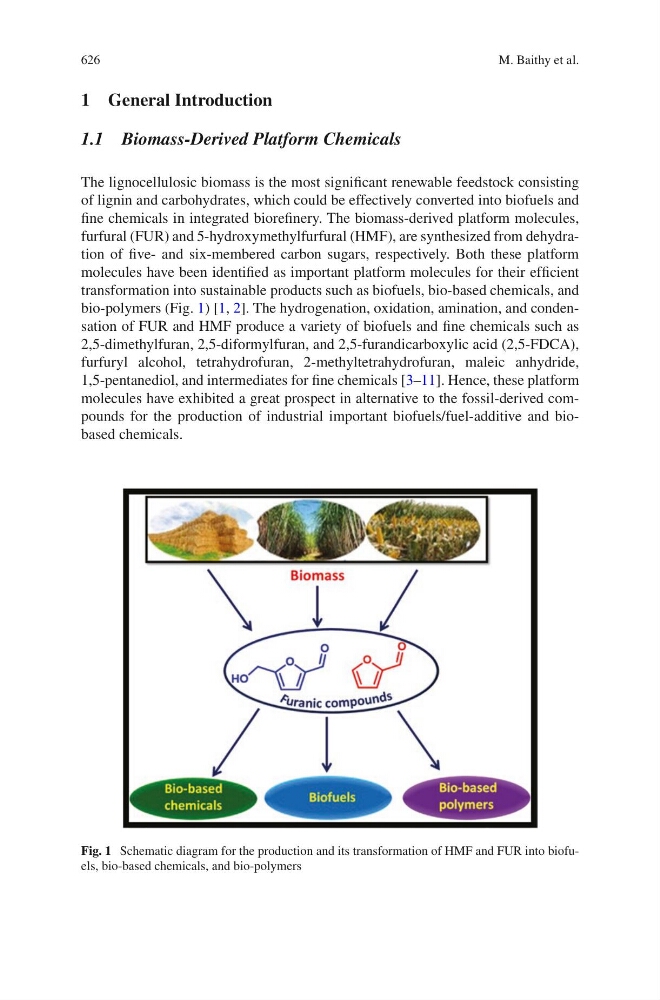
furfural (FUR) and 5-hydroxymethylfurfural (HMF), are synthesized from dehydration of five- and six-membered carbon sugars, respectively. Both these platform
molecules have been identified as important platform molecules for their efficient
transformation into sustainable products such as biofuels, bio-based chemicals, and
bio-polymers (Fig. 1) [1, 2]. The hydrogenation, oxidation, amination, and condensation of FUR and HMF produce a variety of biofuels and fine chemicals such as
2,5-dimethylfuran, 2,5-diformylfuran, and 2,5-furandicarboxylic acid (2,5-FDCA),
furfuryl alcohol, tetrahydrofuran, 2-methyltetrahydrofuran, maleic anhydride,
1,5-pentanediol, and intermediates for fine chemicals [3–11]. Hence, these platform
molecules have exhibited a great prospect in alternative to the fossil-derived compounds for the production of industrial important biofuels/fuel-additive and biobased chemicals.
Fig. 1 Schematic diagram for the production and its transformation of HMF and FUR into biofuels, bio-based chemicals, and bio-polymers
M. Baithy et al.