

599
3.2 SRE with Different Mesoporous Supported Catalysts
3.2.1 Comparison of Different Mesoporous Supported Catalysts Based
on Catalyst Characterization
Table 3 shows the N 2 adsorption-desorption isotherms of different mesoporous supported catalysts used for ethanol steam reforming.
3.2.2 Comparison of the Activities of Catalysts Supported by Different
Mesoporous Supports
The additional methyl group (–CH 3 ) in ethanol makes ethanol steam reforming
reaction more complex than methanol steam reforming [25]. The main advantage of
ethanol over methanol for steam reforming is that it is cheap, non-toxic and an abundant feedstock due to its ability to be readily obtained from thermochemical and
biochemical processing of biomass. Table 4 shows the activity of different mesoporous supported (e.g. MC—mesoporous carbon) catalysts in steam reforming of
ethanol (SRE).
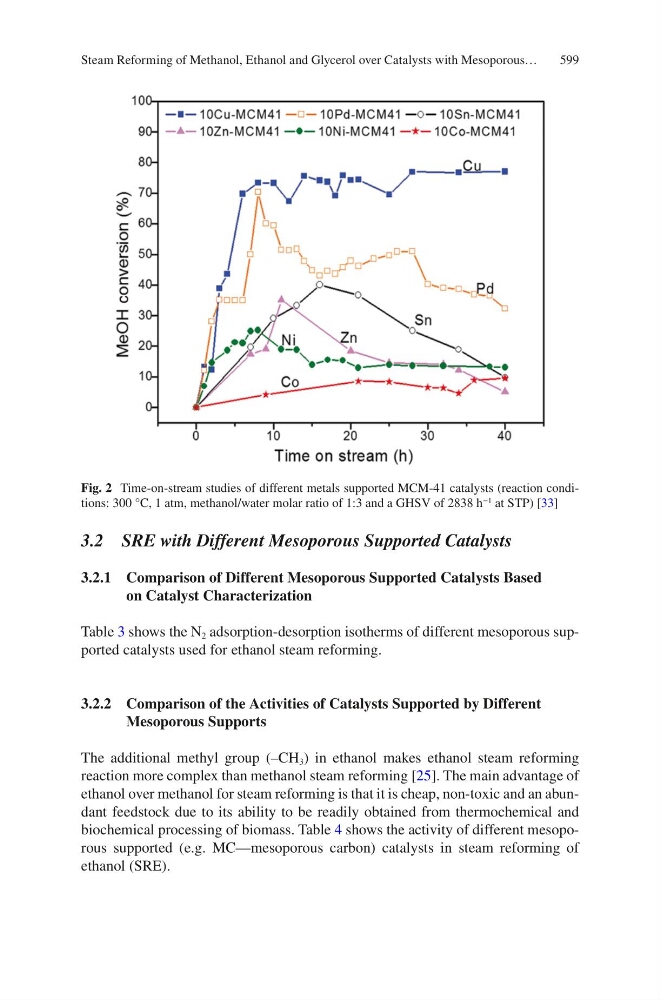
Fig. 2 Time-on-stream studies of different metals supported MCM-41 catalysts (reaction conditions: 300 °C, 1 atm, methanol/water molar ratio of 1:3 and a GHSV of 2838 h
−1 at STP) [33]
Steam Reforming of Methanol, Ethanol and Glycerol over Catalysts with Mesoporous…