

569
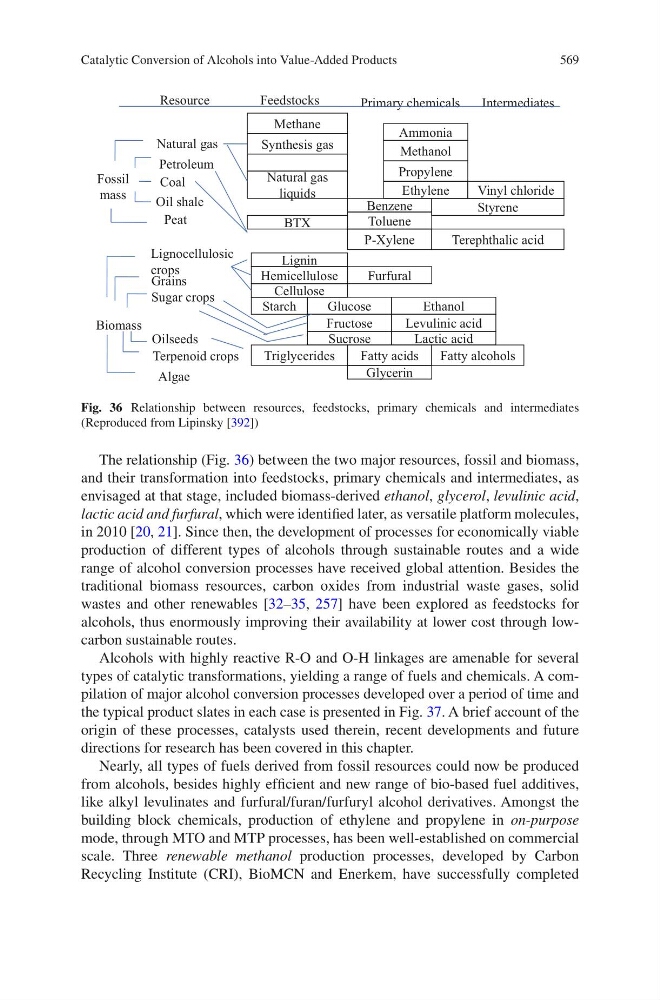
The relationship (Fig. 36) between the two major resources, fossil and biomass,
and their transformation into feedstocks, primary chemicals and intermediates, as
envisaged at that stage, included biomass-derived ethanol, glycerol, levulinic acid,
lactic acid and furfural, which were identified later, as versatile platform molecules,
in 2010 [20, 21]. Since then, the development of processes for economically viable
production of different types of alcohols through sustainable routes and a wide
range of alcohol conversion processes have received global attention. Besides the
traditional biomass resources, carbon oxides from industrial waste gases, solid
wastes and other renewables [32–35, 257] have been explored as feedstocks for
alcohols, thus enormously improving their availability at lower cost through lowcarbon sustainable routes.
Alcohols with highly reactive R-O and O-H linkages are amenable for several
types of catalytic transformations, yielding a range of fuels and chemicals. A compilation of major alcohol conversion processes developed over a period of time and
the typical product slates in each case is presented in Fig. 37. A brief account of the
origin of these processes, catalysts used therein, recent developments and future
directions for research has been covered in this chapter.
Nearly, all types of fuels derived from fossil resources could now be produced
from alcohols, besides highly efficient and new range of bio-based fuel additives,
like alkyl levulinates and furfural/furan/furfuryl alcohol derivatives. Amongst the
building block chemicals, production of ethylene and propylene in on-purpose
mode, through MTO and MTP processes, has been well-established on commercial
scale. Three renewable methanol production processes, developed by Carbon
Recycling Institute (CRI), BioMCN and Enerkem, have successfully completed
Resource
Petroleum
Lignocellulosic
crops
Feedstocks
Sugar crops
Grains
Primary chemicals
Intermediates
Ammonia
Methanol
Propylene
Ethylene
Vinyl chloride
Oilseeds
Terpenoid crops
Algae
Biomass
Natural gas
Coal
Oil shale
Peat
Natural gas
liquids
Synthesis gas
Methane
BTX
Toluene
P-Xylene
Benzene
Styrene
Terephthalic acid
Furfural
Glucose
Levulinic acid
Starch
Cellulose
Hemicellulose
Lignin
Ethanol
Sucrose
Fructose
Lactic acid
Glycerin
Fatty acids
Fatty alcohols
Triglycerides
Fossil
mass
Fig. 36 Relationship between resources, feedstocks, primary chemicals and intermediates
(Reproduced from Lipinsky [392])
Catalytic Conversion of Alcohols into Value-Added Products