

478
by-product can be re-employed for urea production which makes it a very efficient
process. The glycerol carboxylation has been reported with numerous heterogeneous catalysts like Zn-Sn mixed oxide, γ-zirconium phosphate, Sm 0.66 TPA,
Zn-exchanged zeolites, Cu-Mn mixed oxide, Co 3 O 4 /ZnO, Sn-W mixed oxide,
ZnSn(OH) 6 , La 2 O 3 , Zn 1 TPA, Zn/MCM-41, Au-supported ZSM-5, Ta-TPA, WO 3 -
TiO 2 , Sn(OH) 2 [123–138], etc. which have resulted in very high yield of glycerol
carbonate. Performance of some catalysts in glycerol carbonylation with urea as
reported in literature is summarized in Table 3. The use of Sn-beta, Au/Fe 2 O 3 and
ZnAlO catalysts resulted in good conversion of glycerol but with reduced selectivity
towards glycerol carbonate, while in the cases of Sm 0.66 TPA, SW21, Zn 1 TPA, Co 3 O 4 /
ZnO, La 2 O 3 and Zn/MCM-41 catalysts, the reverse was noticed. ZrP and Ta 0.4 TPA
catalysts exhibited 80% and 71% conversion of glycerol, respectively, with maintaining a very good selectivity towards glycerol carbonate. The Zn 2 Sn-CoPre-600,
ZnSn(OH) 6 and Zn-Y catalyst exhibited very good conversion and selectivity
because of the presence of bifunctional, i.e. both acidic and basic, sites in them.
In literature two hypotheses were proposed regarding the reaction mechanism of
urea glycerolysis, where firstly urea was converted to isocyanic acid followed by
urea directly attacking glycerol. Li et al. proposed that at the time of using metal
oxide as catalysts, they confirmed the formation of isocyanic acid (O=C=N stretching) [137]. Keeping in accordance with this observation, a mechanism was suggested where first urea gets activated and with a loss of ammonia molecule to form
isocyanic acid (HNCO) which would react with glycerol to form carbamate followed by the carbonate. In another study by Aresta et al. where they used γ-zirconium
phosphate as catalyst, no isocyanic acid formation was observed [127]. According
to their study, there is direct reaction between glycerol and urea after which release
of ammonia takes place and then carbamate formation. Eventually the reaction
between glycerol and urea produces high quantity of by-product ammonia which in
a way limits its implementation to the industry. To counter with this issue, a positive
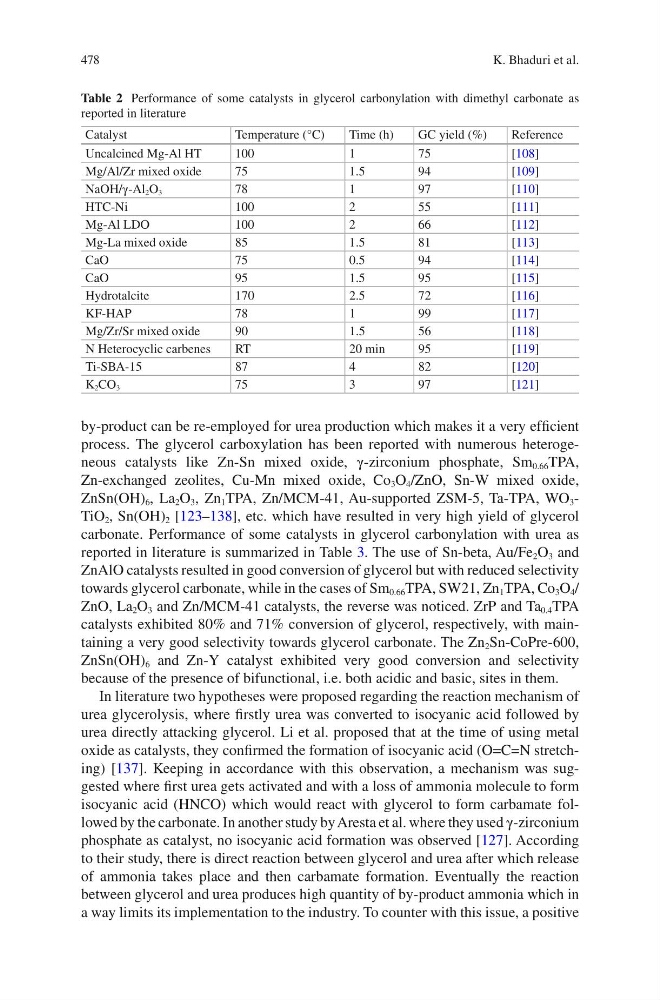
Table 2 Performance of some catalysts in glycerol carbonylation with dimethyl carbonate as
reported in literature
Catalyst
Temperature (°C)
Time (h)
GC yield (%)
Reference
Uncalcined Mg-Al HT
100
1
75
[108]
Mg/Al/Zr mixed oxide
75
1.5
94
[109]
NaOH/γ-Al 2 O 3
78
1
97
[110]
HTC-Ni
100
2
55
[111]
Mg-Al LDO
100
2
66
[112]
Mg-La mixed oxide
85
1.5
81
[113]
CaO
75
0.5
94
[114]
CaO
95
1.5
95
[115]
Hydrotalcite
170
2.5
72
[116]
KF-HAP
78
1
99
[117]
Mg/Zr/Sr mixed oxide
90
1.5
56
[118]
N Heterocyclic carbenes
RT
20 min
95
[119]
Ti-SBA-15
87
4
82
[120]
K 2 CO 3
75
3
97
[121]
K. Bhaduri et al.
by-product can be re-employed for urea production which makes it a very efficient
process. The glycerol carboxylation has been reported with numerous heterogeneous catalysts like Zn-Sn mixed oxide, γ-zirconium phosphate, Sm 0.66 TPA,
Zn-exchanged zeolites, Cu-Mn mixed oxide, Co 3 O 4 /ZnO, Sn-W mixed oxide,
ZnSn(OH) 6 , La 2 O 3 , Zn 1 TPA, Zn/MCM-41, Au-supported ZSM-5, Ta-TPA, WO 3 -
TiO 2 , Sn(OH) 2 [123–138], etc. which have resulted in very high yield of glycerol
carbonate. Performance of some catalysts in glycerol carbonylation with urea as
reported in literature is summarized in Table 3. The use of Sn-beta, Au/Fe 2 O 3 and
ZnAlO catalysts resulted in good conversion of glycerol but with reduced selectivity
towards glycerol carbonate, while in the cases of Sm 0.66 TPA, SW21, Zn 1 TPA, Co 3 O 4 /
ZnO, La 2 O 3 and Zn/MCM-41 catalysts, the reverse was noticed. ZrP and Ta 0.4 TPA
catalysts exhibited 80% and 71% conversion of glycerol, respectively, with maintaining a very good selectivity towards glycerol carbonate. The Zn 2 Sn-CoPre-600,
ZnSn(OH) 6 and Zn-Y catalyst exhibited very good conversion and selectivity
because of the presence of bifunctional, i.e. both acidic and basic, sites in them.
In literature two hypotheses were proposed regarding the reaction mechanism of
urea glycerolysis, where firstly urea was converted to isocyanic acid followed by
urea directly attacking glycerol. Li et al. proposed that at the time of using metal
oxide as catalysts, they confirmed the formation of isocyanic acid (O=C=N stretching) [137]. Keeping in accordance with this observation, a mechanism was suggested where first urea gets activated and with a loss of ammonia molecule to form
isocyanic acid (HNCO) which would react with glycerol to form carbamate followed by the carbonate. In another study by Aresta et al. where they used γ-zirconium
phosphate as catalyst, no isocyanic acid formation was observed [127]. According
to their study, there is direct reaction between glycerol and urea after which release
of ammonia takes place and then carbamate formation. Eventually the reaction
between glycerol and urea produces high quantity of by-product ammonia which in
a way limits its implementation to the industry. To counter with this issue, a positive
Table 2 Performance of some catalysts in glycerol carbonylation with dimethyl carbonate as
reported in literature
Catalyst
Temperature (°C)
Time (h)
GC yield (%)
Reference
Uncalcined Mg-Al HT
100
1
75
[108]
Mg/Al/Zr mixed oxide
75
1.5
94
[109]
NaOH/γ-Al 2 O 3
78
1
97
[110]
HTC-Ni
100
2
55
[111]
Mg-Al LDO
100
2
66
[112]
Mg-La mixed oxide
85
1.5
81
[113]
CaO
75
0.5
94
[114]
CaO
95
1.5
95
[115]
Hydrotalcite
170
2.5
72
[116]
KF-HAP
78
1
99
[117]
Mg/Zr/Sr mixed oxide
90
1.5
56
[118]
N Heterocyclic carbenes
RT
20 min
95
[119]
Ti-SBA-15
87
4
82
[120]
K 2 CO 3
75
3
97
[121]
K. Bhaduri et al.