

463
pathways like reacting glycerol with carbon dioxide, reacting with urea and reacting
with di-alkyl carbonate which is also the transesterification pathway, all leading to
glycerol carbonate formation. The esterification of glycerol yields monoacetin,
diacetin and triacetin which mainly act as biofuel additives. The etherification of
glycerol results in glycerol monoethers, diethers and triethers. In the glycerol acetalization reaction, it is reacted with ketones and/or aldehyde to achieve products
like glycerol solketal and acetal. The reforming of glycerol results in hydrogen formation. In this chapter we have discussed glycerol oxidation, dehydration, carbonylation, esterification and acetalization and mainly kept our focus on products like
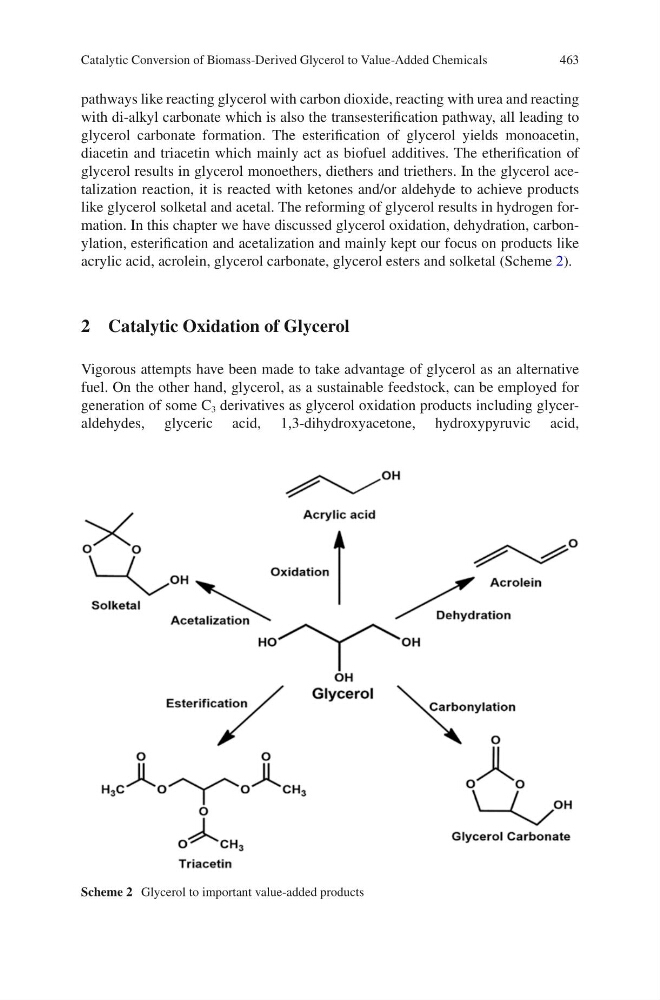
acrylic acid, acrolein, glycerol carbonate, glycerol esters and solketal (Scheme 2).
2 Catalytic Oxidation of Glycerol
Vigorous attempts have been made to take advantage of glycerol as an alternative
fuel. On the other hand, glycerol, as a sustainable feedstock, can be employed for
generation of some C 3 derivatives as glycerol oxidation products including glyceraldehydes, glyceric acid, 1,3-dihydroxyacetone, hydroxypyruvic acid,
Scheme 2 Glycerol to important value-added products
Catalytic Conversion of Biomass-Derived Glycerol to Value-Added Chemicals
pathways like reacting glycerol with carbon dioxide, reacting with urea and reacting
with di-alkyl carbonate which is also the transesterification pathway, all leading to
glycerol carbonate formation. The esterification of glycerol yields monoacetin,
diacetin and triacetin which mainly act as biofuel additives. The etherification of
glycerol results in glycerol monoethers, diethers and triethers. In the glycerol acetalization reaction, it is reacted with ketones and/or aldehyde to achieve products
like glycerol solketal and acetal. The reforming of glycerol results in hydrogen formation. In this chapter we have discussed glycerol oxidation, dehydration, carbonylation, esterification and acetalization and mainly kept our focus on products like
acrylic acid, acrolein, glycerol carbonate, glycerol esters and solketal (Scheme 2).
2 Catalytic Oxidation of Glycerol
Vigorous attempts have been made to take advantage of glycerol as an alternative
fuel. On the other hand, glycerol, as a sustainable feedstock, can be employed for
generation of some C 3 derivatives as glycerol oxidation products including glyceraldehydes, glyceric acid, 1,3-dihydroxyacetone, hydroxypyruvic acid,
Scheme 2 Glycerol to important value-added products
Catalytic Conversion of Biomass-Derived Glycerol to Value-Added Chemicals