

413
3 Non-directed C(sp
3
)–H
Hetero-functionalization Approaches
Whereas the mainstream of C(sp
3
)–H hetero-functionalization of aliphatic carboxylic acid synthons relies on transition metal-catalyzed directed approaches, only a
handful of non-directed strategies were disclosed. In the latter class of approaches,
the transition metal catalyst does not expedite the formation of a metallacycle intermediate via chelation assistance; rather, it promotes the hetero-functionalization
through the formation of either an enol or a stabilized radical intermediate from the
carboxylate equivalent. It is noteworthy to mention that these approaches commonly lead to α-hetero-functionalization of aliphatic carboxylates, with few exception of β-functionalization(s). However, few instances of non-directed approaches
proceed through a transient interplay between the substrate and the metal catalyst.
3.1 Hetero-functionalization of Carboxylic Acid Esters
and Amides
In general, simple carboxylic acid esters and amides, in the presence of an α-proton,
form enol ester/amide that undergoes swift metal-assisted activation/heterofunctionalization process at the α-position. Furthermore, these substrates can stabilize an in situ-generated radical at the α-position and are therefore prone to
α-hetero-functionalization through non-directed strategy.
C–N bond formations: A straightforward oxidative α-amination approach of carboxylic esters with secondary amines has been developed under copper catalysis. In
this reaction, the promptly formed enol ester undergoes bromination with CuBr 2 at
the α-position via a Cu-bound enolate intermediate. Ready nucleophilic replacement of the α-bromo substituent by a secondary amine produces the α-amino ester
product (Scheme 55) [112].
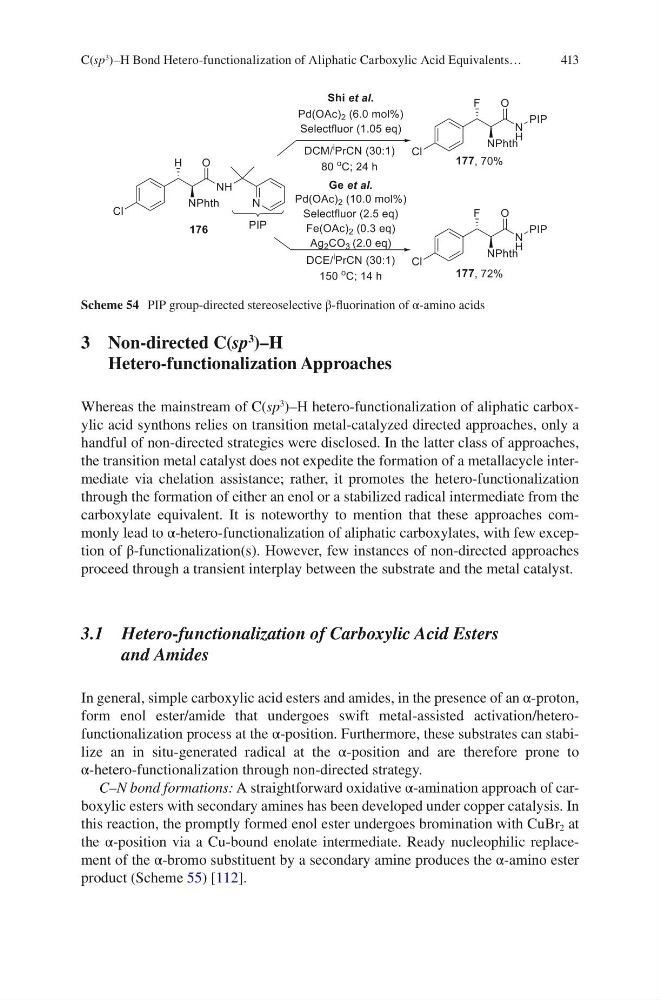
Scheme 54 PIP group-directed stereoselective β-fluorination of α-amino acids
C(sp
3
)–H Bond Hetero-functionalization of Aliphatic Carboxylic Acid Equivalents…
3 Non-directed C(sp
3
)–H
Hetero-functionalization Approaches
Whereas the mainstream of C(sp
3
)–H hetero-functionalization of aliphatic carboxylic acid synthons relies on transition metal-catalyzed directed approaches, only a
handful of non-directed strategies were disclosed. In the latter class of approaches,
the transition metal catalyst does not expedite the formation of a metallacycle intermediate via chelation assistance; rather, it promotes the hetero-functionalization
through the formation of either an enol or a stabilized radical intermediate from the
carboxylate equivalent. It is noteworthy to mention that these approaches commonly lead to α-hetero-functionalization of aliphatic carboxylates, with few exception of β-functionalization(s). However, few instances of non-directed approaches
proceed through a transient interplay between the substrate and the metal catalyst.
3.1 Hetero-functionalization of Carboxylic Acid Esters
and Amides
In general, simple carboxylic acid esters and amides, in the presence of an α-proton,
form enol ester/amide that undergoes swift metal-assisted activation/heterofunctionalization process at the α-position. Furthermore, these substrates can stabilize an in situ-generated radical at the α-position and are therefore prone to
α-hetero-functionalization through non-directed strategy.
C–N bond formations: A straightforward oxidative α-amination approach of carboxylic esters with secondary amines has been developed under copper catalysis. In
this reaction, the promptly formed enol ester undergoes bromination with CuBr 2 at
the α-position via a Cu-bound enolate intermediate. Ready nucleophilic replacement of the α-bromo substituent by a secondary amine produces the α-amino ester
product (Scheme 55) [112].
Scheme 54 PIP group-directed stereoselective β-fluorination of α-amino acids
C(sp
3
)–H Bond Hetero-functionalization of Aliphatic Carboxylic Acid Equivalents…