

23
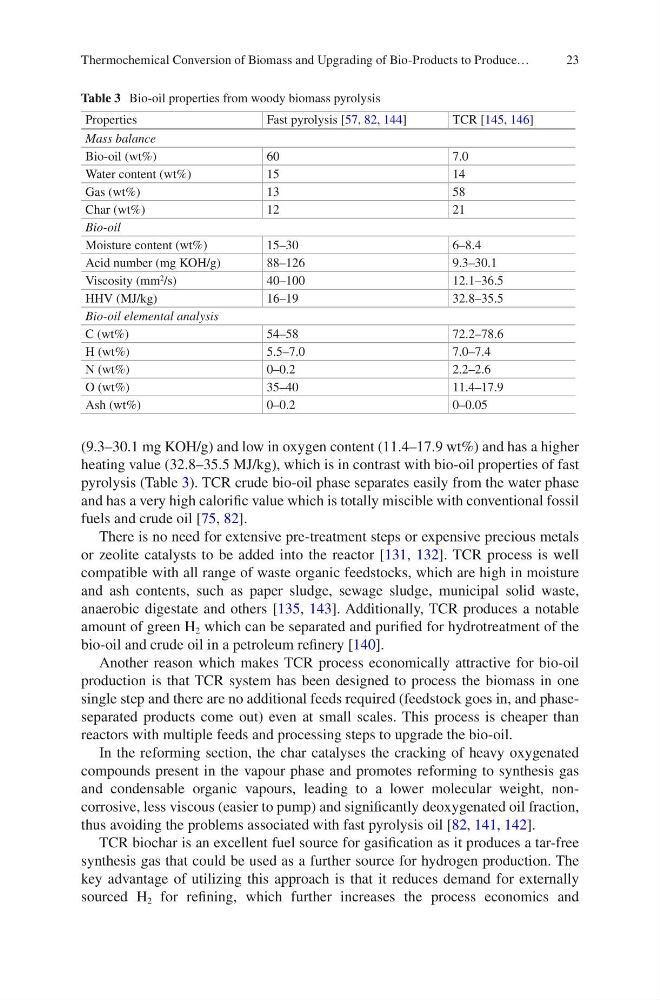
(9.3–30.1 mg KOH/g) and low in oxygen content (11.4–17.9 wt%) and has a higher
heating value (32.8–35.5 MJ/kg), which is in contrast with bio-oil properties of fast
pyrolysis (Table 3). TCR crude bio-oil phase separates easily from the water phase
and has a very high calorific value which is totally miscible with conventional fossil
fuels and crude oil [75, 82].
There is no need for extensive pre-treatment steps or expensive precious metals
or zeolite catalysts to be added into the reactor [131, 132]. TCR process is well
compatible with all range of waste organic feedstocks, which are high in moisture
and ash contents, such as paper sludge, sewage sludge, municipal solid waste,
anaerobic digestate and others [135, 143]. Additionally, TCR produces a notable
amount of green H 2 which can be separated and purified for hydrotreatment of the
bio-oil and crude oil in a petroleum refinery [140].
Another reason which makes TCR process economically attractive for bio-oil
production is that TCR system has been designed to process the biomass in one
single step and there are no additional feeds required (feedstock goes in, and phaseseparated products come out) even at small scales. This process is cheaper than
reactors with multiple feeds and processing steps to upgrade the bio-oil.
In the reforming section, the char catalyses the cracking of heavy oxygenated
compounds present in the vapour phase and promotes reforming to synthesis gas
and condensable organic vapours, leading to a lower molecular weight, noncorrosive, less viscous (easier to pump) and significantly deoxygenated oil fraction,
thus avoiding the problems associated with fast pyrolysis oil [82, 141, 142].
TCR biochar is an excellent fuel source for gasification as it produces a tar-free
synthesis gas that could be used as a further source for hydrogen production. The
key advantage of utilizing this approach is that it reduces demand for externally
sourced H 2 for refining, which further increases the process economics and
Table 3 Bio-oil properties from woody biomass pyrolysis
Properties
Fast pyrolysis [57, 82, 144]
TCR [145, 146]
Mass balance
Bio-oil (wt%)
60
7.0
Water content (wt%)
15
14
Gas (wt%)
13
58
Char (wt%)
12
21
Bio-oil
Moisture content (wt%)
15–30
6–8.4
Acid number (mg KOH/g)
88–126
9.3–30.1
Viscosity (mm
2 /s)
40–100
12.1–36.5
HHV (MJ/kg)
16–19
32.8–35.5
Bio-oil elemental analysis
C (wt%)
54–58
72.2–78.6
H (wt%)
5.5–7.0
7.0–7.4
N (wt%)
0–0.2
2.2–2.6
O (wt%)
35–40
11.4–17.9
Ash (wt%)
0–0.2
0–0.05
Thermochemical Conversion of Biomass and Upgrading of Bio-Products to Produce…
(9.3–30.1 mg KOH/g) and low in oxygen content (11.4–17.9 wt%) and has a higher
heating value (32.8–35.5 MJ/kg), which is in contrast with bio-oil properties of fast
pyrolysis (Table 3). TCR crude bio-oil phase separates easily from the water phase
and has a very high calorific value which is totally miscible with conventional fossil
fuels and crude oil [75, 82].
There is no need for extensive pre-treatment steps or expensive precious metals
or zeolite catalysts to be added into the reactor [131, 132]. TCR process is well
compatible with all range of waste organic feedstocks, which are high in moisture
and ash contents, such as paper sludge, sewage sludge, municipal solid waste,
anaerobic digestate and others [135, 143]. Additionally, TCR produces a notable
amount of green H 2 which can be separated and purified for hydrotreatment of the
bio-oil and crude oil in a petroleum refinery [140].
Another reason which makes TCR process economically attractive for bio-oil
production is that TCR system has been designed to process the biomass in one
single step and there are no additional feeds required (feedstock goes in, and phaseseparated products come out) even at small scales. This process is cheaper than
reactors with multiple feeds and processing steps to upgrade the bio-oil.
In the reforming section, the char catalyses the cracking of heavy oxygenated
compounds present in the vapour phase and promotes reforming to synthesis gas
and condensable organic vapours, leading to a lower molecular weight, noncorrosive, less viscous (easier to pump) and significantly deoxygenated oil fraction,
thus avoiding the problems associated with fast pyrolysis oil [82, 141, 142].
TCR biochar is an excellent fuel source for gasification as it produces a tar-free
synthesis gas that could be used as a further source for hydrogen production. The
key advantage of utilizing this approach is that it reduces demand for externally
sourced H 2 for refining, which further increases the process economics and
Table 3 Bio-oil properties from woody biomass pyrolysis
Properties
Fast pyrolysis [57, 82, 144]
TCR [145, 146]
Mass balance
Bio-oil (wt%)
60
7.0
Water content (wt%)
15
14
Gas (wt%)
13
58
Char (wt%)
12
21
Bio-oil
Moisture content (wt%)
15–30
6–8.4
Acid number (mg KOH/g)
88–126
9.3–30.1
Viscosity (mm
2 /s)
40–100
12.1–36.5
HHV (MJ/kg)
16–19
32.8–35.5
Bio-oil elemental analysis
C (wt%)
54–58
72.2–78.6
H (wt%)
5.5–7.0
7.0–7.4
N (wt%)
0–0.2
2.2–2.6
O (wt%)
35–40
11.4–17.9
Ash (wt%)
0–0.2
0–0.05
Thermochemical Conversion of Biomass and Upgrading of Bio-Products to Produce…