

194
1. Washing with a larger excess volume of water
2. Distillation of the used solvent and subsequent centrifugation, filtration, and further washing of the by-product
3. Extraction using a unique water-immiscible solvent in multiple stages, washing
with water, and subsequent evaporation of the solvent used for extraction
Such procedures are interminable, tedious, inefficient, and not eco-friendly by
generating a large volume of effluent containing harmful solvents which are difficult to recycle.
1.4 Acid-Catalyzed Esterification
Since single-step base-catalyzed transesterification is sensitive to FFA in feedstock,
the FFA content in the feed oil needs to be lowered before transesterification reaction [5]. The FFA content in the feed oil can be lowered using several pretreatment
techniques such as neutralization and stripping off FFA as soap, distillation, and
esterification. In the first two techniques (neutralization and stripping and distillation), there will be a loss of FFA as soaps and waste, whereas in the esterification
process, FFA can be converted to biodiesel, and thus esterification is the most efficient process to reduce FFA content of oil [13].
Esterification is a reversible reaction carried out in the presence or absence of the
acid catalyst (homogeneous/heterogeneous) in which the equimolar amount of fatty
acid alkyl ester (biodiesel) and water can be produced by reacting equimolar quantities of FFA and alcohol [5] as shown in Fig. 4a. The esterification mechanism
involves the protonation of the carboxylic group to give carbocation (Fig. 4b). Then
the methanol initiates the nucleophilic attack on the carbocation as soon as it is
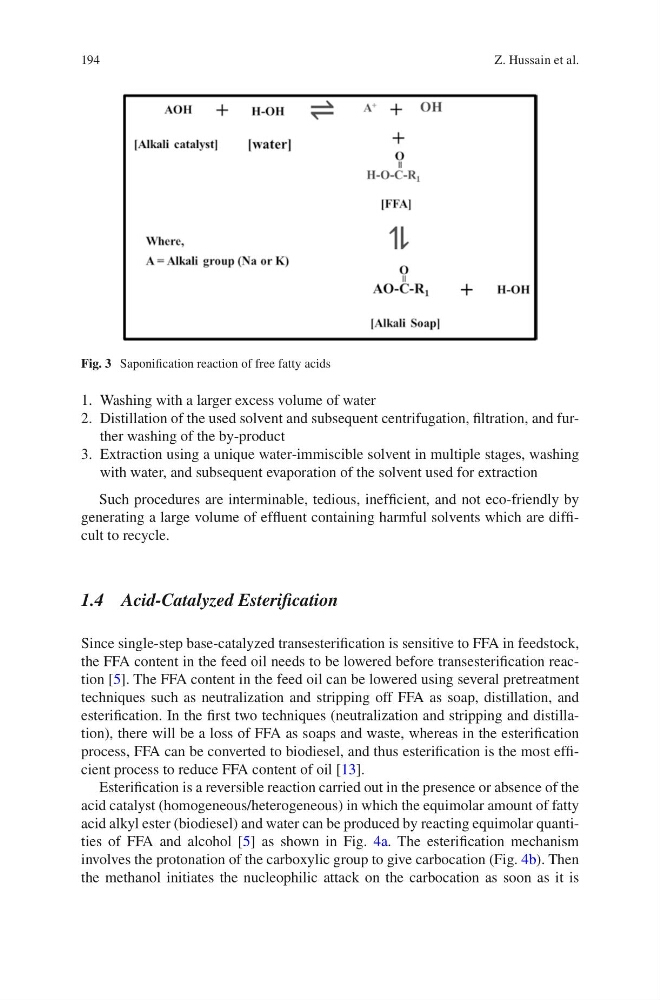
Fig. 3 Saponification reaction of free fatty acids
Z. Hussain et al.
1. Washing with a larger excess volume of water
2. Distillation of the used solvent and subsequent centrifugation, filtration, and further washing of the by-product
3. Extraction using a unique water-immiscible solvent in multiple stages, washing
with water, and subsequent evaporation of the solvent used for extraction
Such procedures are interminable, tedious, inefficient, and not eco-friendly by
generating a large volume of effluent containing harmful solvents which are difficult to recycle.
1.4 Acid-Catalyzed Esterification
Since single-step base-catalyzed transesterification is sensitive to FFA in feedstock,
the FFA content in the feed oil needs to be lowered before transesterification reaction [5]. The FFA content in the feed oil can be lowered using several pretreatment
techniques such as neutralization and stripping off FFA as soap, distillation, and
esterification. In the first two techniques (neutralization and stripping and distillation), there will be a loss of FFA as soaps and waste, whereas in the esterification
process, FFA can be converted to biodiesel, and thus esterification is the most efficient process to reduce FFA content of oil [13].
Esterification is a reversible reaction carried out in the presence or absence of the
acid catalyst (homogeneous/heterogeneous) in which the equimolar amount of fatty
acid alkyl ester (biodiesel) and water can be produced by reacting equimolar quantities of FFA and alcohol [5] as shown in Fig. 4a. The esterification mechanism
involves the protonation of the carboxylic group to give carbocation (Fig. 4b). Then
the methanol initiates the nucleophilic attack on the carbocation as soon as it is
Fig. 3 Saponification reaction of free fatty acids
Z. Hussain et al.