

188
1.2 Conventional Catalysts for Biodiesel Production
Industrial-scale biodiesel is produced by transesterification of oil and alcohol using
a conventional base catalyst like KOH or NaOH which requires high-quality feedstocks [7]. Reaction like transesterification of vegetable oil with alcohol or esterification of FFA with alcohol is used to produce biodiesel. Principally, the only
transesterification of triglycerides (a single-step process or a two-step process) is
used to produce high-quality biodiesel [5]. A single-step base-catalyzed transesterification process can be used when high-quality vegetable oil whose FFA content is
less than 3 wt% is available. In any case, a two-step process that can be carried out
in either of two approaches is preferred for oils containing greater than 3 wt%
FFA. In one approach, FFAs in the oil undergo esterification first to produce an
esterified product, and in a due course, triglycerides present in the esterified oil are
subjected to transesterification to give high-quality biodiesel. This approach is suitable only when FFA in the oil is not much higher than the FFA limit set for the
single-step process. In another approach, FFAs are produced first by hydrolysis of
triglycerides present in vegetable oil, and subsequently, biodiesel is produced by
esterification of FFAs. This approach is particularly useful when utilizing oils containing a very high amount of FFA like jojoba oil, date seed oil, mahua, palm fatty
acid distillates, Jatropha oil, and Karanja oil to produce biodiesel. Therefore, the
conventional transesterification and esterification processes and their disadvantages
in handling the sustainable and cheaper feedstocks are discussed in subsequent
sections.
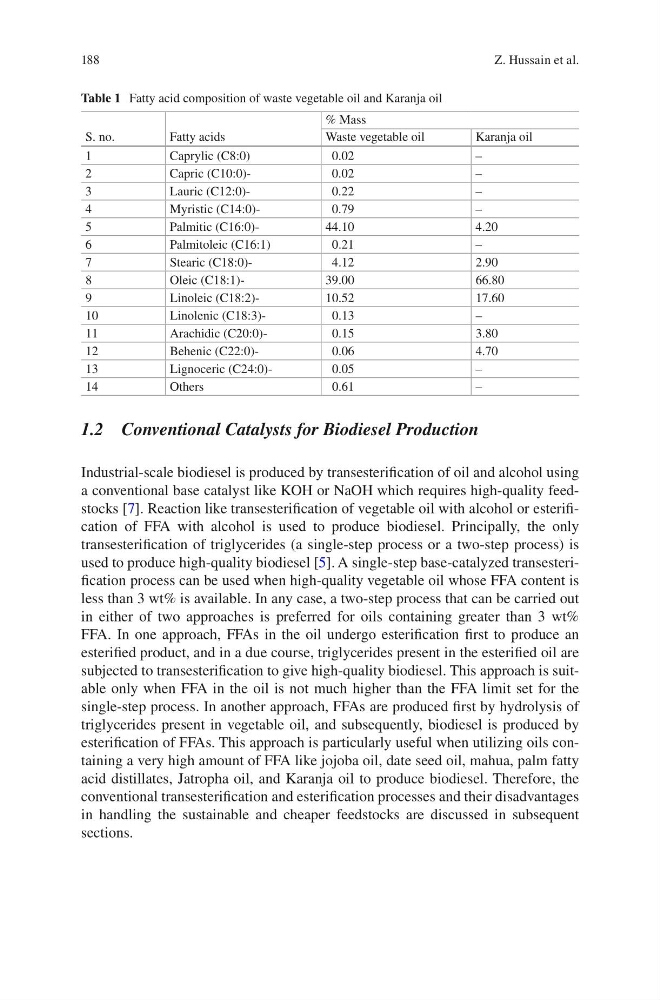
Table 1 Fatty acid composition of waste vegetable oil and Karanja oil
S. no.
Fatty acids
% Mass
Waste vegetable oil
Karanja oil
1
Caprylic (C8:0)
0.02
–
2
Capric (C10:0)0.02
–
3
Lauric (C12:0)0.22
–
4
Myristic (C14:0)0.79
–
5
Palmitic (C16:0)44.10
4.20
6
Palmitoleic (C16:1)
0.21
–
7
Stearic (C18:0)4.12
2.90
8
Oleic (C18:1)39.00
66.80
9
Linoleic (C18:2)10.52
17.60
10
Linolenic (C18:3)0.13
–
11
Arachidic (C20:0)0.15
3.80
12
Behenic (C22:0)0.06
4.70
13
Lignoceric (C24:0)0.05
–
14
Others
0.61
–
Z. Hussain et al.
1.2 Conventional Catalysts for Biodiesel Production
Industrial-scale biodiesel is produced by transesterification of oil and alcohol using
a conventional base catalyst like KOH or NaOH which requires high-quality feedstocks [7]. Reaction like transesterification of vegetable oil with alcohol or esterification of FFA with alcohol is used to produce biodiesel. Principally, the only
transesterification of triglycerides (a single-step process or a two-step process) is
used to produce high-quality biodiesel [5]. A single-step base-catalyzed transesterification process can be used when high-quality vegetable oil whose FFA content is
less than 3 wt% is available. In any case, a two-step process that can be carried out
in either of two approaches is preferred for oils containing greater than 3 wt%
FFA. In one approach, FFAs in the oil undergo esterification first to produce an
esterified product, and in a due course, triglycerides present in the esterified oil are
subjected to transesterification to give high-quality biodiesel. This approach is suitable only when FFA in the oil is not much higher than the FFA limit set for the
single-step process. In another approach, FFAs are produced first by hydrolysis of
triglycerides present in vegetable oil, and subsequently, biodiesel is produced by
esterification of FFAs. This approach is particularly useful when utilizing oils containing a very high amount of FFA like jojoba oil, date seed oil, mahua, palm fatty
acid distillates, Jatropha oil, and Karanja oil to produce biodiesel. Therefore, the
conventional transesterification and esterification processes and their disadvantages
in handling the sustainable and cheaper feedstocks are discussed in subsequent
sections.
Table 1 Fatty acid composition of waste vegetable oil and Karanja oil
S. no.
Fatty acids
% Mass
Waste vegetable oil
Karanja oil
1
Caprylic (C8:0)
0.02
–
2
Capric (C10:0)0.02
–
3
Lauric (C12:0)0.22
–
4
Myristic (C14:0)0.79
–
5
Palmitic (C16:0)44.10
4.20
6
Palmitoleic (C16:1)
0.21
–
7
Stearic (C18:0)4.12
2.90
8
Oleic (C18:1)39.00
66.80
9
Linoleic (C18:2)10.52
17.60
10
Linolenic (C18:3)0.13
–
11
Arachidic (C20:0)0.15
3.80
12
Behenic (C22:0)0.06
4.70
13
Lignoceric (C24:0)0.05
–
14
Others
0.61
–
Z. Hussain et al.