

155
4 Role of Media in Microalgae HTL
Water plays a critical role in HTL. At normal temperature, water is a polar liquid
and does not react with organic compounds. Elevated temperature (superheated
water) leads to the breaking of strong hydrogen bonds which makes water less polar
and behave more like an organic solvent and, consequently, highly reactive and
miscible with organic components. Under these conditions, the dielectric constant
(relative permittivity), ε r , of water decreases substantially. For example, dielectric
constant reduces from 78.85 to 19.66 with a temperature increase from 25 °C to
300 °C. Secondly, an increase in temperature increases the self-ionization (dissociation) of water. Water dissociates into hydronium ion (H3O
+
) and hydroxide ions
(OH
−
) as a reversible reaction. The ionic product of water (K W ), written as molar
concentrations of the ionic products of water, increases considerably (1 × 10
−14
to
1 × 10
−12
) with an increase in temperature from normal to subcritical range:
K W
H O
OH
= é ë
ù û é ë
ù û
+
3
–
(1)
With the increase in the dissociation constant, water acts as a catalyst and accelerates the rate of both acid- and base-catalyzed reactions. These two factors make
water, at an elevated temperature, a good solvent for nonpolar hydrophobic hydrocarbons and lead to fast and efficient reactions. The phase diagram of water depicting the dominant reaction in each region is shown in (Fig. 5).
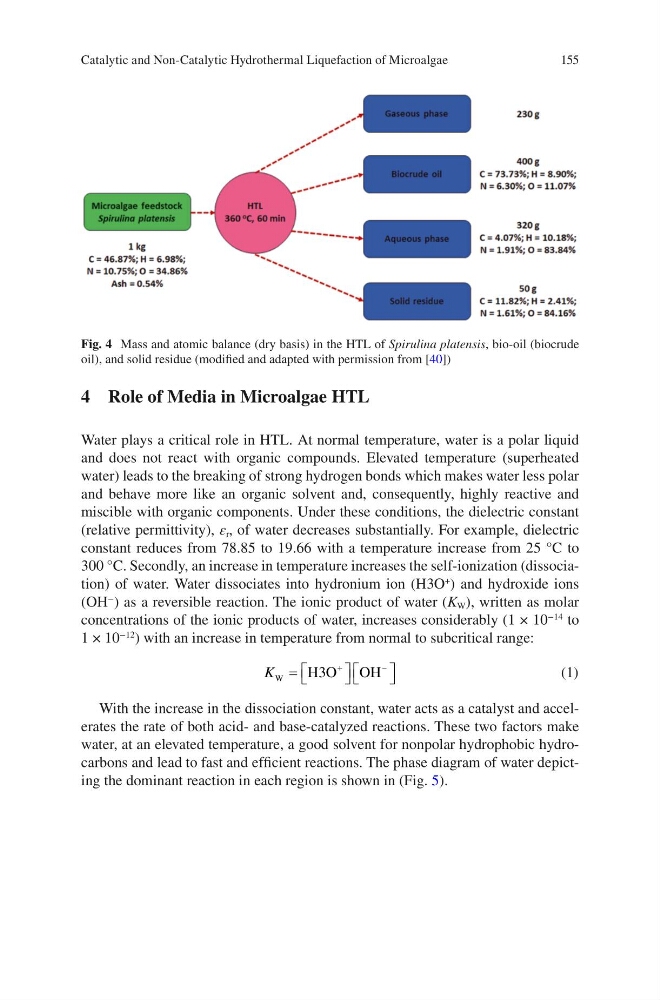
Fig. 4 Mass and atomic balance (dry basis) in the HTL of Spirulina platensis, bio-oil (biocrude
oil), and solid residue (modified and adapted with permission from [40])
Catalytic and Non-Catalytic Hydrothermal Liquefaction of Microalgae
4 Role of Media in Microalgae HTL
Water plays a critical role in HTL. At normal temperature, water is a polar liquid
and does not react with organic compounds. Elevated temperature (superheated
water) leads to the breaking of strong hydrogen bonds which makes water less polar
and behave more like an organic solvent and, consequently, highly reactive and
miscible with organic components. Under these conditions, the dielectric constant
(relative permittivity), ε r , of water decreases substantially. For example, dielectric
constant reduces from 78.85 to 19.66 with a temperature increase from 25 °C to
300 °C. Secondly, an increase in temperature increases the self-ionization (dissociation) of water. Water dissociates into hydronium ion (H3O
+
) and hydroxide ions
(OH
−
) as a reversible reaction. The ionic product of water (K W ), written as molar
concentrations of the ionic products of water, increases considerably (1 × 10
−14
to
1 × 10
−12
) with an increase in temperature from normal to subcritical range:
K W
H O
OH
= é ë
ù û é ë
ù û
+
3
–
(1)
With the increase in the dissociation constant, water acts as a catalyst and accelerates the rate of both acid- and base-catalyzed reactions. These two factors make
water, at an elevated temperature, a good solvent for nonpolar hydrophobic hydrocarbons and lead to fast and efficient reactions. The phase diagram of water depicting the dominant reaction in each region is shown in (Fig. 5).
Fig. 4 Mass and atomic balance (dry basis) in the HTL of Spirulina platensis, bio-oil (biocrude
oil), and solid residue (modified and adapted with permission from [40])
Catalytic and Non-Catalytic Hydrothermal Liquefaction of Microalgae