

123
modified feedstock (glucose), and its non-toxic, 100% biodegradable nature makes
it biocompatible with many types of cells.
4.5 Synthesis of PHBV
Similar to PHB, PHBV [21–23] is also synthesized by three enzymes 3-ketothiolase, acetoacetyl-CoA reductase, and PHA synthase. Several PHAs with monomers
ranging from C 3 to C 5 have been synthesized in bacterium A. eutrophus. The addition
of propionic acid to a medium with glucose produces a copolymer comprising
3-hydroxybutyrate, and 3-hydroxyvalerate gives PHBV whose biosynthetic pathway
is shown in Fig. 6.
4.6 Poly(3-hydroxybutyrate-co3-hydroxyhexanoate) (PHBHHx)
PHBHH x is a co-polyester that consists of 3-hydroxybutyrate (3HB) and 3-hydroxyhexanoate (3HH x ) repeating units [22, 24]. As compared to other PHA family members, PHBHH x (Fig. 7) has better biodegradability and adjustable mechanical
properties (crystallinity, melting point, flexibility, ductility, etc.), which are mainly
dependent on the 3HH x content of the polymer. Some of the properties are summarized in Table 4 [21–24].
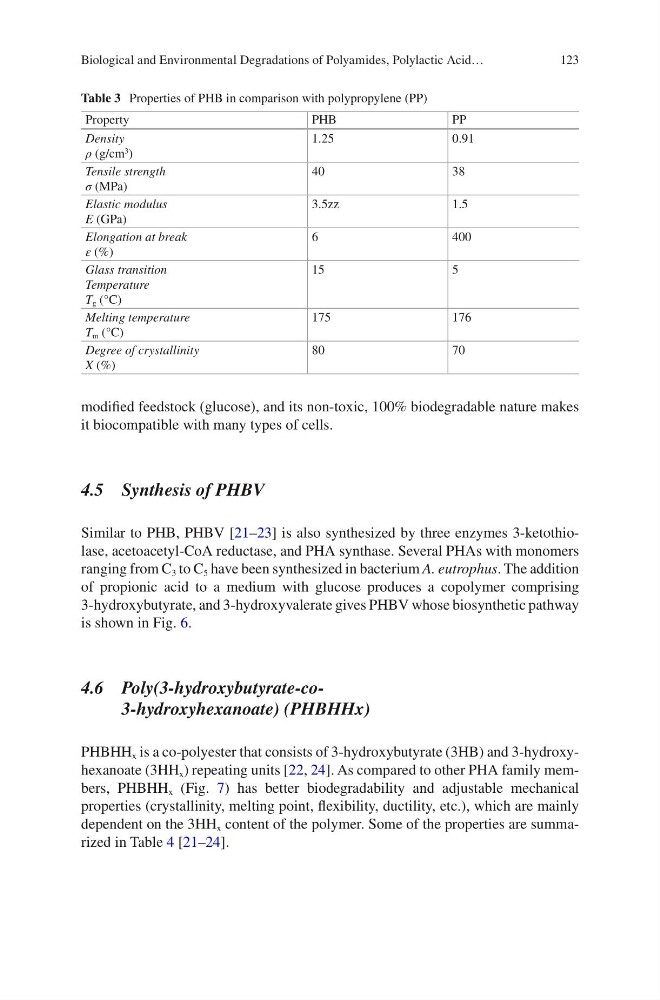
Table 3 Properties of PHB in comparison with polypropylene (PP)
Property
PHB
PP
Density
ρ (g/cm
3 )
1.25
0.91
Tensile strength
σ (MPa)
40
38
Elastic modulus
E (GPa)
3.5zz
1.5
Elongation at break
ε (%)
6
400
Glass transition
Temperature
T g (°C)
15
5
Melting temperature
T m (°C)
175
176
Degree of crystallinity
X (%)
80
70
Biological and Environmental Degradations of Polyamides, Polylactic Acid…
modified feedstock (glucose), and its non-toxic, 100% biodegradable nature makes
it biocompatible with many types of cells.
4.5 Synthesis of PHBV
Similar to PHB, PHBV [21–23] is also synthesized by three enzymes 3-ketothiolase, acetoacetyl-CoA reductase, and PHA synthase. Several PHAs with monomers
ranging from C 3 to C 5 have been synthesized in bacterium A. eutrophus. The addition
of propionic acid to a medium with glucose produces a copolymer comprising
3-hydroxybutyrate, and 3-hydroxyvalerate gives PHBV whose biosynthetic pathway
is shown in Fig. 6.
4.6 Poly(3-hydroxybutyrate-co3-hydroxyhexanoate) (PHBHHx)
PHBHH x is a co-polyester that consists of 3-hydroxybutyrate (3HB) and 3-hydroxyhexanoate (3HH x ) repeating units [22, 24]. As compared to other PHA family members, PHBHH x (Fig. 7) has better biodegradability and adjustable mechanical
properties (crystallinity, melting point, flexibility, ductility, etc.), which are mainly
dependent on the 3HH x content of the polymer. Some of the properties are summarized in Table 4 [21–24].
Table 3 Properties of PHB in comparison with polypropylene (PP)
Property
PHB
PP
Density
ρ (g/cm
3 )
1.25
0.91
Tensile strength
σ (MPa)
40
38
Elastic modulus
E (GPa)
3.5zz
1.5
Elongation at break
ε (%)
6
400
Glass transition
Temperature
T g (°C)
15
5
Melting temperature
T m (°C)
175
176
Degree of crystallinity
X (%)
80
70
Biological and Environmental Degradations of Polyamides, Polylactic Acid…