

28
interaction has to be performed according to a procedure that specifies in particular
how the thermometer must be prepared and applied for guaranteeing that it is in
appropriate thermal contact and for the appropriate duration with the body. In the
case of the measurement of reading comprehension ability, the empirical process is
the sequence of actions performed by the student in reading the text and answering
the questions; this sequence has to be performed according to a procedure that specifies in particular how the student must be preliminarily instructed, how the
environment must be prepared, the way the text passage and the test are delivered to
the student, the time given to the student for completing the process, etc.
2.2.3 Measurement as a process whose input is a property of
an object
The third black box condition of measurement is that it requires an interaction with
an object and that this interaction must be related to a property of that object, as
depicted in Fig. 2.5.
This assumes a basic ontology including objects having properties. For example,
both rods and human beings are, in this sense, objects, and both have a temperature
and a length (in the case of human beings, their height) among their properties; on
the other hand, human beings, but not rods, have reading comprehension abilities.
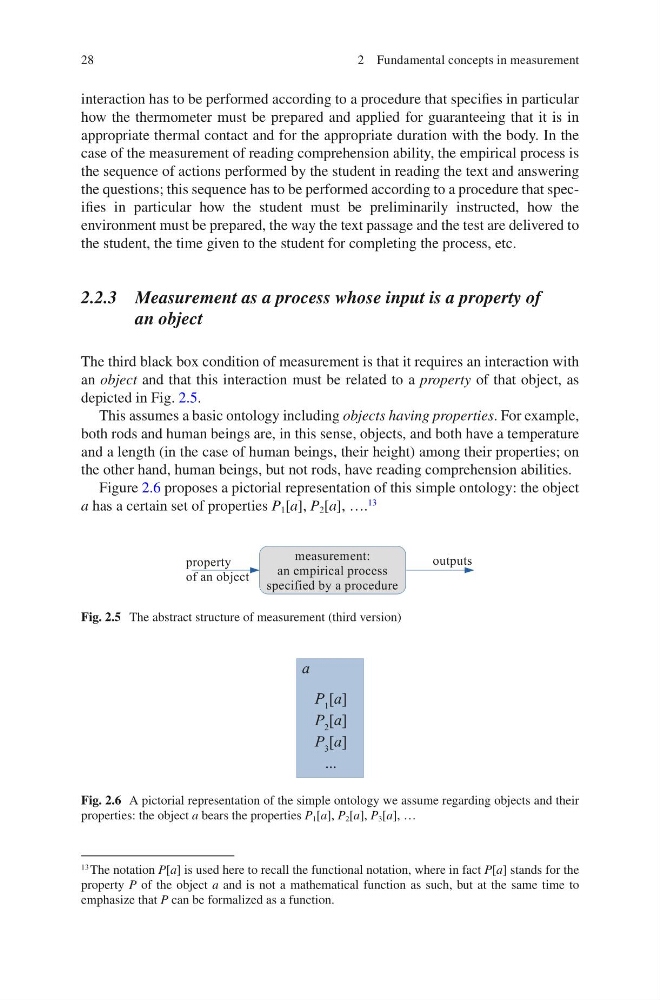
Figure 2.6 proposes a pictorial representation of this simple ontology: the object
a has a certain set of properties P 1 [a], P 2 [a], ….
13
13 The notation P[a] is used here to recall the functional notation, where in fact P[a] stands for the
property P of the object a and is not a mathematical function as such, but at the same time to
emphasize that P can be formalized as a function.
Fig. 2.5 The abstract structure of measurement (third version)
Fig. 2.6 A pictorial representation of the simple ontology we assume regarding objects and their
properties: the object a bears the properties P 1 [a], P 2 [a], P 3 [a], …
2 Fundamental concepts in measurement
interaction has to be performed according to a procedure that specifies in particular
how the thermometer must be prepared and applied for guaranteeing that it is in
appropriate thermal contact and for the appropriate duration with the body. In the
case of the measurement of reading comprehension ability, the empirical process is
the sequence of actions performed by the student in reading the text and answering
the questions; this sequence has to be performed according to a procedure that specifies in particular how the student must be preliminarily instructed, how the
environment must be prepared, the way the text passage and the test are delivered to
the student, the time given to the student for completing the process, etc.
2.2.3 Measurement as a process whose input is a property of
an object
The third black box condition of measurement is that it requires an interaction with
an object and that this interaction must be related to a property of that object, as
depicted in Fig. 2.5.
This assumes a basic ontology including objects having properties. For example,
both rods and human beings are, in this sense, objects, and both have a temperature
and a length (in the case of human beings, their height) among their properties; on
the other hand, human beings, but not rods, have reading comprehension abilities.
Figure 2.6 proposes a pictorial representation of this simple ontology: the object
a has a certain set of properties P 1 [a], P 2 [a], ….
13
13 The notation P[a] is used here to recall the functional notation, where in fact P[a] stands for the
property P of the object a and is not a mathematical function as such, but at the same time to
emphasize that P can be formalized as a function.
Fig. 2.5 The abstract structure of measurement (third version)
Fig. 2.6 A pictorial representation of the simple ontology we assume regarding objects and their
properties: the object a bears the properties P 1 [a], P 2 [a], P 3 [a], …
2 Fundamental concepts in measurement