

24
These assumptions and terminological choices are discussed and justified in
what follows.
8
2.2.1 Measurement as an empirical process
The first black box condition of measurement is that it is an empirical process that
operates on inputs to produce outputs, as depicted in Fig. 2.2.
The condition that measurement is empirical aims primarily at demarcating it
from theoretical processes, such as computation and logical inference, and thought
experiments: computing a mathematical function produces a value but is not a measurement; conceiving of an experiment that produces values of quantities is not
measurement. This is not as trivial as one might suppose. Particularly in the context
of geometry, the distinction between measurement and computation is in fact sometimes confused, and the computation of the length of segments or of the areas of
surfaces is typically called a measurement (Lockhart, 2012). With the widespread
use of numerical methods based on computers, the idea of purely computational
(and therefore nonempirical) experiments, for example as performed through simulation, is now common. Hence, characterizing measurement as an experimental pro8 Even though these terminological choices are very preliminary, they are not void of content. In
particular, while we maintain that properties of objects may be empirical entities, modeled as variables, sometimes properties and variables are not formally distinguished, “for economy of notation”, as in the case of the GUM (JCGM, 2008: 4.1.1, Note 1), or perhaps because the difference
between empirical entities and their mathematical counterparts is neglected. A telling example is
found in the following sentence: “By a variable we will mean an attribute, measurement or inquiry
that may take on one of several possible outcomes, or values, from a specified domain” (Pearl,
2009: p. 8), which also includes the term “measurement” plausibly in the sense of.
While this sentence may make sense in Pearl’s terms, given our definitions above, it makes no
sense.
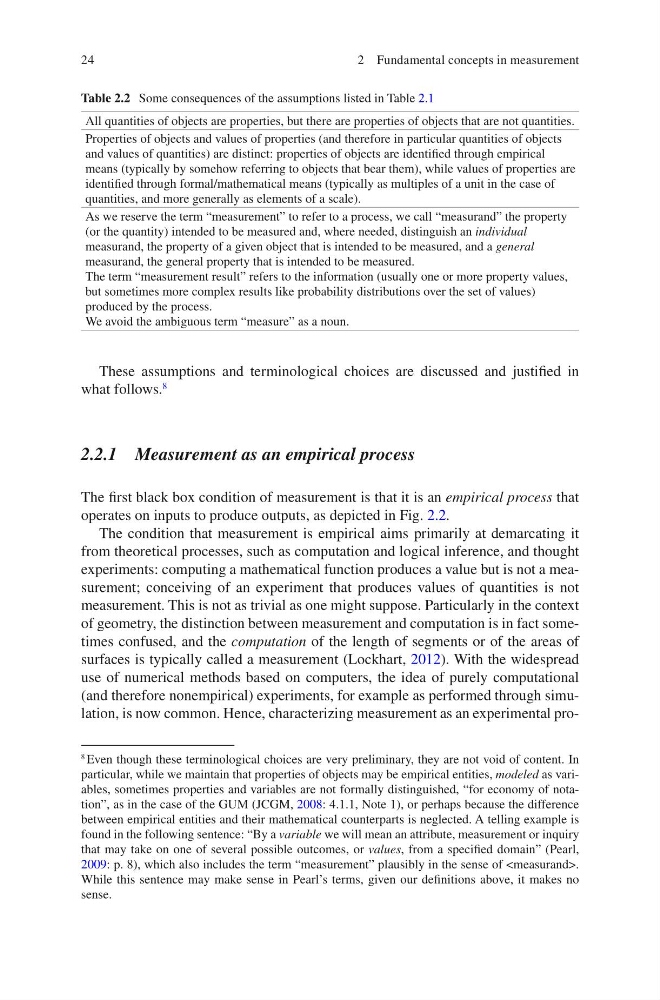
Table 2.2 Some consequences of the assumptions listed in Table 2.1
All quantities of objects are properties, but there are properties of objects that are not quantities.
Properties of objects and values of properties (and therefore in particular quantities of objects
and values of quantities) are distinct: properties of objects are identified through empirical
means (typically by somehow referring to objects that bear them), while values of properties are
identified through formal/mathematical means (typically as multiples of a unit in the case of
quantities, and more generally as elements of a scale).
As we reserve the term “measurement” to refer to a process, we call “measurand” the property
(or the quantity) intended to be measured and, where needed, distinguish an individual
measurand, the property of a given object that is intended to be measured, and a general
measurand, the general property that is intended to be measured.
The term “measurement result” refers to the information (usually one or more property values,
but sometimes more complex results like probability distributions over the set of values)
produced by the process.
We avoid the ambiguous term “measure” as a noun.
2 Fundamental concepts in measurement
These assumptions and terminological choices are discussed and justified in
what follows.
8
2.2.1 Measurement as an empirical process
The first black box condition of measurement is that it is an empirical process that
operates on inputs to produce outputs, as depicted in Fig. 2.2.
The condition that measurement is empirical aims primarily at demarcating it
from theoretical processes, such as computation and logical inference, and thought
experiments: computing a mathematical function produces a value but is not a measurement; conceiving of an experiment that produces values of quantities is not
measurement. This is not as trivial as one might suppose. Particularly in the context
of geometry, the distinction between measurement and computation is in fact sometimes confused, and the computation of the length of segments or of the areas of
surfaces is typically called a measurement (Lockhart, 2012). With the widespread
use of numerical methods based on computers, the idea of purely computational
(and therefore nonempirical) experiments, for example as performed through simulation, is now common. Hence, characterizing measurement as an experimental pro8 Even though these terminological choices are very preliminary, they are not void of content. In
particular, while we maintain that properties of objects may be empirical entities, modeled as variables, sometimes properties and variables are not formally distinguished, “for economy of notation”, as in the case of the GUM (JCGM, 2008: 4.1.1, Note 1), or perhaps because the difference
between empirical entities and their mathematical counterparts is neglected. A telling example is
found in the following sentence: “By a variable we will mean an attribute, measurement or inquiry
that may take on one of several possible outcomes, or values, from a specified domain” (Pearl,
2009: p. 8), which also includes the term “measurement” plausibly in the sense of
While this sentence may make sense in Pearl’s terms, given our definitions above, it makes no
sense.
Table 2.2 Some consequences of the assumptions listed in Table 2.1
All quantities of objects are properties, but there are properties of objects that are not quantities.
Properties of objects and values of properties (and therefore in particular quantities of objects
and values of quantities) are distinct: properties of objects are identified through empirical
means (typically by somehow referring to objects that bear them), while values of properties are
identified through formal/mathematical means (typically as multiples of a unit in the case of
quantities, and more generally as elements of a scale).
As we reserve the term “measurement” to refer to a process, we call “measurand” the property
(or the quantity) intended to be measured and, where needed, distinguish an individual
measurand, the property of a given object that is intended to be measured, and a general
measurand, the general property that is intended to be measured.
The term “measurement result” refers to the information (usually one or more property values,
but sometimes more complex results like probability distributions over the set of values)
produced by the process.
We avoid the ambiguous term “measure” as a noun.
2 Fundamental concepts in measurement