

121
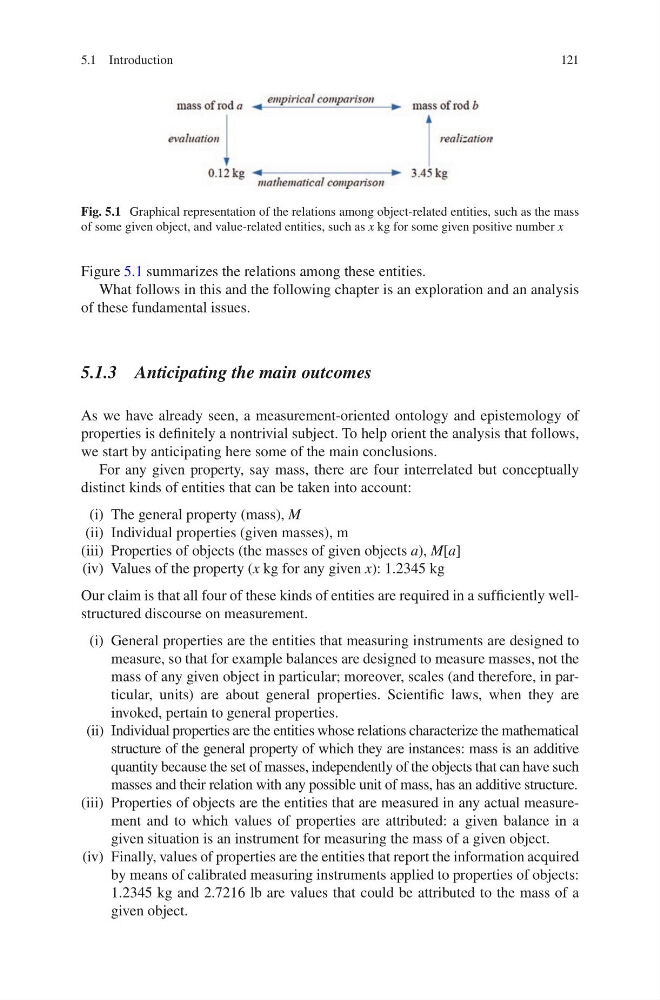
Figure 5.1 summarizes the relations among these entities.
What follows in this and the following chapter is an exploration and an analysis
of these fundamental issues.
5.1.3 Anticipating the main outcomes
As we have already seen, a measurement-oriented ontology and epistemology of
properties is definitely a nontrivial subject. To help orient the analysis that follows,
we start by anticipating here some of the main conclusions.
For any given property, say mass, there are four interrelated but conceptually
distinct kinds of entities that can be taken into account:
(i) The general property (mass), M
(ii) Individual properties (given masses), m
(iii) Properties of objects (the masses of given objects a), M[a]
(iv) Values of the property (x kg for any given x): 1.2345 kg
Our claim is that all four of these kinds of entities are required in a sufficiently wellstructured discourse on measurement.
(i) General properties are the entities that measuring instruments are designed to
measure, so that for example balances are designed to measure masses, not the
mass of any given object in particular; moreover, scales (and therefore, in particular, units) are about general properties. Scientific laws, when they are
invoked, pertain to general properties.
(ii) Individual properties are the entities whose relations characterize the mathematical
structure of the general property of which they are instances: mass is an additive
quantity because the set of masses, independently of the objects that can have such
masses and their relation with any possible unit of mass, has an additive structure.
(iii) Properties of objects are the entities that are measured in any actual measurement and to which values of properties are attributed: a given balance in a
given situation is an instrument for measuring the mass of a given object.
(iv) Finally, values of properties are the entities that report the information acquired
by means of calibrated measuring instruments applied to properties of objects:
1.2345 kg and 2.7216 lb are values that could be attributed to the mass of a
given object.
Fig. 5.1 Graphical representation of the relations among object-related entities, such as the mass
of some given object, and value-related entities, such as x kg for some given positive number x
5.1 Introduction
Figure 5.1 summarizes the relations among these entities.
What follows in this and the following chapter is an exploration and an analysis
of these fundamental issues.
5.1.3 Anticipating the main outcomes
As we have already seen, a measurement-oriented ontology and epistemology of
properties is definitely a nontrivial subject. To help orient the analysis that follows,
we start by anticipating here some of the main conclusions.
For any given property, say mass, there are four interrelated but conceptually
distinct kinds of entities that can be taken into account:
(i) The general property (mass), M
(ii) Individual properties (given masses), m
(iii) Properties of objects (the masses of given objects a), M[a]
(iv) Values of the property (x kg for any given x): 1.2345 kg
Our claim is that all four of these kinds of entities are required in a sufficiently wellstructured discourse on measurement.
(i) General properties are the entities that measuring instruments are designed to
measure, so that for example balances are designed to measure masses, not the
mass of any given object in particular; moreover, scales (and therefore, in particular, units) are about general properties. Scientific laws, when they are
invoked, pertain to general properties.
(ii) Individual properties are the entities whose relations characterize the mathematical
structure of the general property of which they are instances: mass is an additive
quantity because the set of masses, independently of the objects that can have such
masses and their relation with any possible unit of mass, has an additive structure.
(iii) Properties of objects are the entities that are measured in any actual measurement and to which values of properties are attributed: a given balance in a
given situation is an instrument for measuring the mass of a given object.
(iv) Finally, values of properties are the entities that report the information acquired
by means of calibrated measuring instruments applied to properties of objects:
1.2345 kg and 2.7216 lb are values that could be attributed to the mass of a
given object.
Fig. 5.1 Graphical representation of the relations among object-related entities, such as the mass
of some given object, and value-related entities, such as x kg for some given positive number x
5.1 Introduction