

104
property is partly or entirely dependent on the individual’s experience of its existing. However, the subjective, first-person ontology of such properties does not preclude the possibility of others gaining knowledge of them in a publically explainable,
credibly documented way.
31
Further, the connection between reality and a given measurement result is not in
itself compromised by the fact that we choose to model the world in a particular
way. In fact, models used in the service of scientific inquiry (including both substantive models, such as a cognitive-developmental model of learning in a particular
domain, and psychometric models, such as the Rasch model) serve precisely the
purpose of organizing experience. The acknowledgment that there is no single “true
model”—that is, models (and theories) are always underdetermined by facts—does
not preclude the possibility of comparing models in terms of their quality. Thus it is
possible to maintain a realist perspective about the targets of measurement—objects
and their properties—while acknowledging that knowledge is constructed by
humans, and can be so constructed in multiple ways. To make the point in a slightly
different way, borrowing terms from Nancy Cartwright (1983) and Ian Hacking
(1983), one can subscribe to entity realism without necessarily subscribing to theory
realism; that is, the entities that feature in scientific theories may be regarded as real,
without requiring a judgment about the truth of the theories into which they figure.
On the other hand, conceptual pluralism is not the same as relativism: responsible
science requires awareness and acknowledgment of the roles that conceptual frameworks, methodological approaches, and statistical models play in shaping investiga31 Using terminology from Searle (1992), ontological subjectivity is not necessarily a barrier to
epistemic objectivity (see also Maul, 2013). Or, using terminology from Dennett (1987), we may
choose to model and study psychosocial properties by adopting a “design stance” and (especially)
an “intentional stance” rather than a “physical stance”.
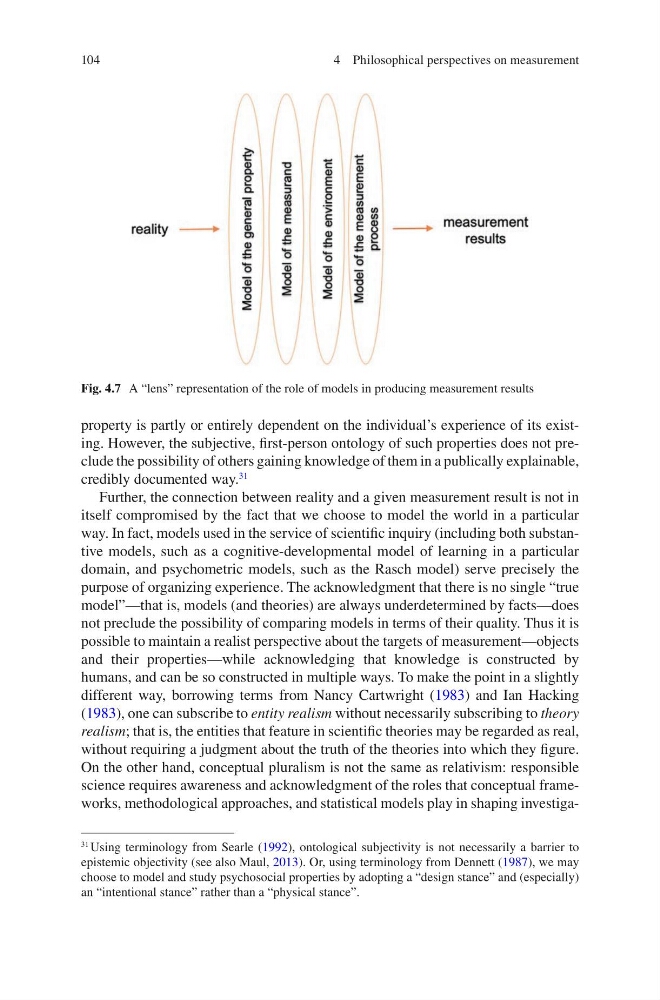
Fig. 4.7 A “lens” representation of the role of models in producing measurement results
4 Philosophical perspectives on measurement
property is partly or entirely dependent on the individual’s experience of its existing. However, the subjective, first-person ontology of such properties does not preclude the possibility of others gaining knowledge of them in a publically explainable,
credibly documented way.
31
Further, the connection between reality and a given measurement result is not in
itself compromised by the fact that we choose to model the world in a particular
way. In fact, models used in the service of scientific inquiry (including both substantive models, such as a cognitive-developmental model of learning in a particular
domain, and psychometric models, such as the Rasch model) serve precisely the
purpose of organizing experience. The acknowledgment that there is no single “true
model”—that is, models (and theories) are always underdetermined by facts—does
not preclude the possibility of comparing models in terms of their quality. Thus it is
possible to maintain a realist perspective about the targets of measurement—objects
and their properties—while acknowledging that knowledge is constructed by
humans, and can be so constructed in multiple ways. To make the point in a slightly
different way, borrowing terms from Nancy Cartwright (1983) and Ian Hacking
(1983), one can subscribe to entity realism without necessarily subscribing to theory
realism; that is, the entities that feature in scientific theories may be regarded as real,
without requiring a judgment about the truth of the theories into which they figure.
On the other hand, conceptual pluralism is not the same as relativism: responsible
science requires awareness and acknowledgment of the roles that conceptual frameworks, methodological approaches, and statistical models play in shaping investiga31 Using terminology from Searle (1992), ontological subjectivity is not necessarily a barrier to
epistemic objectivity (see also Maul, 2013). Or, using terminology from Dennett (1987), we may
choose to model and study psychosocial properties by adopting a “design stance” and (especially)
an “intentional stance” rather than a “physical stance”.
Fig. 4.7 A “lens” representation of the role of models in producing measurement results
4 Philosophical perspectives on measurement