

77
Thus, a stereotyped (or naïve) form of realism conflates the model with what is
modeled and therefore measured properties and measured values.
5
Whenever the
essential distinction between empirical and informational entities is absent, the simple position emerges that each property of each object has, inherently, a value, i.e.,
its “true value”. The view that measurement aims at discovering such “true values”
of properties can also be recognized in the conceptual foundation of the theory of
measurement errors developed by Pierre Simon Laplace and Karl Friedrich Gauss
at the beginning of the nineteenth century (see, e.g., Rossi, 2014: ch. 2; Stigler,
1986), in which any quantity is assumed to have its own inherent (and in this sense
“true”) value, and the observed variability of the measurement results is explained
as deriving from the introduction of errors. As discussed by Stephen Stigler (1986,
1992), the theory of errors was originally developed within the context of astronomy, wherein it seemed sensible to suppose that, for example, a planet really does
5 The usual notation “measured property of an object = measured value of a property” (which we
have introduced as the Basic Evaluation Equation in Sect. 2.2.4) might contribute to such a confusion. As an example, consider the relation c = 299,792,458 m/s: Does the symbol “c” stand for (a)
the speed of light in vacuum or (b) its value? In the first case the relation conveys a claim about the
physical world, which (were the metre defined independently of the speed of light in vacuum) is in
principle true or false: the ratio of the speed of light in vacuum and the metre is 299,792,458. In the
second case the relation is just a conventional alias: “c” is synonymous with “299,792,458 m/s”.
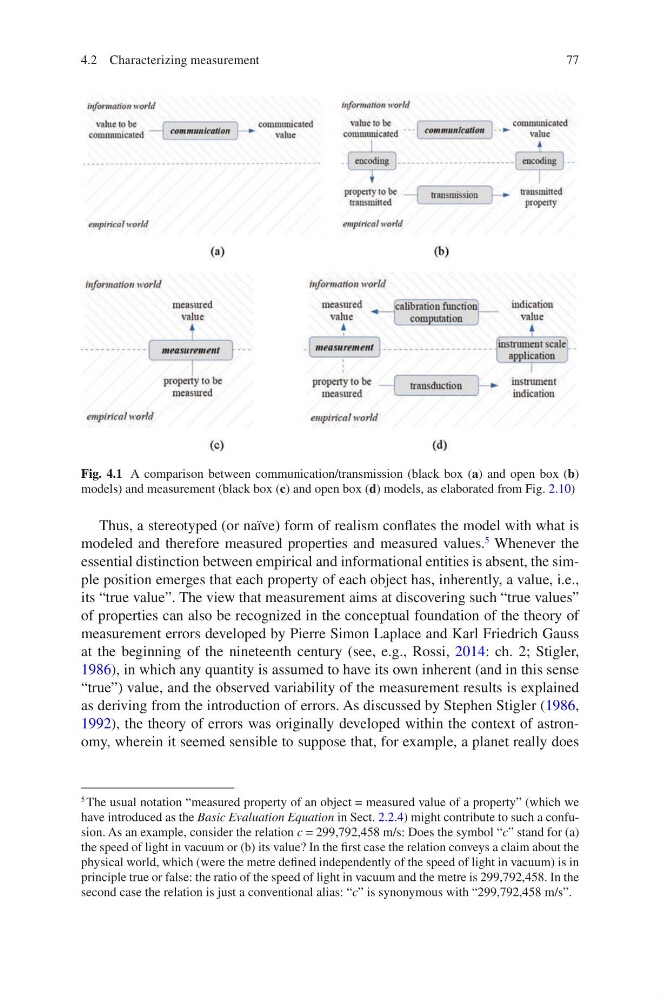
Fig. 4.1 A comparison between communication/transmission (black box (a) and open box (b)
models) and measurement (black box (c) and open box (d) models, as elaborated from Fig. 2.10)
4.2 Characterizing measurement
Thus, a stereotyped (or naïve) form of realism conflates the model with what is
modeled and therefore measured properties and measured values.
5
Whenever the
essential distinction between empirical and informational entities is absent, the simple position emerges that each property of each object has, inherently, a value, i.e.,
its “true value”. The view that measurement aims at discovering such “true values”
of properties can also be recognized in the conceptual foundation of the theory of
measurement errors developed by Pierre Simon Laplace and Karl Friedrich Gauss
at the beginning of the nineteenth century (see, e.g., Rossi, 2014: ch. 2; Stigler,
1986), in which any quantity is assumed to have its own inherent (and in this sense
“true”) value, and the observed variability of the measurement results is explained
as deriving from the introduction of errors. As discussed by Stephen Stigler (1986,
1992), the theory of errors was originally developed within the context of astronomy, wherein it seemed sensible to suppose that, for example, a planet really does
5 The usual notation “measured property of an object = measured value of a property” (which we
have introduced as the Basic Evaluation Equation in Sect. 2.2.4) might contribute to such a confusion. As an example, consider the relation c = 299,792,458 m/s: Does the symbol “c” stand for (a)
the speed of light in vacuum or (b) its value? In the first case the relation conveys a claim about the
physical world, which (were the metre defined independently of the speed of light in vacuum) is in
principle true or false: the ratio of the speed of light in vacuum and the metre is 299,792,458. In the
second case the relation is just a conventional alias: “c” is synonymous with “299,792,458 m/s”.
Fig. 4.1 A comparison between communication/transmission (black box (a) and open box (b)
models) and measurement (black box (c) and open box (d) models, as elaborated from Fig. 2.10)
4.2 Characterizing measurement