

74
which we consider to be the three main stereotypes of measurement, as related to
naïve realism, operationalism, and representationalism.
4.2.1 Naïve realist perspectives on measurement
Realism builds upon the hypothesis that the world exists independently of us and
our understanding of it. Realist perspectives may acknowledge the importance of
models, but emphasize that any model is always a model of something that exists
independently of the model. Alternatively, a realist perspective might deny the
importance of models altogether, thus with the implication that our knowledge of
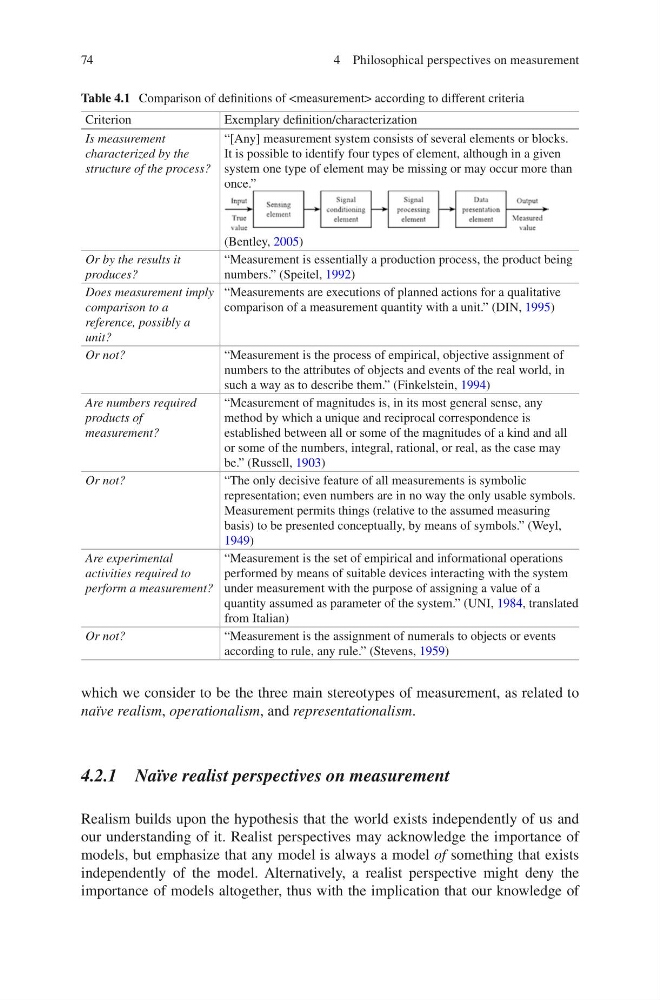
Table 4.1 Comparison of definitions of according to different criteria
Criterion
Exemplary definition/characterization
Is measurement
characterized by the
structure of the process?
“[Any] measurement system consists of several elements or blocks.
It is possible to identify four types of element, although in a given
system one type of element may be missing or may occur more than
once.”
(Bentley, 2005)
Or by the results it
produces?
“Measurement is essentially a production process, the product being
numbers.” (Speitel, 1992)
Does measurement imply
comparison to a
reference, possibly a
unit?
“Measurements are executions of planned actions for a qualitative
comparison of a measurement quantity with a unit.” (DIN, 1995)
Or not?
“Measurement is the process of empirical, objective assignment of
numbers to the attributes of objects and events of the real world, in
such a way as to describe them.” (Finkelstein, 1994)
Are numbers required
products of
measurement?
“Measurement of magnitudes is, in its most general sense, any
method by which a unique and reciprocal correspondence is
established between all or some of the magnitudes of a kind and all
or some of the numbers, integral, rational, or real, as the case may
be.” (Russell, 1903)
Or not?
“The only decisive feature of all measurements is symbolic
representation; even numbers are in no way the only usable symbols.
Measurement permits things (relative to the assumed measuring
basis) to be presented conceptually, by means of symbols.” (Weyl,
1949)
Are experimental
activities required to
perform a measurement?
“Measurement is the set of empirical and informational operations
performed by means of suitable devices interacting with the system
under measurement with the purpose of assigning a value of a
quantity assumed as parameter of the system.” (UNI, 1984, translated
from Italian)
Or not?
“Measurement is the assignment of numerals to objects or events
according to rule, any rule.” (Stevens, 1959)
4 Philosophical perspectives on measurement
which we consider to be the three main stereotypes of measurement, as related to
naïve realism, operationalism, and representationalism.
4.2.1 Naïve realist perspectives on measurement
Realism builds upon the hypothesis that the world exists independently of us and
our understanding of it. Realist perspectives may acknowledge the importance of
models, but emphasize that any model is always a model of something that exists
independently of the model. Alternatively, a realist perspective might deny the
importance of models altogether, thus with the implication that our knowledge of
Table 4.1 Comparison of definitions of
Criterion
Exemplary definition/characterization
Is measurement
characterized by the
structure of the process?
“[Any] measurement system consists of several elements or blocks.
It is possible to identify four types of element, although in a given
system one type of element may be missing or may occur more than
once.”
(Bentley, 2005)
Or by the results it
produces?
“Measurement is essentially a production process, the product being
numbers.” (Speitel, 1992)
Does measurement imply
comparison to a
reference, possibly a
unit?
“Measurements are executions of planned actions for a qualitative
comparison of a measurement quantity with a unit.” (DIN, 1995)
Or not?
“Measurement is the process of empirical, objective assignment of
numbers to the attributes of objects and events of the real world, in
such a way as to describe them.” (Finkelstein, 1994)
Are numbers required
products of
measurement?
“Measurement of magnitudes is, in its most general sense, any
method by which a unique and reciprocal correspondence is
established between all or some of the magnitudes of a kind and all
or some of the numbers, integral, rational, or real, as the case may
be.” (Russell, 1903)
Or not?
“The only decisive feature of all measurements is symbolic
representation; even numbers are in no way the only usable symbols.
Measurement permits things (relative to the assumed measuring
basis) to be presented conceptually, by means of symbols.” (Weyl,
1949)
Are experimental
activities required to
perform a measurement?
“Measurement is the set of empirical and informational operations
performed by means of suitable devices interacting with the system
under measurement with the purpose of assigning a value of a
quantity assumed as parameter of the system.” (UNI, 1984, translated
from Italian)
Or not?
“Measurement is the assignment of numerals to objects or events
according to rule, any rule.” (Stevens, 1959)
4 Philosophical perspectives on measurement