

66
3 In-Tether Chiral Center Induced Helical Peptide Modulators …
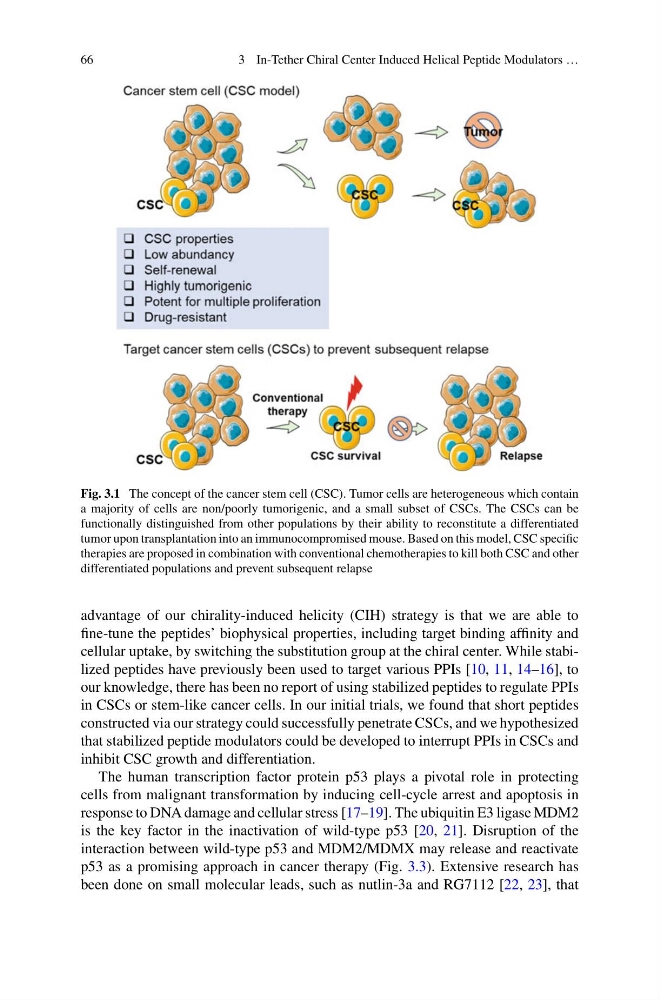
Fig. 3.1 The concept of the cancer stem cell (CSC). Tumor cells are heterogeneous which contain
a majority of cells are non/poorly tumorigenic, and a small subset of CSCs. The CSCs can be
functionally distinguished from other populations by their ability to reconstitute a differentiated
tumor upon transplantation into an immunocompromised mouse. Based on this model, CSC specific
therapies are proposed in combination with conventional chemotherapies to kill both CSC and other
differentiated populations and prevent subsequent relapse
advantage of our chirality-induced helicity (CIH) strategy is that we are able to
fine-tune the peptides’ biophysical properties, including target binding affinity and
cellular uptake, by switching the substitution group at the chiral center. While stabilized peptides have previously been used to target various PPIs [10, 11, 14–16], to
our knowledge, there has been no report of using stabilized peptides to regulate PPIs
in CSCs or stem-like cancer cells. In our initial trials, we found that short peptides
constructed via our strategy could successfully penetrate CSCs, and we hypothesized
that stabilized peptide modulators could be developed to interrupt PPIs in CSCs and
inhibit CSC growth and differentiation.
The human transcription factor protein p53 plays a pivotal role in protecting
cells from malignant transformation by inducing cell-cycle arrest and apoptosis in
response to DNA damage and cellular stress [17–19]. The ubiquitin E3 ligase MDM2
is the key factor in the inactivation of wild-type p53 [20, 21]. Disruption of the
interaction between wild-type p53 and MDM2/MDMX may release and reactivate
p53 as a promising approach in cancer therapy (Fig. 3.3). Extensive research has
been done on small molecular leads, such as nutlin-3a and RG7112 [22, 23], that
3 In-Tether Chiral Center Induced Helical Peptide Modulators …
Fig. 3.1 The concept of the cancer stem cell (CSC). Tumor cells are heterogeneous which contain
a majority of cells are non/poorly tumorigenic, and a small subset of CSCs. The CSCs can be
functionally distinguished from other populations by their ability to reconstitute a differentiated
tumor upon transplantation into an immunocompromised mouse. Based on this model, CSC specific
therapies are proposed in combination with conventional chemotherapies to kill both CSC and other
differentiated populations and prevent subsequent relapse
advantage of our chirality-induced helicity (CIH) strategy is that we are able to
fine-tune the peptides’ biophysical properties, including target binding affinity and
cellular uptake, by switching the substitution group at the chiral center. While stabilized peptides have previously been used to target various PPIs [10, 11, 14–16], to
our knowledge, there has been no report of using stabilized peptides to regulate PPIs
in CSCs or stem-like cancer cells. In our initial trials, we found that short peptides
constructed via our strategy could successfully penetrate CSCs, and we hypothesized
that stabilized peptide modulators could be developed to interrupt PPIs in CSCs and
inhibit CSC growth and differentiation.
The human transcription factor protein p53 plays a pivotal role in protecting
cells from malignant transformation by inducing cell-cycle arrest and apoptosis in
response to DNA damage and cellular stress [17–19]. The ubiquitin E3 ligase MDM2
is the key factor in the inactivation of wild-type p53 [20, 21]. Disruption of the
interaction between wild-type p53 and MDM2/MDMX may release and reactivate
p53 as a promising approach in cancer therapy (Fig. 3.3). Extensive research has
been done on small molecular leads, such as nutlin-3a and RG7112 [22, 23], that