

consensus being established (Velicogna and Wahr 2006;
Ramillien et al. 2006). However, recent estimates suggest
that some sectors, such as the Wilkes Land region, are losing
mass. As a result, the rate of change in ice-sheet mass is
estimated to be +11 ± 58 Gt/yr in 1992 (mass gain) and
−28 ± 30 Gt/yr (mass loss) in 2017 (IMBIE team, 2018).
Using a different technique, Rignot et al. (2019) estimate an
even larger mass loss from EAIS with a strongly reduced
uncertainty.
Overall, taking the Antarctic and Greenland ice sheets
together, it appears that mass losses have accelerated in
recent years. This trend is correlated with an increase in
surface ablation due to increasing temperatures, but also with
an acceleration of ice flow and subsequent dynamic ice
discharges.
Several processes are at the origin of ice mass loss. The
increasing surface ablation, mainly observed in Greenland, is
a direct response to increased atmospheric temperatures.
However, the ocean warming also plays a key role. As
oceanic temperatures rise, basal melting under the ice
shelves is enhanced. Eventually, this may lead to the dislocation of ice shelves and to the removal of the buttressing
effect mentioned above. This causes an inland retreat of the
grounding line (i.e. the limit beyond which ice starts to
float), and subsequently, an acceleration of the upstream
grounded ice. Theoretically, this process is only valid for
ice-shelves confined within their embayment. It is responsible for more than half of the ice mass loss at the margins of
the Antarctic ice sheet. For unconfined ice shelves, another
process, known as the Marine Ice Sheet Instability, may also
apply. For a marine-based ice sheet, such as the WAIS,
bedrock is often more depressed in the center of the ice sheet
than it is at the margins. As ice flux increases with ice
thickness, the position of the grounding line becomes highly
unstable in areas of reverse bed slopes, and any change in ice
thickness in the vicinity of the grounding line creates an
irreversible retreat of the grounding line position. A second
hypothesis is the lubrication of the subglacial substratum
caused by meltwater produced at the surface that percolates
to the base of the ice sheet. A third process that may be
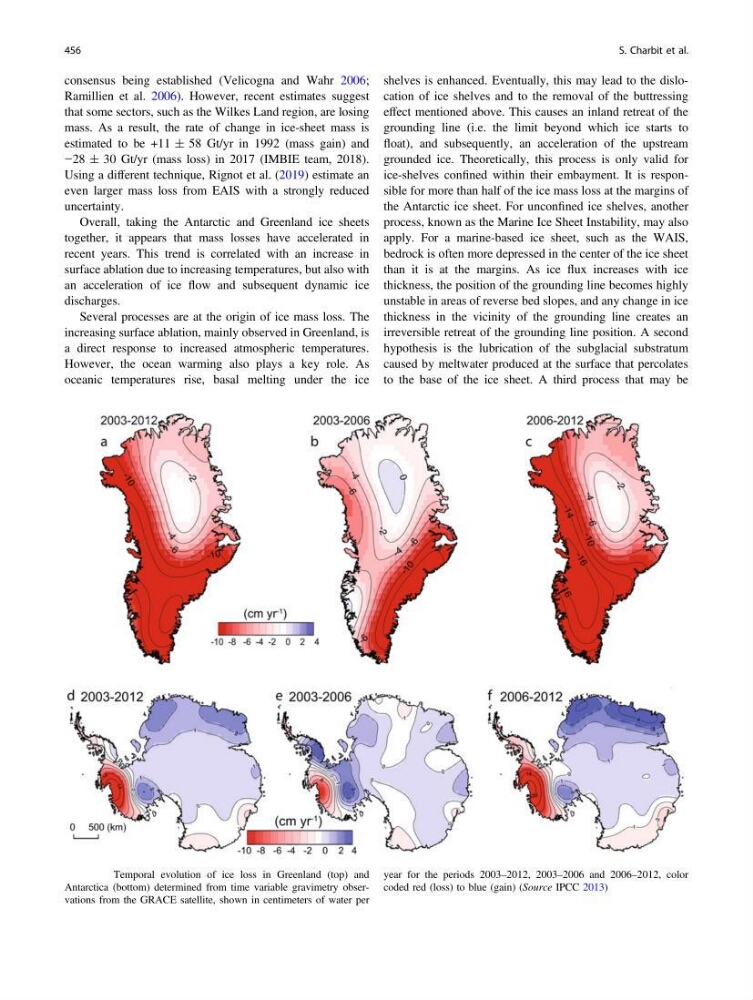
Fig. 31.6 Temporal evolution of ice loss in Greenland (top) and
Antarctica (bottom) determined from time variable gravimetry observations from the GRACE satellite, shown in centimeters of water per
year for the periods 2003–2012, 2003–2006 and 2006–2012, color
coded red (loss) to blue (gain) (Source IPCC 2013)
456
S. Charbit et al.
Ramillien et al. 2006). However, recent estimates suggest
that some sectors, such as the Wilkes Land region, are losing
mass. As a result, the rate of change in ice-sheet mass is
estimated to be +11 ± 58 Gt/yr in 1992 (mass gain) and
−28 ± 30 Gt/yr (mass loss) in 2017 (IMBIE team, 2018).
Using a different technique, Rignot et al. (2019) estimate an
even larger mass loss from EAIS with a strongly reduced
uncertainty.
Overall, taking the Antarctic and Greenland ice sheets
together, it appears that mass losses have accelerated in
recent years. This trend is correlated with an increase in
surface ablation due to increasing temperatures, but also with
an acceleration of ice flow and subsequent dynamic ice
discharges.
Several processes are at the origin of ice mass loss. The
increasing surface ablation, mainly observed in Greenland, is
a direct response to increased atmospheric temperatures.
However, the ocean warming also plays a key role. As
oceanic temperatures rise, basal melting under the ice
shelves is enhanced. Eventually, this may lead to the dislocation of ice shelves and to the removal of the buttressing
effect mentioned above. This causes an inland retreat of the
grounding line (i.e. the limit beyond which ice starts to
float), and subsequently, an acceleration of the upstream
grounded ice. Theoretically, this process is only valid for
ice-shelves confined within their embayment. It is responsible for more than half of the ice mass loss at the margins of
the Antarctic ice sheet. For unconfined ice shelves, another
process, known as the Marine Ice Sheet Instability, may also
apply. For a marine-based ice sheet, such as the WAIS,
bedrock is often more depressed in the center of the ice sheet
than it is at the margins. As ice flux increases with ice
thickness, the position of the grounding line becomes highly
unstable in areas of reverse bed slopes, and any change in ice
thickness in the vicinity of the grounding line creates an
irreversible retreat of the grounding line position. A second
hypothesis is the lubrication of the subglacial substratum
caused by meltwater produced at the surface that percolates
to the base of the ice sheet. A third process that may be
Fig. 31.6 Temporal evolution of ice loss in Greenland (top) and
Antarctica (bottom) determined from time variable gravimetry observations from the GRACE satellite, shown in centimeters of water per
year for the periods 2003–2012, 2003–2006 and 2006–2012, color
coded red (loss) to blue (gain) (Source IPCC 2013)
456
S. Charbit et al.