

The isotopic study (Sr/Nd) of the grains brought by the
icebergs to the North Atlantic during the Heinrich events
made it possible to determine where these icebergs came
from. Grousset et al. (1993) first demonstrated that within
the Heinrich levels, although most of the detrital material
brought to the Ruddiman belt came from the Laurentide ice
sheet, there were some detrital elements from European and
Icelandic ice sheets. Subsequent, more detailed studies of the
Heinrich events complemented this panorama by showing
that during each Heinrich event a level of detrital material
from the European ice sheets preceded the level coming
from the North American ice sheet. This almost systematic
phase relationship led these authors to question the possibility of a causal relationship: could the icebergs from the
European ice sheet be triggering the discharge of icebergs
from the North American ice sheet? Another interpretation
of these observations is to imagine that the European ice
sheets were smaller and oscillated faster than the larger
Laurentide ice sheet, causing them to precede it during the
Heinrich events, with no obvious causality between the two.
The Heinrich events continue to attract a lot of attention
from researchers, and many connections between these
iceberg armada events and other records sensitive to temperature, precipitation and other climatic factors have been
highlighted. This has led, in some publications, to a shortcut
being made between the iceberg armada event and its supposed climate impact. It should be noted that, strictly
speaking, a Heinrich event can only be defined by the presence of coarse detrital elements in sedimentary cores taken
from the Ruddiman band. This implies in particular that the
presence of detrital elements in an ocean core from
the Fennoscandian ice sheet margin does not necessarily
indicate a Heinrich event, but could be due to the melting of
icebergs from European ice sheets. In addition, it is not
generally possible to define Heinrich events from marine
records outside the Ruddiman band and, even less so, from
continental records. As a result, the term ‘cold Heinrich
event’ is often inaccurately used because it applies only to the
Ruddiman band, and is simplistic, because the drop in temperature is only one aspect of the climate changes associated
with a Heinrich event. One exception is pollen records from
marine cores containing detrital material. These provide
simultaneous records from the adjacent continent (pollen)
and from the iceberg armadas originating from the North
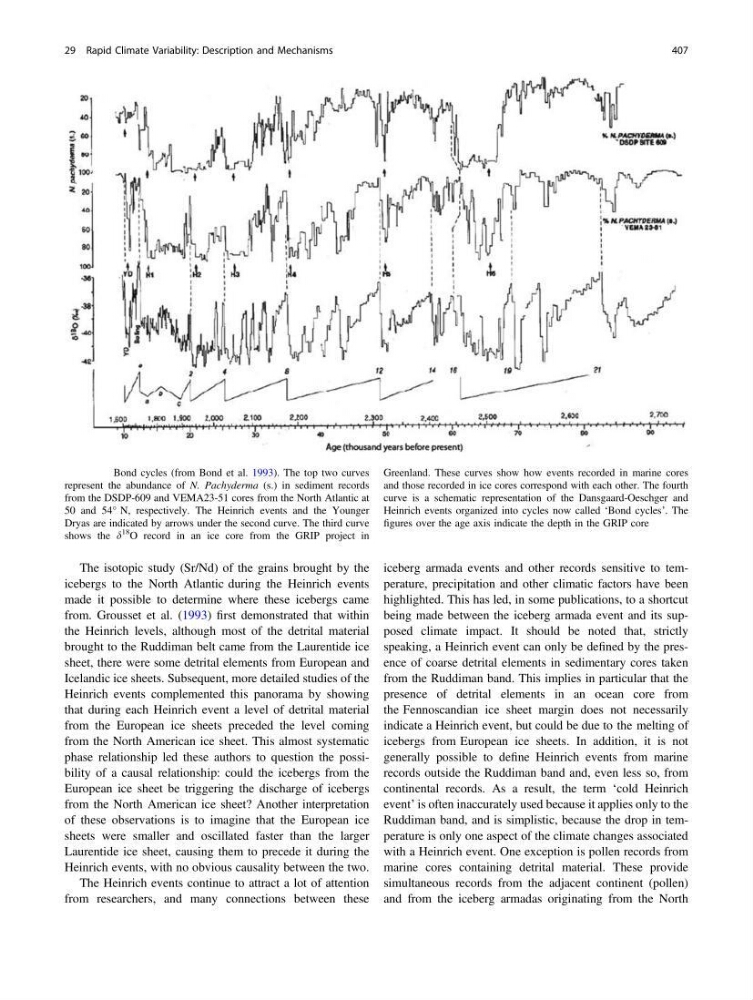
Fig. 29.1 Bond cycles (from Bond et al. 1993). The top two curves
represent the abundance of N. Pachyderma (s.) in sediment records
from the DSDP-609 and VEMA23-51 cores from the North Atlantic at
50 and 54° N, respectively. The Heinrich events and the Younger
Dryas are indicated by arrows under the second curve. The third curve
shows the d
18
O record in an ice core from the GRIP project in
Greenland. These curves show how events recorded in marine cores
and those recorded in ice cores correspond with each other. The fourth
curve is a schematic representation of the Dansgaard-Oeschger and
Heinrich events organized into cycles now called ‘Bond cycles’. The
figures over the age axis indicate the depth in the GRIP core
29 Rapid Climate Variability: Description and Mechanisms
407
icebergs to the North Atlantic during the Heinrich events
made it possible to determine where these icebergs came
from. Grousset et al. (1993) first demonstrated that within
the Heinrich levels, although most of the detrital material
brought to the Ruddiman belt came from the Laurentide ice
sheet, there were some detrital elements from European and
Icelandic ice sheets. Subsequent, more detailed studies of the
Heinrich events complemented this panorama by showing
that during each Heinrich event a level of detrital material
from the European ice sheets preceded the level coming
from the North American ice sheet. This almost systematic
phase relationship led these authors to question the possibility of a causal relationship: could the icebergs from the
European ice sheet be triggering the discharge of icebergs
from the North American ice sheet? Another interpretation
of these observations is to imagine that the European ice
sheets were smaller and oscillated faster than the larger
Laurentide ice sheet, causing them to precede it during the
Heinrich events, with no obvious causality between the two.
The Heinrich events continue to attract a lot of attention
from researchers, and many connections between these
iceberg armada events and other records sensitive to temperature, precipitation and other climatic factors have been
highlighted. This has led, in some publications, to a shortcut
being made between the iceberg armada event and its supposed climate impact. It should be noted that, strictly
speaking, a Heinrich event can only be defined by the presence of coarse detrital elements in sedimentary cores taken
from the Ruddiman band. This implies in particular that the
presence of detrital elements in an ocean core from
the Fennoscandian ice sheet margin does not necessarily
indicate a Heinrich event, but could be due to the melting of
icebergs from European ice sheets. In addition, it is not
generally possible to define Heinrich events from marine
records outside the Ruddiman band and, even less so, from
continental records. As a result, the term ‘cold Heinrich
event’ is often inaccurately used because it applies only to the
Ruddiman band, and is simplistic, because the drop in temperature is only one aspect of the climate changes associated
with a Heinrich event. One exception is pollen records from
marine cores containing detrital material. These provide
simultaneous records from the adjacent continent (pollen)
and from the iceberg armadas originating from the North
Fig. 29.1 Bond cycles (from Bond et al. 1993). The top two curves
represent the abundance of N. Pachyderma (s.) in sediment records
from the DSDP-609 and VEMA23-51 cores from the North Atlantic at
50 and 54° N, respectively. The Heinrich events and the Younger
Dryas are indicated by arrows under the second curve. The third curve
shows the d
18
O record in an ice core from the GRIP project in
Greenland. These curves show how events recorded in marine cores
and those recorded in ice cores correspond with each other. The fourth
curve is a schematic representation of the Dansgaard-Oeschger and
Heinrich events organized into cycles now called ‘Bond cycles’. The
figures over the age axis indicate the depth in the GRIP core
29 Rapid Climate Variability: Description and Mechanisms
407