

changes in temperature and humidity dominate the climate.
Vegetation takes the form of deciduous forests in humid
temperate regions, of drought-resistant flora in the
Mediterranean area or prairie grass in dry areas with strong
seasonal contrasts. Even further north is the area of the
boreal forest (taiga), consisting of birch and conifers, and
finally the tundra, where trees cannot grow. The mapping of
current vegetation is therefore closely linked to major climate zones.
In the oceans, the marine biosphere depends on the
temperature and salinity, but also on the amount of light and
nutrients available to enable the production of phytoplankton
which forms the basis of the ocean food chain. However, the
areas where the production of phytoplankton is abundant are
very limited. Apart from some coastal fringes of tropical
regions, the Southern Ocean and the North Atlantic are the
only areas capable of producing enough nutrients to continuously feed a wide range of living matter. Most of the
ocean areas consist of essentially sterile water, hence the
bright blue color of tropical waters.
The Role of the Biosphere
On land, vegetation alters the exchanges of energy, water and
momentum. Vegetation permits greater solar energy absorption than bare soil. Indeed, the albedo (reflection power) of
vegetation cover is 10–15% compared to 35% for bare soil.
Trees also enhance the evaporation from the surface, through
transpiration by the foliage and through pumping water from
the soil by the root system. Finally, a tree creates an obstacle at
the surface and increases turbulence close to the ground, hindering the wind more efficiently than bare soil. Based on
numerical simulations, these physical effects of vegetation
seem to have reinforced the intensification of monsoon rains
during the mid-Holocene, 6000 years ago.
During the 1980s, the discovery of past variations in
carbon dioxide and methane in air trapped in Antarctic ice
has directed the spotlight onto the role of the biosphere,
hitherto neglected. Indeed, these changes that show disruption of biogeochemical cycles cannot be explained solely by
the physical exchanges between the atmosphere and oceans.
The biosphere must be taken into account. The land-based
biosphere absorbs carbon dioxide by photosynthesis, but
emits it by respiration during the life of the plant and also
later, during its decomposition in the soil through the action
of bacteria. On average, as long as the climate remains
constant, the absorption and emission of carbon dioxide by
the land-based biosphere balances out and biological activity
recycles atmospheric carbon.
In the oceans, phytoplankton also absorbs carbon dioxide
through photosynthesis. This carbon is then reused to form
the tissues of other living organisms in the food chain as well
as organic waste of all kinds. In this way, phytoplankton is
responsible for a rapid recycling of carbon in the surface
waters of the oceans: the absorption carried out during
photosynthesis is offset by the constant emission of carbon
dioxide caused by the respiration of algae, zooplankton and
fish, as well as by the oxidation of waste. A fraction of this
carbon, about 10%, is subtracted from this recycling. Fecal
pellets, dead tissue and other waste sink as a result of their
weight and take some of the carbon absorbed at the surface
of the oceans with them to the ocean floor. Most of this
‘marine snow’ dissolves or decomposes through the action
of bacteria before reaching the bottom of the ocean, releasing
carbon organic matter which is added to the dissolved carbon in the deep ocean waters. A tiny fraction of this ‘marine
snow’, around 1% of the carbon taken from the surface, is
Temperature (°C)
El Niño event
Salinity
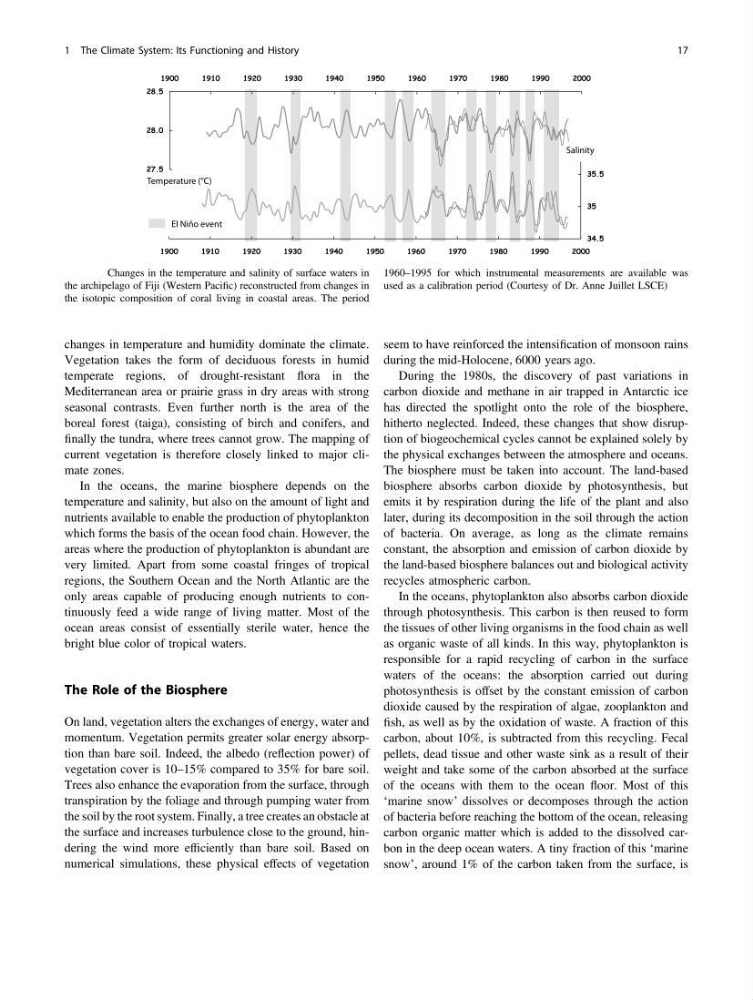
Fig. 1.9 Changes in the temperature and salinity of surface waters in
the archipelago of Fiji (Western Pacific) reconstructed from changes in
the isotopic composition of coral living in coastal areas. The period
1960–1995 for which instrumental measurements are available was
used as a calibration period (Courtesy of Dr. Anne Juillet LSCE)
1 The Climate System: Its Functioning and History
17
Vegetation takes the form of deciduous forests in humid
temperate regions, of drought-resistant flora in the
Mediterranean area or prairie grass in dry areas with strong
seasonal contrasts. Even further north is the area of the
boreal forest (taiga), consisting of birch and conifers, and
finally the tundra, where trees cannot grow. The mapping of
current vegetation is therefore closely linked to major climate zones.
In the oceans, the marine biosphere depends on the
temperature and salinity, but also on the amount of light and
nutrients available to enable the production of phytoplankton
which forms the basis of the ocean food chain. However, the
areas where the production of phytoplankton is abundant are
very limited. Apart from some coastal fringes of tropical
regions, the Southern Ocean and the North Atlantic are the
only areas capable of producing enough nutrients to continuously feed a wide range of living matter. Most of the
ocean areas consist of essentially sterile water, hence the
bright blue color of tropical waters.
The Role of the Biosphere
On land, vegetation alters the exchanges of energy, water and
momentum. Vegetation permits greater solar energy absorption than bare soil. Indeed, the albedo (reflection power) of
vegetation cover is 10–15% compared to 35% for bare soil.
Trees also enhance the evaporation from the surface, through
transpiration by the foliage and through pumping water from
the soil by the root system. Finally, a tree creates an obstacle at
the surface and increases turbulence close to the ground, hindering the wind more efficiently than bare soil. Based on
numerical simulations, these physical effects of vegetation
seem to have reinforced the intensification of monsoon rains
during the mid-Holocene, 6000 years ago.
During the 1980s, the discovery of past variations in
carbon dioxide and methane in air trapped in Antarctic ice
has directed the spotlight onto the role of the biosphere,
hitherto neglected. Indeed, these changes that show disruption of biogeochemical cycles cannot be explained solely by
the physical exchanges between the atmosphere and oceans.
The biosphere must be taken into account. The land-based
biosphere absorbs carbon dioxide by photosynthesis, but
emits it by respiration during the life of the plant and also
later, during its decomposition in the soil through the action
of bacteria. On average, as long as the climate remains
constant, the absorption and emission of carbon dioxide by
the land-based biosphere balances out and biological activity
recycles atmospheric carbon.
In the oceans, phytoplankton also absorbs carbon dioxide
through photosynthesis. This carbon is then reused to form
the tissues of other living organisms in the food chain as well
as organic waste of all kinds. In this way, phytoplankton is
responsible for a rapid recycling of carbon in the surface
waters of the oceans: the absorption carried out during
photosynthesis is offset by the constant emission of carbon
dioxide caused by the respiration of algae, zooplankton and
fish, as well as by the oxidation of waste. A fraction of this
carbon, about 10%, is subtracted from this recycling. Fecal
pellets, dead tissue and other waste sink as a result of their
weight and take some of the carbon absorbed at the surface
of the oceans with them to the ocean floor. Most of this
‘marine snow’ dissolves or decomposes through the action
of bacteria before reaching the bottom of the ocean, releasing
carbon organic matter which is added to the dissolved carbon in the deep ocean waters. A tiny fraction of this ‘marine
snow’, around 1% of the carbon taken from the surface, is
Temperature (°C)
El Niño event
Salinity
Fig. 1.9 Changes in the temperature and salinity of surface waters in
the archipelago of Fiji (Western Pacific) reconstructed from changes in
the isotopic composition of coral living in coastal areas. The period
1960–1995 for which instrumental measurements are available was
used as a calibration period (Courtesy of Dr. Anne Juillet LSCE)
1 The Climate System: Its Functioning and History
17