

54
V. P. Drachev et al.
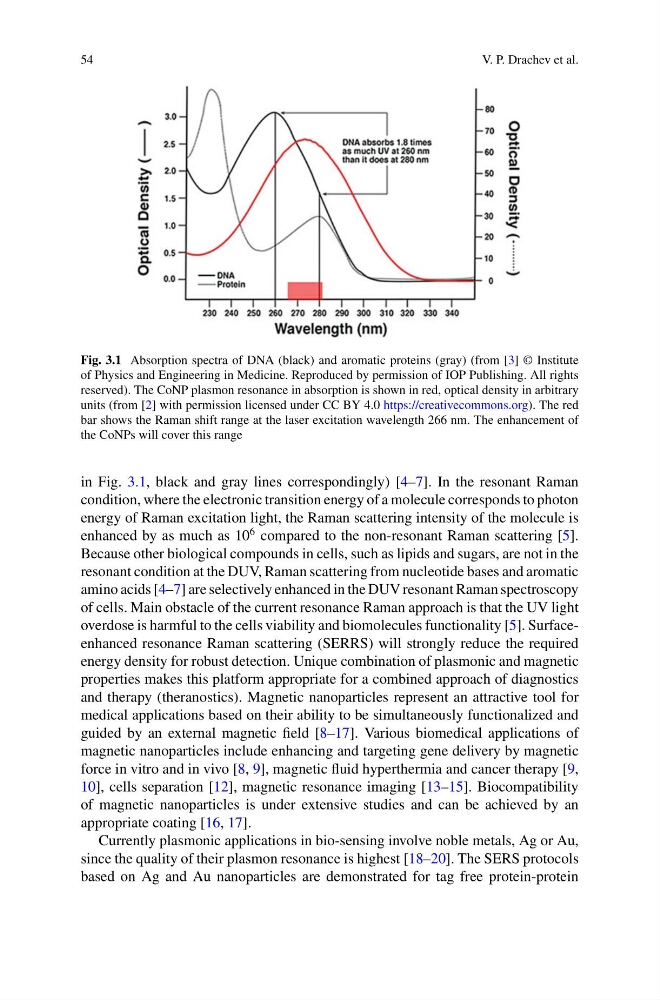
Fig. 3.1 Absorption spectra of DNA (black) and aromatic proteins (gray) (from [3] © Institute
of Physics and Engineering in Medicine. Reproduced by permission of IOP Publishing. All rights
reserved). The CoNP plasmon resonance in absorption is shown in red, optical density in arbitrary
units (from [2] with permission licensed under CC BY 4.0 https://creativecommons.org). The red
bar shows the Raman shift range at the laser excitation wavelength 266 nm. The enhancement of
the CoNPs will cover this range
in Fig. 3.1, black and gray lines correspondingly) [4–7]. In the resonant Raman
condition, where the electronic transition energy of a molecule corresponds to photon
energy of Raman excitation light, the Raman scattering intensity of the molecule is
enhanced by as much as 10
6 compared to the non-resonant Raman scattering [5].
Because other biological compounds in cells, such as lipids and sugars, are not in the
resonant condition at the DUV, Raman scattering from nucleotide bases and aromatic
amino acids [4–7] are selectively enhanced in the DUV resonant Raman spectroscopy
of cells. Main obstacle of the current resonance Raman approach is that the UV light
overdose is harmful to the cells viability and biomolecules functionality [5]. Surfaceenhanced resonance Raman scattering (SERRS) will strongly reduce the required
energy density for robust detection. Unique combination of plasmonic and magnetic
properties makes this platform appropriate for a combined approach of diagnostics
and therapy (theranostics). Magnetic nanoparticles represent an attractive tool for
medical applications based on their ability to be simultaneously functionalized and
guided by an external magnetic field [8–17]. Various biomedical applications of
magnetic nanoparticles include enhancing and targeting gene delivery by magnetic
force in vitro and in vivo [8, 9], magnetic fluid hyperthermia and cancer therapy [9,
10], cells separation [12], magnetic resonance imaging [13–15]. Biocompatibility
of magnetic nanoparticles is under extensive studies and can be achieved by an
appropriate coating [16, 17].
Currently plasmonic applications in bio-sensing involve noble metals, Ag or Au,
since the quality of their plasmon resonance is highest [18–20]. The SERS protocols
based on Ag and Au nanoparticles are demonstrated for tag free protein-protein
V. P. Drachev et al.
Fig. 3.1 Absorption spectra of DNA (black) and aromatic proteins (gray) (from [3] © Institute
of Physics and Engineering in Medicine. Reproduced by permission of IOP Publishing. All rights
reserved). The CoNP plasmon resonance in absorption is shown in red, optical density in arbitrary
units (from [2] with permission licensed under CC BY 4.0 https://creativecommons.org). The red
bar shows the Raman shift range at the laser excitation wavelength 266 nm. The enhancement of
the CoNPs will cover this range
in Fig. 3.1, black and gray lines correspondingly) [4–7]. In the resonant Raman
condition, where the electronic transition energy of a molecule corresponds to photon
energy of Raman excitation light, the Raman scattering intensity of the molecule is
enhanced by as much as 10
6 compared to the non-resonant Raman scattering [5].
Because other biological compounds in cells, such as lipids and sugars, are not in the
resonant condition at the DUV, Raman scattering from nucleotide bases and aromatic
amino acids [4–7] are selectively enhanced in the DUV resonant Raman spectroscopy
of cells. Main obstacle of the current resonance Raman approach is that the UV light
overdose is harmful to the cells viability and biomolecules functionality [5]. Surfaceenhanced resonance Raman scattering (SERRS) will strongly reduce the required
energy density for robust detection. Unique combination of plasmonic and magnetic
properties makes this platform appropriate for a combined approach of diagnostics
and therapy (theranostics). Magnetic nanoparticles represent an attractive tool for
medical applications based on their ability to be simultaneously functionalized and
guided by an external magnetic field [8–17]. Various biomedical applications of
magnetic nanoparticles include enhancing and targeting gene delivery by magnetic
force in vitro and in vivo [8, 9], magnetic fluid hyperthermia and cancer therapy [9,
10], cells separation [12], magnetic resonance imaging [13–15]. Biocompatibility
of magnetic nanoparticles is under extensive studies and can be achieved by an
appropriate coating [16, 17].
Currently plasmonic applications in bio-sensing involve noble metals, Ag or Au,
since the quality of their plasmon resonance is highest [18–20]. The SERS protocols
based on Ag and Au nanoparticles are demonstrated for tag free protein-protein