

550
E. Kamenetskii
field in vacuum reflect its own topologically nontrivial structure at each mode of the
MDM-oscillation spectrum.
It is worth noting that in a remarkable paper [92], the authors had measured the
low-temperature magnetization response of an isolated mescoscopic copper ring to
a slowly varying magnetic flux. They showed that the total magnetization response
oscillates as a function of the enclosed magnetic flux on the scale of half a flux
quantum. In our study, a numerical analysis made in [89] shows that the currents
induced on a metal ring at the MDM resonances, strongly perturb the electric, but
not the magnetic, field in a vacuum region above the ferrite disk. This means that the
ring is threaded mainly by an electric flux. Taking into account the above-analyzed
properties of the anapole, we have evidence of the presence of the enclosed electric
flux on the scale of half a flux quantum.
C. MDM cavity electrodynamics
For the case of MDM resonances in a small ferrite disk, characterizing by nonuniform magnetization dynamics, the above-mentioned model of coherent states
of the macrospin/photon system in a ferrite sphere [72–76, 81], is not applicable.
In [57, 93], it was shown that multiresonance microwave oscillations observed in
experiments [49–51, 93], are related to the fact that magnetization dynamics of
MDM oscillations in a quasi-2D ferrite disk have a strong impact on the phenomena
associated with the quantized energy fluctuation of microwave photons in a cavity.
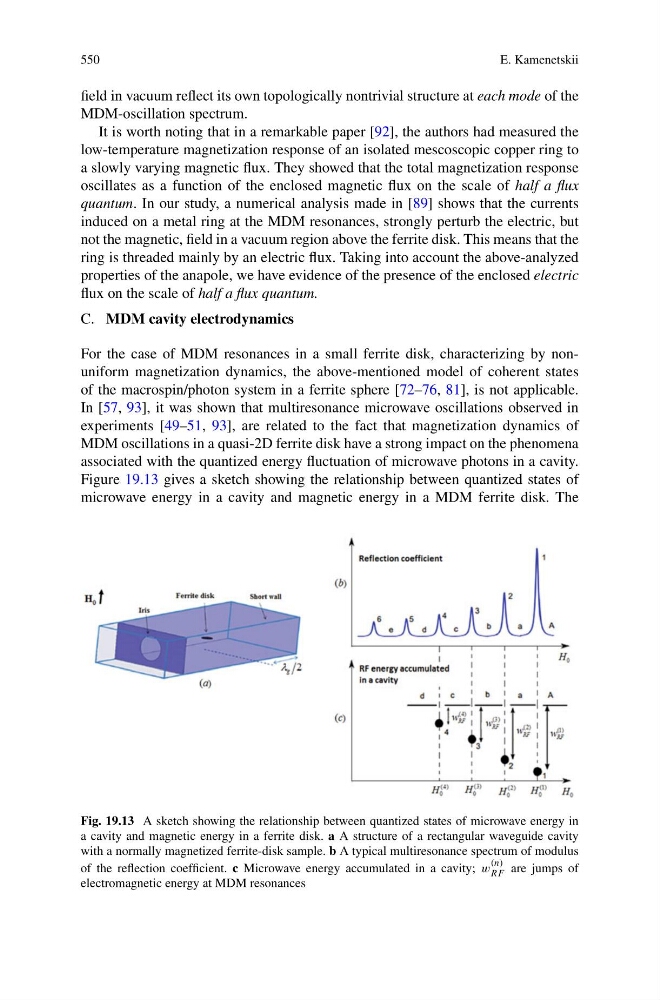
Figure 19.13 gives a sketch showing the relationship between quantized states of
microwave energy in a cavity and magnetic energy in a MDM ferrite disk. The
Fig. 19.13 A sketch showing the relationship between quantized states of microwave energy in
a cavity and magnetic energy in a ferrite disk. a A structure of a rectangular waveguide cavity
with a normally magnetized ferrite-disk sample. b A typical multiresonance spectrum of modulus
of the reflection coefficient. c Microwave energy accumulated in a cavity; w
(n)
R F are jumps of
electromagnetic energy at MDM resonances
E. Kamenetskii
field in vacuum reflect its own topologically nontrivial structure at each mode of the
MDM-oscillation spectrum.
It is worth noting that in a remarkable paper [92], the authors had measured the
low-temperature magnetization response of an isolated mescoscopic copper ring to
a slowly varying magnetic flux. They showed that the total magnetization response
oscillates as a function of the enclosed magnetic flux on the scale of half a flux
quantum. In our study, a numerical analysis made in [89] shows that the currents
induced on a metal ring at the MDM resonances, strongly perturb the electric, but
not the magnetic, field in a vacuum region above the ferrite disk. This means that the
ring is threaded mainly by an electric flux. Taking into account the above-analyzed
properties of the anapole, we have evidence of the presence of the enclosed electric
flux on the scale of half a flux quantum.
C. MDM cavity electrodynamics
For the case of MDM resonances in a small ferrite disk, characterizing by nonuniform magnetization dynamics, the above-mentioned model of coherent states
of the macrospin/photon system in a ferrite sphere [72–76, 81], is not applicable.
In [57, 93], it was shown that multiresonance microwave oscillations observed in
experiments [49–51, 93], are related to the fact that magnetization dynamics of
MDM oscillations in a quasi-2D ferrite disk have a strong impact on the phenomena
associated with the quantized energy fluctuation of microwave photons in a cavity.
Figure 19.13 gives a sketch showing the relationship between quantized states of
microwave energy in a cavity and magnetic energy in a MDM ferrite disk. The
Fig. 19.13 A sketch showing the relationship between quantized states of microwave energy in
a cavity and magnetic energy in a ferrite disk. a A structure of a rectangular waveguide cavity
with a normally magnetized ferrite-disk sample. b A typical multiresonance spectrum of modulus
of the reflection coefficient. c Microwave energy accumulated in a cavity; w
(n)
R F are jumps of
electromagnetic energy at MDM resonances