

276
thaliana T85 cell lines than loose MWCNT agglomerates. T85 cells have the tendency to clump together, in almost 20 cells, and became a few hundred micrometers
in diameter. The cell clumps possessed gorges of a size distinctly smaller for loose
MWCNT agglomerates to penetrate. Only finely sized MWCNT agglomerates
could enter the plant cell clumps. The plant system, thus, considering the cellular
clumps as pathogens, induced hypersensitive response against them (Lin
et al. 2009b).
Ag NPs and ZnO NPs induced irregular growth of roots in maize and cabbage
due to cell distortion of the meristematic root cells. Ag NPs induced abnormal root
growth via narrowing and elongation of root cells. The metaxylem count was also
disturbed on Ag NP exposure. While ZnO NPs induced toxicity through tunnelinglike effect (Pokhrel and Dubey 2013). CeO 2 NPs have no effect on the yield and
vegetative growth of wheat in field experiments. However, CeO 2 NPs decreased the
chlorophyll content, altered the root and leaf cell microstructures, and delayed the
flowering stage in wheat. Further, the NP-treated plants produced seeds with a
smaller starch grain in the endosperm and higher protein content. CeO 2 NPs were
observed in seeds of treated plants and, hence, can enter the next trophic level (Du
et al. 2015). Ag NPs were more easily internalized by P. radiatus and S. bicolor in
agar medium than from soil. As a result, Ag NPs induced more toxicity in agar
medium as compared to soil (Lee et al. 2012).
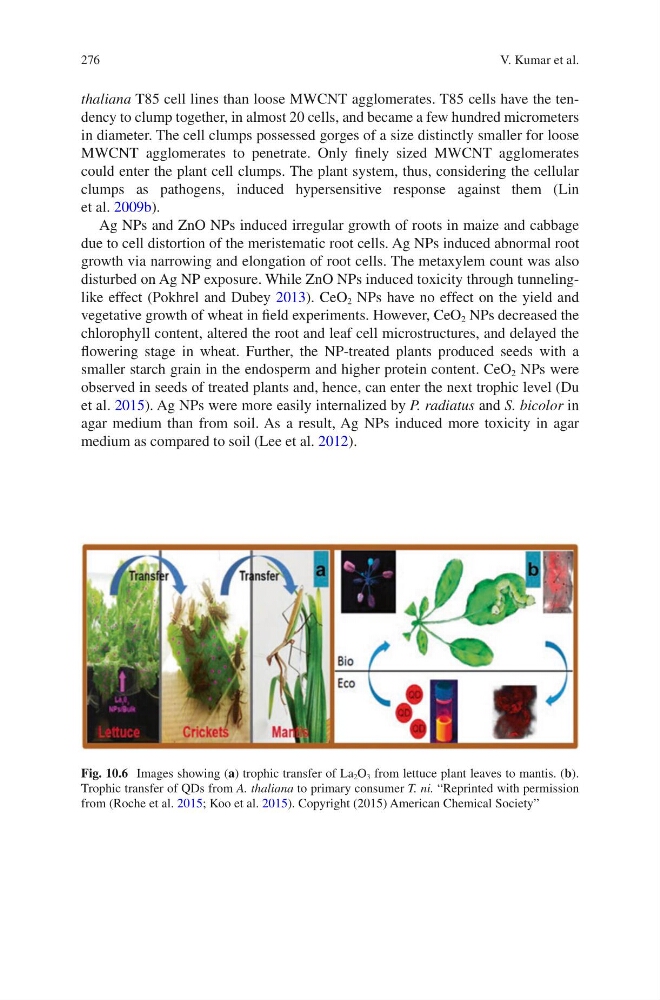
Fig. 10.6 Images showing (a) trophic transfer of La 2 O 3 from lettuce plant leaves to mantis. (b).
Trophic transfer of QDs from A. thaliana to primary consumer T. ni. “Reprinted with permission
from (Roche et al. 2015; Koo et al. 2015). Copyright (2015) American Chemical Society”
V. Kumar et al.
thaliana T85 cell lines than loose MWCNT agglomerates. T85 cells have the tendency to clump together, in almost 20 cells, and became a few hundred micrometers
in diameter. The cell clumps possessed gorges of a size distinctly smaller for loose
MWCNT agglomerates to penetrate. Only finely sized MWCNT agglomerates
could enter the plant cell clumps. The plant system, thus, considering the cellular
clumps as pathogens, induced hypersensitive response against them (Lin
et al. 2009b).
Ag NPs and ZnO NPs induced irregular growth of roots in maize and cabbage
due to cell distortion of the meristematic root cells. Ag NPs induced abnormal root
growth via narrowing and elongation of root cells. The metaxylem count was also
disturbed on Ag NP exposure. While ZnO NPs induced toxicity through tunnelinglike effect (Pokhrel and Dubey 2013). CeO 2 NPs have no effect on the yield and
vegetative growth of wheat in field experiments. However, CeO 2 NPs decreased the
chlorophyll content, altered the root and leaf cell microstructures, and delayed the
flowering stage in wheat. Further, the NP-treated plants produced seeds with a
smaller starch grain in the endosperm and higher protein content. CeO 2 NPs were
observed in seeds of treated plants and, hence, can enter the next trophic level (Du
et al. 2015). Ag NPs were more easily internalized by P. radiatus and S. bicolor in
agar medium than from soil. As a result, Ag NPs induced more toxicity in agar
medium as compared to soil (Lee et al. 2012).
Fig. 10.6 Images showing (a) trophic transfer of La 2 O 3 from lettuce plant leaves to mantis. (b).
Trophic transfer of QDs from A. thaliana to primary consumer T. ni. “Reprinted with permission
from (Roche et al. 2015; Koo et al. 2015). Copyright (2015) American Chemical Society”
V. Kumar et al.