

255
indirectly by influencing their growth and yield or by providing protection to plants
against pathogens/phytotoxins/pesticide accumulations.
No Effect of NP Exposure on the Plants
Poly-3-aminobenzenesulfonic acid-functionalized single-walled carbon nanotubes
(SWCNTs) as well as nonfunctionalized SWCNTs have no effect on the root length
of cabbage and carrot plants (Canas et al. 2008). Likewise, multiwalled carbon
nanotubes (MWCNTs), silver (Ag), copper (Cu), zinc oxide (ZnO), and silicon (Si)
NPs has no influence on the seed germination of Cucurbita pepo plants (Stampoulis
et al. 2009). Titanium dioxide (TiO 2 ) NPs have no effect on the water uptake efficiency, transpiration rate, and vegetative growth parameters of willow plants (Seeger
et al. 2009). Undoped and nitrogen-doped TiO 2 NPs also do not affect the growth of
maize and soybean plants. However, the same NPs inhibited the growth of fungal
rhizospheres (Burke et al. 2014). Cerium oxide (CeO 2 ) NPs also did not influence
the root elongation process of radish, rape, tomato, wheat, cabbage, and cucumber
plants (Ma et al. 2010). SWCNTs labeled with FITC and DNA have no effect on the
morphology, cytoplasmic fluidity, and cell survival of Nicotiana tobacum cells (Liu
et al. 2009).
In addition to absorption, translocation of NPs from one plant part to another can
spread toxicity and NPs can easily enter the food chain. Such NPs can thus undergo
bioaccumulation followed by biomagnification. In such a study, Cerium (Ce) NPs
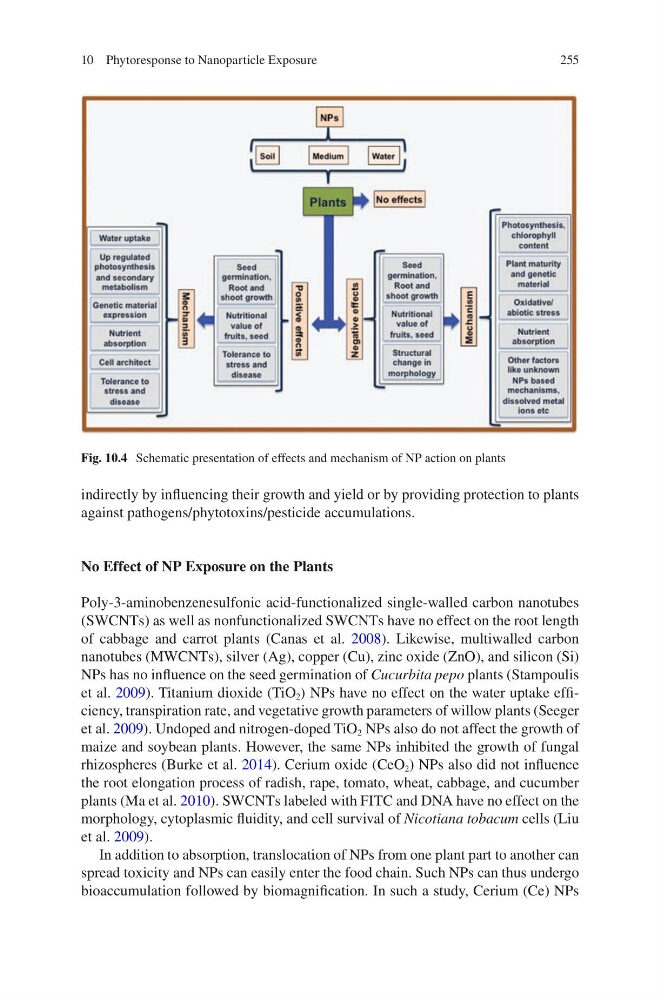
Fig. 10.4 Schematic presentation of effects and mechanism of NP action on plants
10 Phytoresponse to Nanoparticle Exposure
indirectly by influencing their growth and yield or by providing protection to plants
against pathogens/phytotoxins/pesticide accumulations.
No Effect of NP Exposure on the Plants
Poly-3-aminobenzenesulfonic acid-functionalized single-walled carbon nanotubes
(SWCNTs) as well as nonfunctionalized SWCNTs have no effect on the root length
of cabbage and carrot plants (Canas et al. 2008). Likewise, multiwalled carbon
nanotubes (MWCNTs), silver (Ag), copper (Cu), zinc oxide (ZnO), and silicon (Si)
NPs has no influence on the seed germination of Cucurbita pepo plants (Stampoulis
et al. 2009). Titanium dioxide (TiO 2 ) NPs have no effect on the water uptake efficiency, transpiration rate, and vegetative growth parameters of willow plants (Seeger
et al. 2009). Undoped and nitrogen-doped TiO 2 NPs also do not affect the growth of
maize and soybean plants. However, the same NPs inhibited the growth of fungal
rhizospheres (Burke et al. 2014). Cerium oxide (CeO 2 ) NPs also did not influence
the root elongation process of radish, rape, tomato, wheat, cabbage, and cucumber
plants (Ma et al. 2010). SWCNTs labeled with FITC and DNA have no effect on the
morphology, cytoplasmic fluidity, and cell survival of Nicotiana tobacum cells (Liu
et al. 2009).
In addition to absorption, translocation of NPs from one plant part to another can
spread toxicity and NPs can easily enter the food chain. Such NPs can thus undergo
bioaccumulation followed by biomagnification. In such a study, Cerium (Ce) NPs
Fig. 10.4 Schematic presentation of effects and mechanism of NP action on plants
10 Phytoresponse to Nanoparticle Exposure