

208
whereas nanocapsules and nanospheres are matrix-based nanosystems, from which
the drug is released mainly by diffusion.
The use of DDNCs offers several advantages. As therapeutic materials, they provide great improvements in solubility increase, dissolution rate enhancement, and
drug bioavailability improvement (Gaba et al. 2015). These advantages have been
already proven and useful in distinct therapeutic areas, namely some of those consider critical in public health, namely, antibiotic resistance and chemotherapy
(Jaiswal et al. 2016).
Nanoparticles have also the ability to pass through biological barriers, namely,
the blood–brain barrier (BBB) or the blood-retinal barrier (BRB), gaining interest
for therapeutical approaches in specific diseases, such as brain and retinal diseases.
This particular characteristic allows an increase in the residence time of therapeutic
drugs in target organs leading to better therapeutics’ results. Moreover, the physical
and chemical properties of DDNCs can also enhance the bioavailability of therapeutic agents in local and systemic administration (Jo et al. 2015).
Considering the development of these nanosystems, pharmaceutical technology
may achieve the possibility for a better controlled therapeutic agent delivery and
targeting to the organs or tissues (Rowland et al. 2012). Thus resulting in (i) drug
stability increase and toxicity decrease, resulting in a biochemical protection in the
human body (Mishra et al. 2013); (ii) the reduction of adverse effects—once the
interactions of these with the biological surroundings are less probable (Rowland
et al. 2012); (iii) long circulation times with an increase of the drug lifetime (Mishra
et al. 2013); (iv) biological degradation of the nanoparticles (Mishra et al. 2013); (v)
more effective production using simpler and less expensive methods; (vi) an increase
in storage lifetime related to the improvement of the compounds stability (Duncan
and Gaspar 2011).
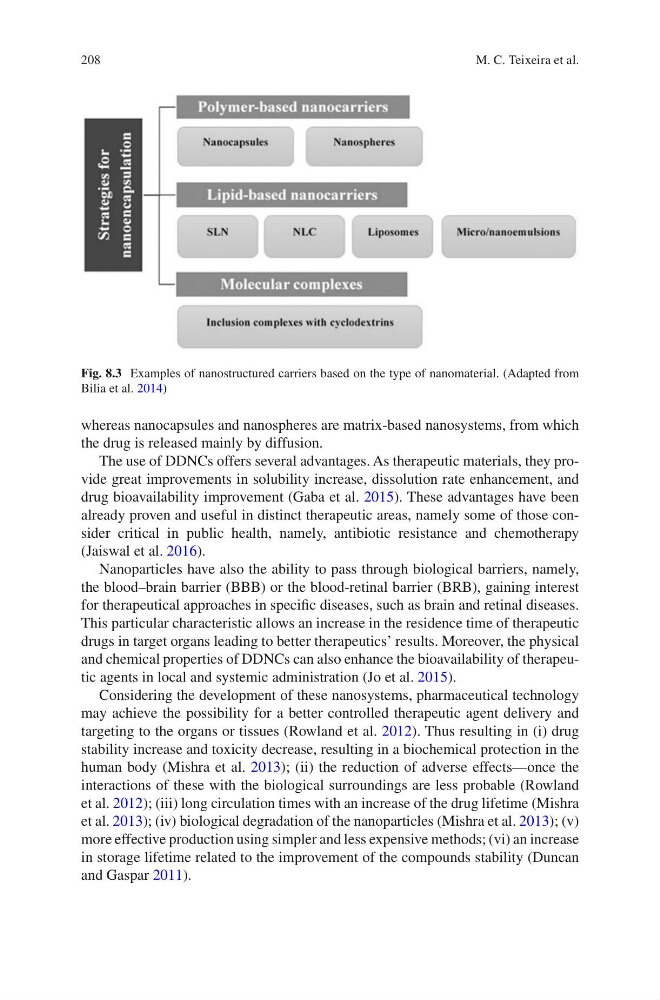
Fig. 8.3 Examples of nanostructured carriers based on the type of nanomaterial. (Adapted from
Bilia et al. 2014)
M. C. Teixeira et al.
whereas nanocapsules and nanospheres are matrix-based nanosystems, from which
the drug is released mainly by diffusion.
The use of DDNCs offers several advantages. As therapeutic materials, they provide great improvements in solubility increase, dissolution rate enhancement, and
drug bioavailability improvement (Gaba et al. 2015). These advantages have been
already proven and useful in distinct therapeutic areas, namely some of those consider critical in public health, namely, antibiotic resistance and chemotherapy
(Jaiswal et al. 2016).
Nanoparticles have also the ability to pass through biological barriers, namely,
the blood–brain barrier (BBB) or the blood-retinal barrier (BRB), gaining interest
for therapeutical approaches in specific diseases, such as brain and retinal diseases.
This particular characteristic allows an increase in the residence time of therapeutic
drugs in target organs leading to better therapeutics’ results. Moreover, the physical
and chemical properties of DDNCs can also enhance the bioavailability of therapeutic agents in local and systemic administration (Jo et al. 2015).
Considering the development of these nanosystems, pharmaceutical technology
may achieve the possibility for a better controlled therapeutic agent delivery and
targeting to the organs or tissues (Rowland et al. 2012). Thus resulting in (i) drug
stability increase and toxicity decrease, resulting in a biochemical protection in the
human body (Mishra et al. 2013); (ii) the reduction of adverse effects—once the
interactions of these with the biological surroundings are less probable (Rowland
et al. 2012); (iii) long circulation times with an increase of the drug lifetime (Mishra
et al. 2013); (iv) biological degradation of the nanoparticles (Mishra et al. 2013); (v)
more effective production using simpler and less expensive methods; (vi) an increase
in storage lifetime related to the improvement of the compounds stability (Duncan
and Gaspar 2011).
Fig. 8.3 Examples of nanostructured carriers based on the type of nanomaterial. (Adapted from
Bilia et al. 2014)
M. C. Teixeira et al.