

175
graphite target at high temperature or a gas containing methane or carbon dioxide,
resulting in the formation of pristine carbon nanotubes.
Chemical vapor deposition (CVD): this technique is usually applied for producing carbon nanotubes in scalable industrial production due to its mild operations
and low cost. This technique has two main approaches: floating catalyst chemical
vapor deposition (FCCVD) and fixed catalyst chemical vapor deposition (Prasek
et al. 2011; Eatemadi et al. 2014; Yadav et al. 2017).
7.2.2 Copper Nanoparticles
Copper oxide nanoparticles present remarkable physical and chemical properties
and have been used for different applications, including bactericide materials, sensors, catalysts, conductive films, lubrication, nanofluids, semiconductors, batteries,
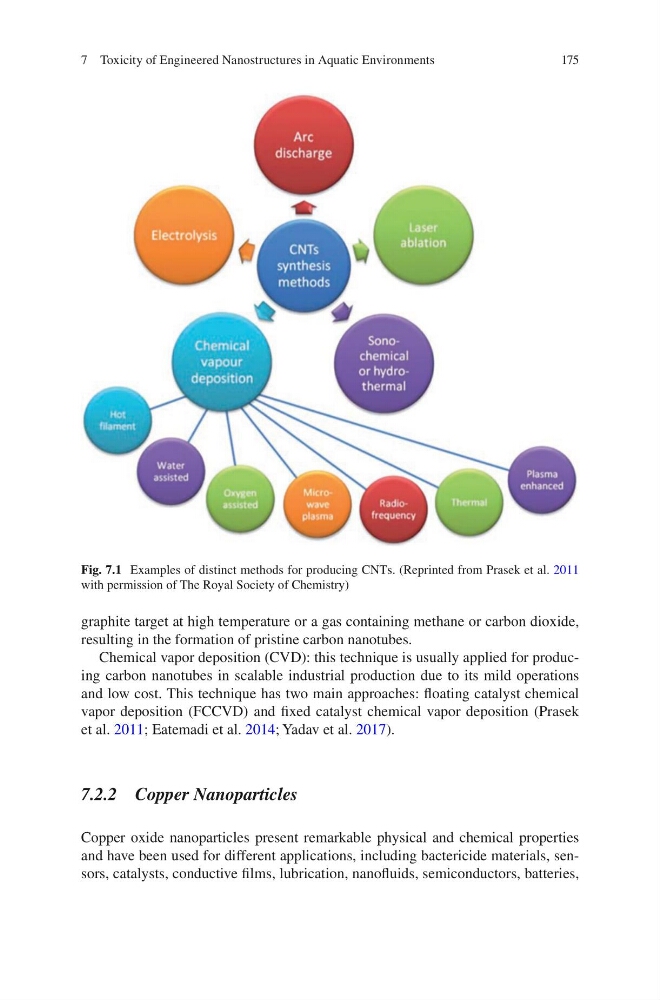
Fig. 7.1 Examples of distinct methods for producing CNTs. (Reprinted from Prasek et al. 2011
with permission of The Royal Society of Chemistry)
7 Toxicity of Engineered Nanostructures in Aquatic Environments
graphite target at high temperature or a gas containing methane or carbon dioxide,
resulting in the formation of pristine carbon nanotubes.
Chemical vapor deposition (CVD): this technique is usually applied for producing carbon nanotubes in scalable industrial production due to its mild operations
and low cost. This technique has two main approaches: floating catalyst chemical
vapor deposition (FCCVD) and fixed catalyst chemical vapor deposition (Prasek
et al. 2011; Eatemadi et al. 2014; Yadav et al. 2017).
7.2.2 Copper Nanoparticles
Copper oxide nanoparticles present remarkable physical and chemical properties
and have been used for different applications, including bactericide materials, sensors, catalysts, conductive films, lubrication, nanofluids, semiconductors, batteries,
Fig. 7.1 Examples of distinct methods for producing CNTs. (Reprinted from Prasek et al. 2011
with permission of The Royal Society of Chemistry)
7 Toxicity of Engineered Nanostructures in Aquatic Environments