

C hapTer 11 nanomaterials and nanotechnologies
496
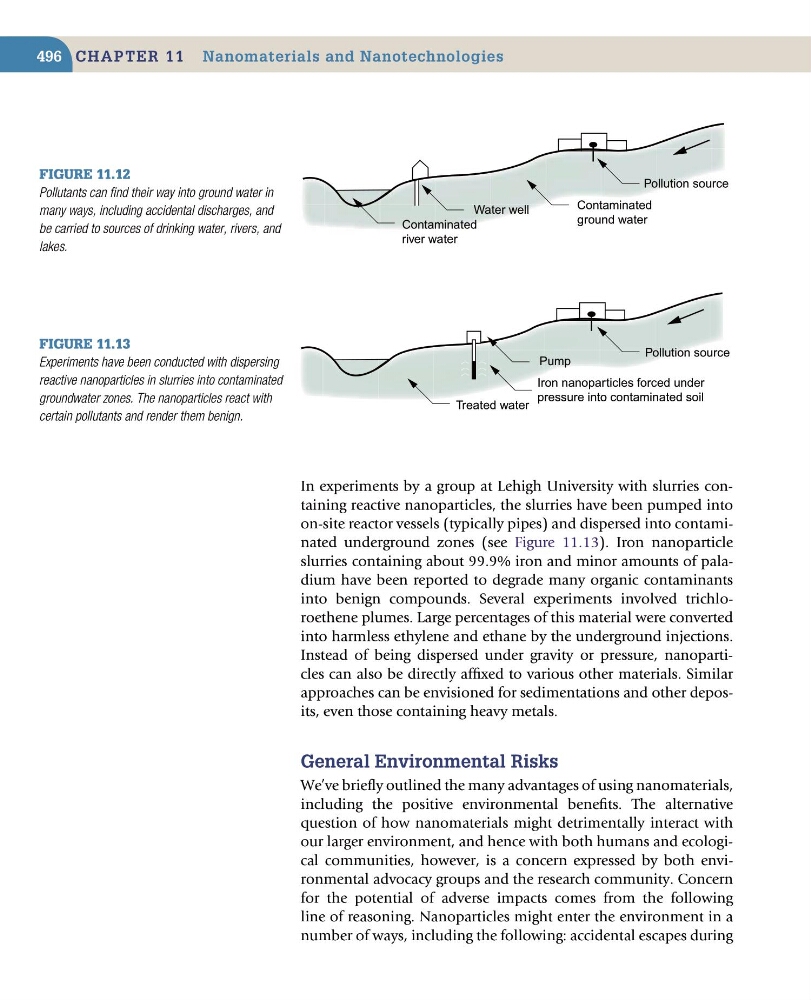
In experiments by a group at Lehigh University with slurries containing reactive nanoparticles, the slurries have been pumped into
on-site reactor vessels (typically pipes) and dispersed into contaminated underground zones (see Figure 11.13). Iron nanoparticle
slurries containing about 99.9% iron and minor amounts of paladium have been reported to degrade many organic contaminants
into benign compounds. Several experiments involved trichloroethene plumes. Large percentages of this material were converted
into harmless ethylene and ethane by the underground injections.
Instead of being dispersed under gravity or pressure, nanoparticles can also be directly affixed to various other materials. Similar
approaches can be envisioned for sedimentations and other deposits, even those containing heavy metals.
General environmental risks
We’ve briefly outlined the many advantages of using nano materials,
including the positive environmental benefits. The alternative
question of how nanomaterials might detrimentally interact with
our larger environment, and hence with both humans and ecological communities, however, is a concern expressed by both environmental advocacy groups and the research community. Concern
for the potential of adverse impacts comes from the following
line of reasoning. Nanoparticles might enter the environment in a
number of ways, including the following: accidental escapes during
Figure 11.12
Pollutants can find their way into ground water in
many ways, including accidental discharges, and
be carried to sources of drinking water, rivers, and
lakes.
Water well
Contaminated
ground water
Pollution source
Contaminated
river water
Figure 11.13
Experiments have been conducted with dispersing
reactive nanoparticles in slurries into contaminated
groundwater zones. The nanoparticles react with
certain pollutants and render them benign.
Treated water
Pump
Pollution source
Iron nanoparticles forced under
pressure into contaminated soil
496
In experiments by a group at Lehigh University with slurries containing reactive nanoparticles, the slurries have been pumped into
on-site reactor vessels (typically pipes) and dispersed into contaminated underground zones (see Figure 11.13). Iron nanoparticle
slurries containing about 99.9% iron and minor amounts of paladium have been reported to degrade many organic contaminants
into benign compounds. Several experiments involved trichloroethene plumes. Large percentages of this material were converted
into harmless ethylene and ethane by the underground injections.
Instead of being dispersed under gravity or pressure, nanoparticles can also be directly affixed to various other materials. Similar
approaches can be envisioned for sedimentations and other deposits, even those containing heavy metals.
General environmental risks
We’ve briefly outlined the many advantages of using nano materials,
including the positive environmental benefits. The alternative
question of how nanomaterials might detrimentally interact with
our larger environment, and hence with both humans and ecological communities, however, is a concern expressed by both environmental advocacy groups and the research community. Concern
for the potential of adverse impacts comes from the following
line of reasoning. Nanoparticles might enter the environment in a
number of ways, including the following: accidental escapes during
Figure 11.12
Pollutants can find their way into ground water in
many ways, including accidental discharges, and
be carried to sources of drinking water, rivers, and
lakes.
Water well
Contaminated
ground water
Pollution source
Contaminated
river water
Figure 11.13
Experiments have been conducted with dispersing
reactive nanoparticles in slurries into contaminated
groundwater zones. The nanoparticles react with
certain pollutants and render them benign.
Treated water
Pump
Pollution source
Iron nanoparticles forced under
pressure into contaminated soil