

453
provide responsive thermal performances. There is great interest in
self-cleaning materials. Increasing attention is also being paid to
the material’s ability to be recycled.
In addition to textiles being used as primary structures, there are
a whole host of less structurally intensive uses in buildings. There
are innumerable types of shading devices; most have to do with
sun control, but there are others that deal more generally with light
control. Other uses include any number of types of privacy devices
(for example, recall the wonderful tatami screens in indigenous
Japanese architecture). Other textiles find use in ever-present floor,
wall, or furniture coverings. Clearly each application demands
various kinds of textile characteristics. Sometimes translucency is
desired, for example; sometimes not. Levels of required strength
and flexibility vary dramatically. All textiles (and other materials
as well) that are used in buildings, however, must absolutely meet
certain requirements related to the behavior of the material in a fire
circumstance. One important measure is the flame-spread rating of
the material (how quickly a flame will spread across a material’s
surface). The type and amount of gases that can be given off during
a fire are similarly important. High levels of toxic gases must obviously be prevented. Though not always a requirement, increased
attention is also now being paid to the type of normal outgassing
that materials exhibit over time in enclosed spaces—a phenomenon that has been demonstrated to contribute to the so-called “sick
building syndrome” and deleterious effects on occupants. A list of
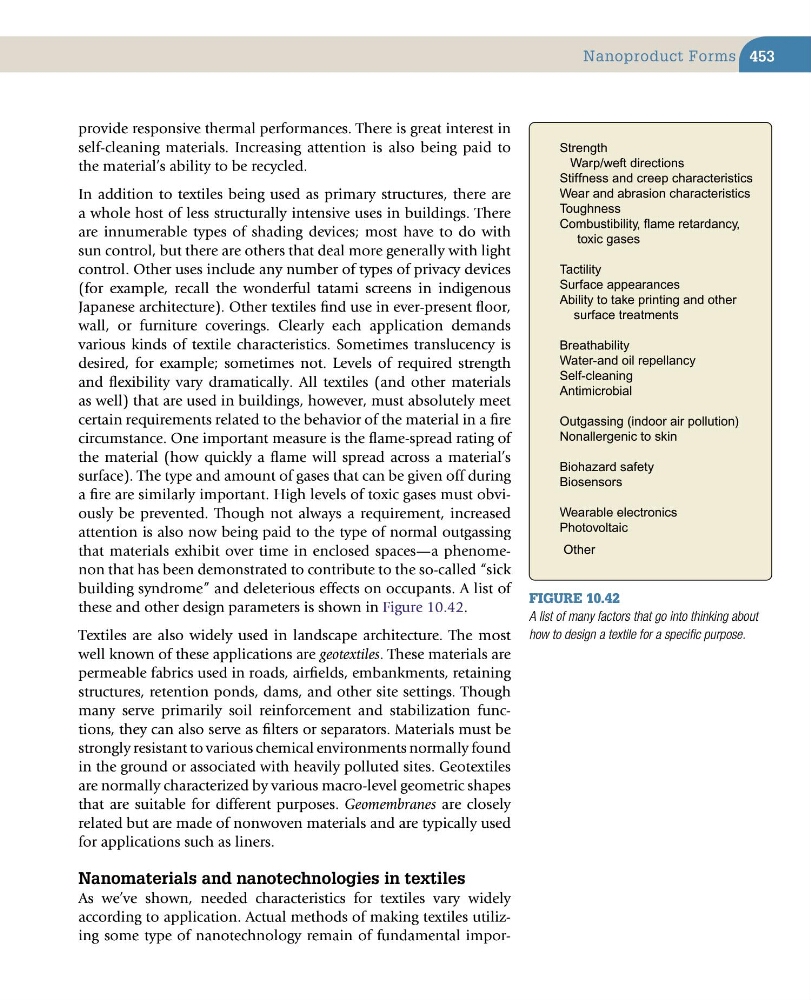
these and other design parameters is shown in Figure 10.42.
Textiles are also widely used in landscape architecture. The most
well known of these applications are geotextiles. These materials are
permeable fabrics used in roads, airfields, embankments, retaining
structures, retention ponds, dams, and other site settings. Though
many serve primarily soil reinforcement and stabilization functions, they can also serve as filters or separators. Materials must be
strongly resistant to various chemical environments normally found
in the ground or associated with heavily polluted sites. Geotextiles
are normally characterized by various macro-level geometric shapes
that are suitable for different purposes. Geomembranes are closely
related but are made of nonwoven materials and are typically used
for applications such as liners.
nanomaterials and nanotechnologies in textiles
As we’ve shown, needed characteristics for textiles vary widely
according to application. Actual methods of making textiles utilizing some type of nanotechnology remain of fundamental imporNanoproduct Forms
Figure 10.42
A list of many factors that go into thinking about
how to design a textile for a specific purpose.
Strength
Warp/weft directions
Stiffness and creep characteristics
Wear and abrasion characteristics
Toughness
Combustibility, flame retardancy,
toxic gases
Tactility
Surface appearances
Ability to take printing and other
surface treatments
Breathability
Water-and oil repellancy
Self-cleaning
Antimicrobial
Outgassing (indoor air pollution)
Nonallergenic to skin
Biohazard safety
Biosensors
Wearable electronics
Photovoltaic
Other
provide responsive thermal performances. There is great interest in
self-cleaning materials. Increasing attention is also being paid to
the material’s ability to be recycled.
In addition to textiles being used as primary structures, there are
a whole host of less structurally intensive uses in buildings. There
are innumerable types of shading devices; most have to do with
sun control, but there are others that deal more generally with light
control. Other uses include any number of types of privacy devices
(for example, recall the wonderful tatami screens in indigenous
Japanese architecture). Other textiles find use in ever-present floor,
wall, or furniture coverings. Clearly each application demands
various kinds of textile characteristics. Sometimes translucency is
desired, for example; sometimes not. Levels of required strength
and flexibility vary dramatically. All textiles (and other materials
as well) that are used in buildings, however, must absolutely meet
certain requirements related to the behavior of the material in a fire
circumstance. One important measure is the flame-spread rating of
the material (how quickly a flame will spread across a material’s
surface). The type and amount of gases that can be given off during
a fire are similarly important. High levels of toxic gases must obviously be prevented. Though not always a requirement, increased
attention is also now being paid to the type of normal outgassing
that materials exhibit over time in enclosed spaces—a phenomenon that has been demonstrated to contribute to the so-called “sick
building syndrome” and deleterious effects on occupants. A list of
these and other design parameters is shown in Figure 10.42.
Textiles are also widely used in landscape architecture. The most
well known of these applications are geotextiles. These materials are
permeable fabrics used in roads, airfields, embankments, retaining
structures, retention ponds, dams, and other site settings. Though
many serve primarily soil reinforcement and stabilization functions, they can also serve as filters or separators. Materials must be
strongly resistant to various chemical environments normally found
in the ground or associated with heavily polluted sites. Geotextiles
are normally characterized by various macro-level geometric shapes
that are suitable for different purposes. Geomembranes are closely
related but are made of nonwoven materials and are typically used
for applications such as liners.
nanomaterials and nanotechnologies in textiles
As we’ve shown, needed characteristics for textiles vary widely
according to application. Actual methods of making textiles utilizing some type of nanotechnology remain of fundamental imporNanoproduct Forms
Figure 10.42
A list of many factors that go into thinking about
how to design a textile for a specific purpose.
Strength
Warp/weft directions
Stiffness and creep characteristics
Wear and abrasion characteristics
Toughness
Combustibility, flame retardancy,
toxic gases
Tactility
Surface appearances
Ability to take printing and other
surface treatments
Breathability
Water-and oil repellancy
Self-cleaning
Antimicrobial
Outgassing (indoor air pollution)
Nonallergenic to skin
Biohazard safety
Biosensors
Wearable electronics
Photovoltaic
Other