

C haptEr 9 design Environments and systems
310
the primary function of being a source of heating or cooling—for
example, thermoelectric devices. Other components—various insulators—are intended to either prevent or control heat loss or gain
or provide a shielding function. The function of other components
might be to deliberately and effectively transfer heat from one point
to another, as is the case with common heat pipes or thermosiphons. Many devices are intended to store heat or to exchange heat
between components. These kinds of components are used to form
systems of thermal management and control within a product, to
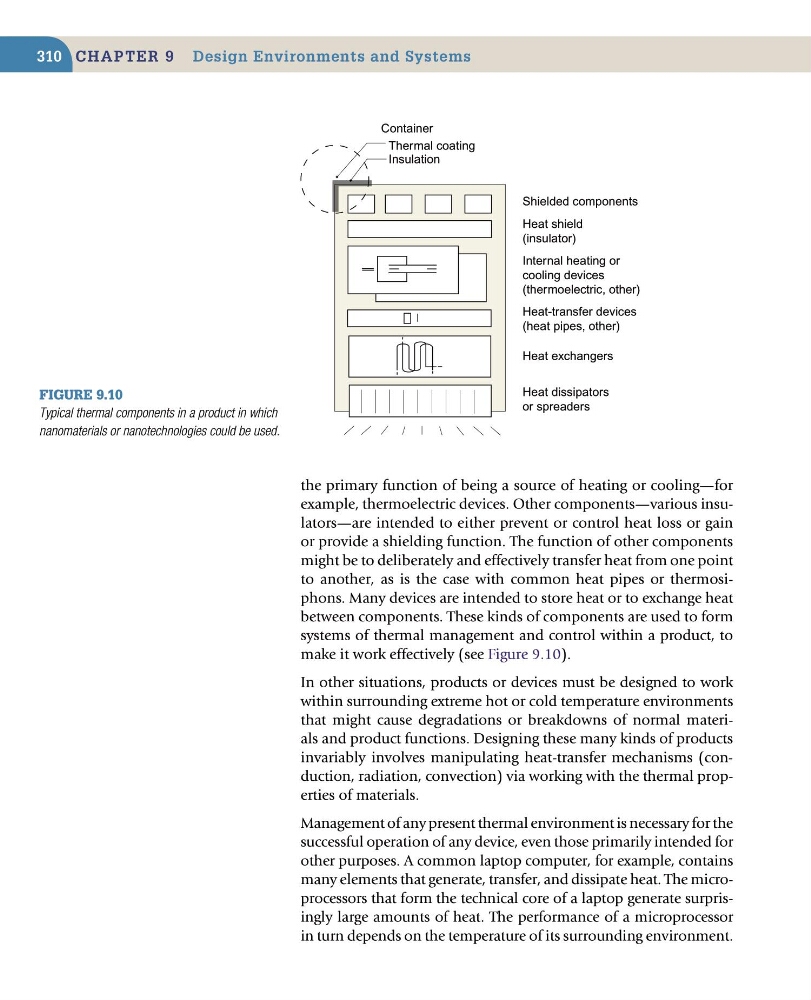
make it work effectively (see Figure 9.10).
In other situations, products or devices must be designed to work
within surrounding extreme hot or cold temperature environments
that might cause degradations or breakdowns of normal materials and product functions. Designing these many kinds of products
invariably involves manipulating heat-transfer mechanisms (conduction, radiation, convection) via working with the thermal properties of materials.
Management of any present thermal environment is necessary for the
successful operation of any device, even those primarily intended for
other purposes. A common laptop computer, for example, contains
many elements that generate, transfer, and dissipate heat. The microprocessors that form the technical core of a laptop generate surprisingly large amounts of heat. The performance of a microprocessor
in turn depends on the temperature of its surrounding environment.
Figure 9.10
Typical thermal components in a product in which
nanomaterials or nanotechnologies could be used.
Shielded components
Heat shield
(insulator)
Internal heating or
cooling devices
(thermoelectric, other)
Heat-transfer devices
(heat pipes, other)
Heat exchangers
Heat dissipators
or spreaders
Container
Thermal coating
Insulation
310
the primary function of being a source of heating or cooling—for
example, thermoelectric devices. Other components—various insulators—are intended to either prevent or control heat loss or gain
or provide a shielding function. The function of other components
might be to deliberately and effectively transfer heat from one point
to another, as is the case with common heat pipes or thermosiphons. Many devices are intended to store heat or to exchange heat
between components. These kinds of components are used to form
systems of thermal management and control within a product, to
make it work effectively (see Figure 9.10).
In other situations, products or devices must be designed to work
within surrounding extreme hot or cold temperature environments
that might cause degradations or breakdowns of normal materials and product functions. Designing these many kinds of products
invariably involves manipulating heat-transfer mechanisms (conduction, radiation, convection) via working with the thermal properties of materials.
Management of any present thermal environment is necessary for the
successful operation of any device, even those primarily intended for
other purposes. A common laptop computer, for example, contains
many elements that generate, transfer, and dissipate heat. The microprocessors that form the technical core of a laptop generate surprisingly large amounts of heat. The performance of a microprocessor
in turn depends on the temperature of its surrounding environment.
Figure 9.10
Typical thermal components in a product in which
nanomaterials or nanotechnologies could be used.
Shielded components
Heat shield
(insulator)
Internal heating or
cooling devices
(thermoelectric, other)
Heat-transfer devices
(heat pipes, other)
Heat exchangers
Heat dissipators
or spreaders
Container
Thermal coating
Insulation