

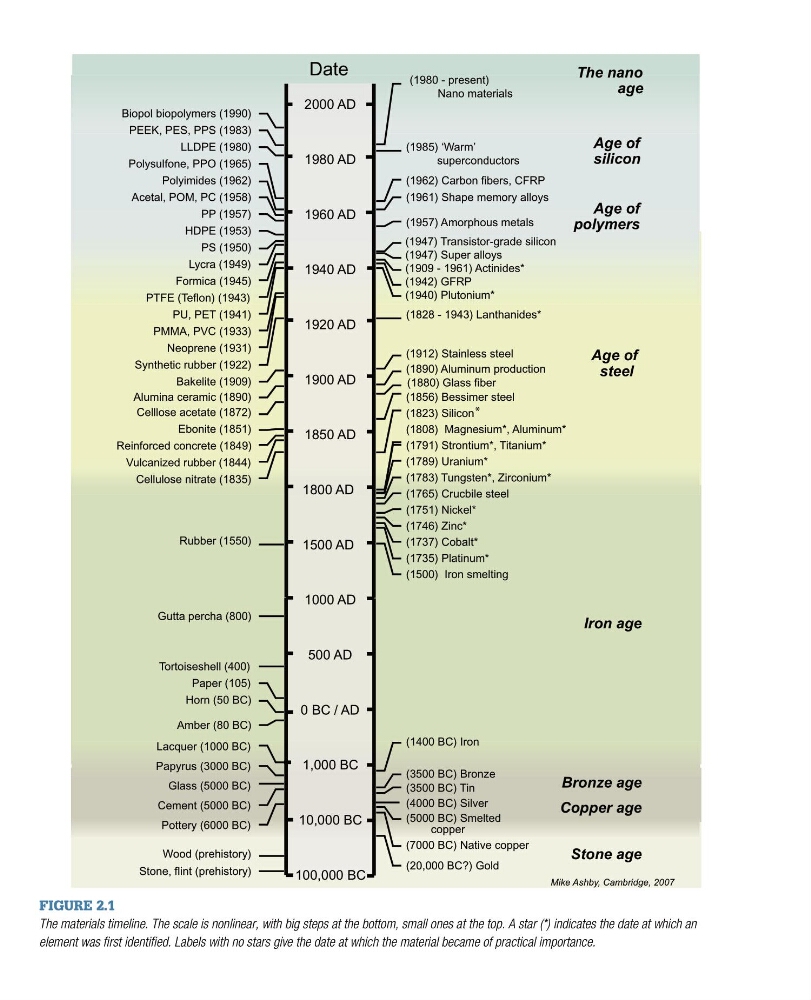
Figure 2.1
The materials timeline. The scale is nonlinear, with big steps at the bottom, small ones at the top. A star (*) indicates the date at which an
element was first identified. Labels with no stars give the date at which the material became of practical importance.
Date
100,000 BC
10,000 BC
1,000 BC
0 BC / AD
1000 AD
500 AD
1500 AD
1800 AD
1900 AD
1850 AD
1920 AD
1940 AD
1960 AD
1980 AD
2000 AD
Biopol biopolymers (1990)
PEEK, PES, PPS (1983)
LLDPE (1980)
Polysulfone, PPO (1965)
Polyimides (1962)
Acetal, POM, PC (1958)
PP (1957)
HDPE (1953)
PMMA, PVC (1933)
PS (1950)
Lycra (1949)
Formica (1945)
PTFE (Teflon) (1943)
PU, PET (1941)
Neoprene (1931)
Lacquer (1000 BC)
Horn (50 BC)
Amber (80 BC)
Tortoiseshell (400)
Gutta percha (800)
Rubber (1550)
Cellulose nitrate (1835)
Vulcanized rubber (1844)
Ebonite (1851)
Celllose acetate (1872)
Bakelite (1909)
Synthetic rubber (1922)
Stone, flint (prehistory)
Glass (5000 BC)
(20,000 BC?) Gold
(5000 BC) Smelted
copper
(1400 BC) Iron
(4000 BC) Silver
Stone age
Copper age
Bronze age
Iron age
Age of
steel
Age of
silicon
(1735) Platinum*
(1751) Nickel*
(1737) Cobalt*
(1746) Zinc*
(1789) Uranium*
(1940) Plutonium*
(1783) Tungsten*, Zirconium*
(1791) Strontium*, Titanium*
(1808) Magnesium*, Aluminum*
(1823) Silicon
(1909 - 1961) Actinides*
(1957) Amorphous metals
(1828 - 1943) Lanthanides*
(1961) Shape memory alloys
(1500) Iron smelting
(1856) Bessimer steel
(1890) Aluminum production
The nano
age
(1947) Super alloys
(1912) Stainless steel
(1765) Crucbile steel
Cement (5000 BC)
(1980 - present)
Nano materials
(1985) ‘Warm’
superconductors
(7000 BC) Native copper
Mike Ashby, Cambridge, 2007
Reinforced concrete (1849)
(3500 BC) Bronze
(3500 BC) Tin
Wood (prehistory)
*
Papyrus (3000 BC)
Paper (105)
(1962) Carbon fibers, CFRP
(1947) Transistor-grade silicon
(1880) Glass fiber
(1942) GFRP
Alumina ceramic (1890)
Pottery (6000 BC)
Age of
polymers
The materials timeline. The scale is nonlinear, with big steps at the bottom, small ones at the top. A star (*) indicates the date at which an
element was first identified. Labels with no stars give the date at which the material became of practical importance.
Date
100,000 BC
10,000 BC
1,000 BC
0 BC / AD
1000 AD
500 AD
1500 AD
1800 AD
1900 AD
1850 AD
1920 AD
1940 AD
1960 AD
1980 AD
2000 AD
Biopol biopolymers (1990)
PEEK, PES, PPS (1983)
LLDPE (1980)
Polysulfone, PPO (1965)
Polyimides (1962)
Acetal, POM, PC (1958)
PP (1957)
HDPE (1953)
PMMA, PVC (1933)
PS (1950)
Lycra (1949)
Formica (1945)
PTFE (Teflon) (1943)
PU, PET (1941)
Neoprene (1931)
Lacquer (1000 BC)
Horn (50 BC)
Amber (80 BC)
Tortoiseshell (400)
Gutta percha (800)
Rubber (1550)
Cellulose nitrate (1835)
Vulcanized rubber (1844)
Ebonite (1851)
Celllose acetate (1872)
Bakelite (1909)
Synthetic rubber (1922)
Stone, flint (prehistory)
Glass (5000 BC)
(20,000 BC?) Gold
(5000 BC) Smelted
copper
(1400 BC) Iron
(4000 BC) Silver
Stone age
Copper age
Bronze age
Iron age
Age of
steel
Age of
silicon
(1735) Platinum*
(1751) Nickel*
(1737) Cobalt*
(1746) Zinc*
(1789) Uranium*
(1940) Plutonium*
(1783) Tungsten*, Zirconium*
(1791) Strontium*, Titanium*
(1808) Magnesium*, Aluminum*
(1823) Silicon
(1909 - 1961) Actinides*
(1957) Amorphous metals
(1828 - 1943) Lanthanides*
(1961) Shape memory alloys
(1500) Iron smelting
(1856) Bessimer steel
(1890) Aluminum production
The nano
age
(1947) Super alloys
(1912) Stainless steel
(1765) Crucbile steel
Cement (5000 BC)
(1980 - present)
Nano materials
(1985) ‘Warm’
superconductors
(7000 BC) Native copper
Mike Ashby, Cambridge, 2007
Reinforced concrete (1849)
(3500 BC) Bronze
(3500 BC) Tin
Wood (prehistory)
*
Papyrus (3000 BC)
Paper (105)
(1962) Carbon fibers, CFRP
(1947) Transistor-grade silicon
(1880) Glass fiber
(1942) GFRP
Alumina ceramic (1890)
Pottery (6000 BC)
Age of
polymers