

10.5 Consideration of T Fuel on the Selection of PFM in a Reactor
195
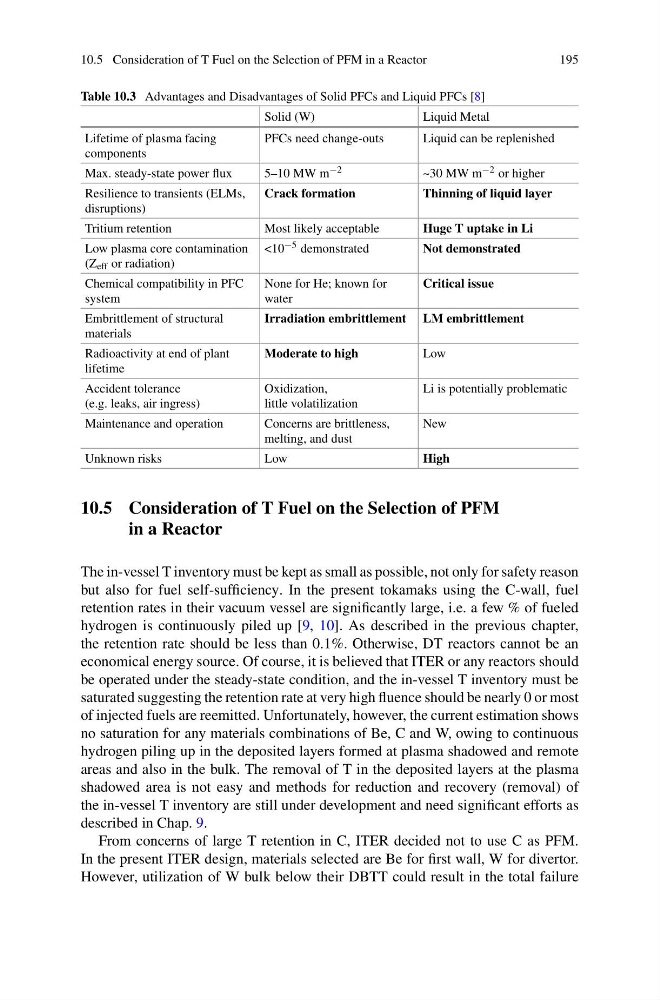
Table 10.3 Advantages and Disadvantages of Solid PFCs and Liquid PFCs [8]
Solid (W)
Liquid Metal
Lifetime of plasma facing
components
PFCs need change-outs
Liquid can be replenished
Max. steady-state power flux
5–10 MW m −2
~30 MW m −2 or higher
Resilience to transients (ELMs,
disruptions)
Crack formation
Thinning of liquid layer
Tritium retention
Most likely acceptable
Huge T uptake in Li
Low plasma core contamination
(Z eff or radiation)
<10 −5 demonstrated
Not demonstrated
Chemical compatibility in PFC
system
None for He; known for
water
Critical issue
Embrittlement of structural
materials
Irradiation embrittlement LM embrittlement
Radioactivity at end of plant
lifetime
Moderate to high
Low
Accident tolerance
(e.g. leaks, air ingress)
Oxidization,
little volatilization
Li is potentially problematic
Maintenance and operation
Concerns are brittleness,
melting, and dust
New
Unknown risks
Low
High
10.5 Consideration of T Fuel on the Selection of PFM
in a Reactor
The in-vessel T inventory must be kept as small as possible, not only for safety reason
but also for fuel self-sufficiency. In the present tokamaks using the C-wall, fuel
retention rates in their vacuum vessel are significantly large, i.e. a few % of fueled
hydrogen is continuously piled up [9, 10]. As described in the previous chapter,
the retention rate should be less than 0.1%. Otherwise, DT reactors cannot be an
economical energy source. Of course, it is believed that ITER or any reactors should
be operated under the steady-state condition, and the in-vessel T inventory must be
saturated suggesting the retention rate at very high fluence should be nearly 0 or most
of injected fuels are reemitted. Unfortunately, however, the current estimation shows
no saturation for any materials combinations of Be, C and W, owing to continuous
hydrogen piling up in the deposited layers formed at plasma shadowed and remote
areas and also in the bulk. The removal of T in the deposited layers at the plasma
shadowed area is not easy and methods for reduction and recovery (removal) of
the in-vessel T inventory are still under development and need significant efforts as
described in Chap. 9.
From concerns of large T retention in C, ITER decided not to use C as PFM.
In the present ITER design, materials selected are Be for first wall, W for divertor.
However, utilization of W bulk below their DBTT could result in the total failure
195
Table 10.3 Advantages and Disadvantages of Solid PFCs and Liquid PFCs [8]
Solid (W)
Liquid Metal
Lifetime of plasma facing
components
PFCs need change-outs
Liquid can be replenished
Max. steady-state power flux
5–10 MW m −2
~30 MW m −2 or higher
Resilience to transients (ELMs,
disruptions)
Crack formation
Thinning of liquid layer
Tritium retention
Most likely acceptable
Huge T uptake in Li
Low plasma core contamination
(Z eff or radiation)
<10 −5 demonstrated
Not demonstrated
Chemical compatibility in PFC
system
None for He; known for
water
Critical issue
Embrittlement of structural
materials
Irradiation embrittlement LM embrittlement
Radioactivity at end of plant
lifetime
Moderate to high
Low
Accident tolerance
(e.g. leaks, air ingress)
Oxidization,
little volatilization
Li is potentially problematic
Maintenance and operation
Concerns are brittleness,
melting, and dust
New
Unknown risks
Low
High
10.5 Consideration of T Fuel on the Selection of PFM
in a Reactor
The in-vessel T inventory must be kept as small as possible, not only for safety reason
but also for fuel self-sufficiency. In the present tokamaks using the C-wall, fuel
retention rates in their vacuum vessel are significantly large, i.e. a few % of fueled
hydrogen is continuously piled up [9, 10]. As described in the previous chapter,
the retention rate should be less than 0.1%. Otherwise, DT reactors cannot be an
economical energy source. Of course, it is believed that ITER or any reactors should
be operated under the steady-state condition, and the in-vessel T inventory must be
saturated suggesting the retention rate at very high fluence should be nearly 0 or most
of injected fuels are reemitted. Unfortunately, however, the current estimation shows
no saturation for any materials combinations of Be, C and W, owing to continuous
hydrogen piling up in the deposited layers formed at plasma shadowed and remote
areas and also in the bulk. The removal of T in the deposited layers at the plasma
shadowed area is not easy and methods for reduction and recovery (removal) of
the in-vessel T inventory are still under development and need significant efforts as
described in Chap. 9.
From concerns of large T retention in C, ITER decided not to use C as PFM.
In the present ITER design, materials selected are Be for first wall, W for divertor.
However, utilization of W bulk below their DBTT could result in the total failure