

34% for the low-income population, 12% for lower middle income, 16% for the
upper middle income, and 8.8% for the high income. It is foreseeable that the major
increase will be in the first two sectors even in future as the electricity will reach
areas of our planet not yet served or poorly served up to now. A substitution of
source, shifting from fossil-C to SWHG will be highly beneficial for reducing the
CO 2 emission: in general such areas are well insulated and can make profitable use
of solar energy.
Moving to the manufacturing industries and construction sector, one can observe
a steady situation all over the world, with some reductions in some specific areas.
This effect is the result of both technology innovation that saves energy and some
shift to renewable energy sources.
The residential sector shows a stable emission in general. Other activities
account for a minor, stable share of the emission.
Therefore, the sectors that need an immediate intervention are the production of
electricity and, possibly, transport, which together account for 70% of the emission.
Shifting to PV electricity and biofuels may give a strong push to the reduction of
the emission of CO 2 . But why the CO 2 emission should be reduced and why is so
urgent to reduce CO 2 ?
These issues will be discussed in Chap. 3.
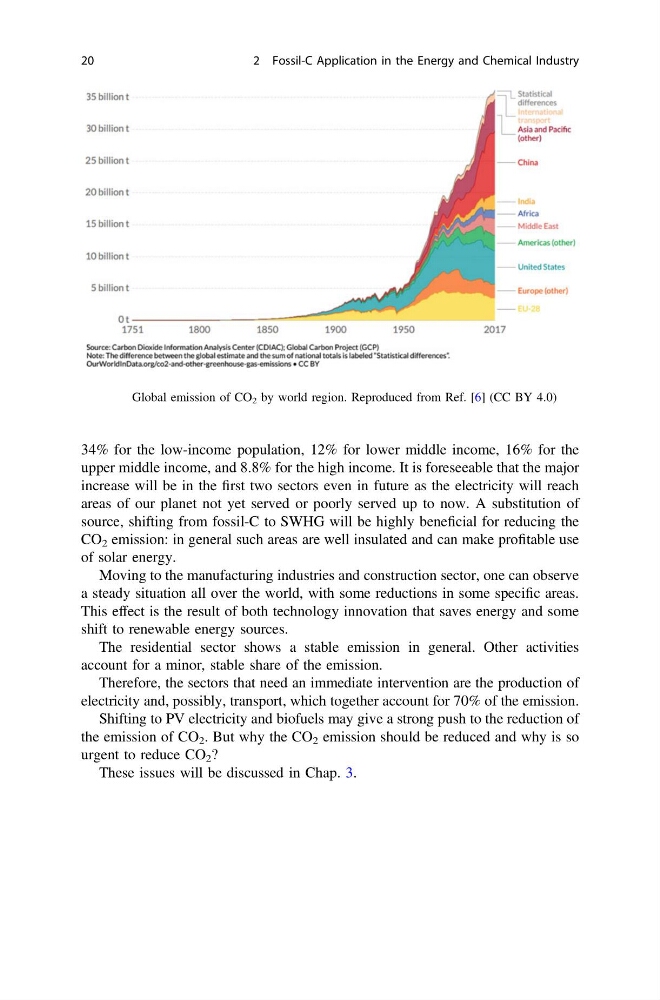
Fig. 2.4 Global emission of CO 2 by world region. Reproduced from Ref. [6] (CC BY 4.0)
20
2 Fossil-C Application in the Energy and Chemical Industry
upper middle income, and 8.8% for the high income. It is foreseeable that the major
increase will be in the first two sectors even in future as the electricity will reach
areas of our planet not yet served or poorly served up to now. A substitution of
source, shifting from fossil-C to SWHG will be highly beneficial for reducing the
CO 2 emission: in general such areas are well insulated and can make profitable use
of solar energy.
Moving to the manufacturing industries and construction sector, one can observe
a steady situation all over the world, with some reductions in some specific areas.
This effect is the result of both technology innovation that saves energy and some
shift to renewable energy sources.
The residential sector shows a stable emission in general. Other activities
account for a minor, stable share of the emission.
Therefore, the sectors that need an immediate intervention are the production of
electricity and, possibly, transport, which together account for 70% of the emission.
Shifting to PV electricity and biofuels may give a strong push to the reduction of
the emission of CO 2 . But why the CO 2 emission should be reduced and why is so
urgent to reduce CO 2 ?
These issues will be discussed in Chap. 3.
Fig. 2.4 Global emission of CO 2 by world region. Reproduced from Ref. [6] (CC BY 4.0)
20
2 Fossil-C Application in the Energy and Chemical Industry