

7.5 Flying Objects
67
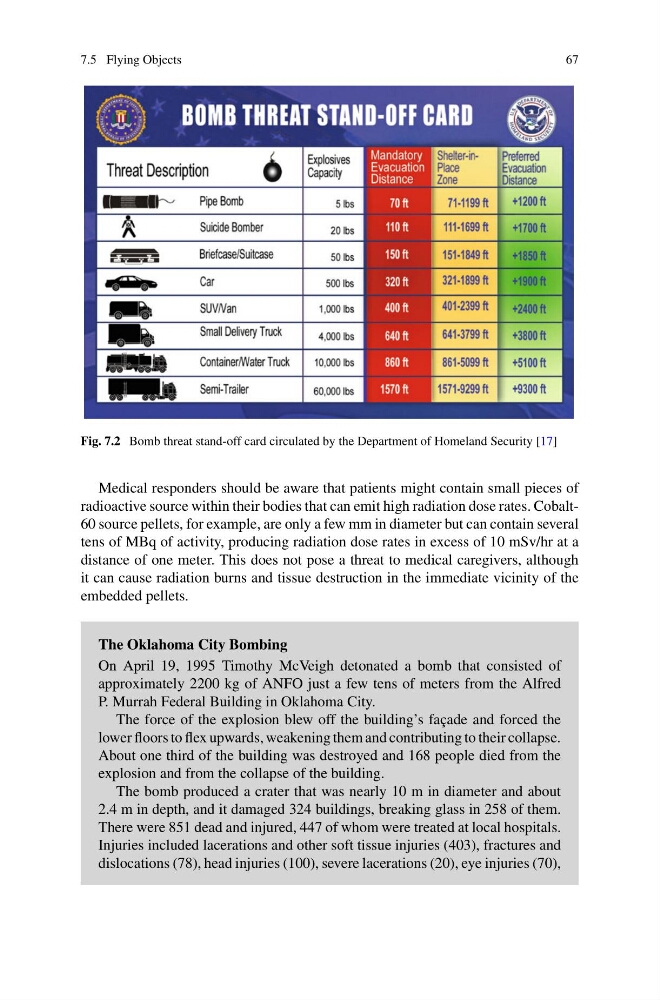
Fig. 7.2 Bomb threat stand-off card circulated by the Department of Homeland Security [17]
Medical responders should be aware that patients might contain small pieces of
radioactive source within their bodies that can emit high radiation dose rates. Cobalt60 source pellets, for example, are only a few mm in diameter but can contain several
tens of MBq of activity, producing radiation dose rates in excess of 10 mSv/hr at a
distance of one meter. This does not pose a threat to medical caregivers, although
it can cause radiation burns and tissue destruction in the immediate vicinity of the
embedded pellets.
The Oklahoma City Bombing
On April 19, 1995 Timothy McVeigh detonated a bomb that consisted of
approximately 2200 kg of ANFO just a few tens of meters from the Alfred
P. Murrah Federal Building in Oklahoma City.
The force of the explosion blew off the building’s façade and forced the
lower floors to flex upwards, weakening them and contributing to their collapse.
About one third of the building was destroyed and 168 people died from the
explosion and from the collapse of the building.
The bomb produced a crater that was nearly 10 m in diameter and about
2.4 m in depth, and it damaged 324 buildings, breaking glass in 258 of them.
There were 851 dead and injured, 447 of whom were treated at local hospitals.
Injuries included lacerations and other soft tissue injuries (403), fractures and
dislocations (78), head injuries (100), severe lacerations (20), eye injuries (70),
67
Fig. 7.2 Bomb threat stand-off card circulated by the Department of Homeland Security [17]
Medical responders should be aware that patients might contain small pieces of
radioactive source within their bodies that can emit high radiation dose rates. Cobalt60 source pellets, for example, are only a few mm in diameter but can contain several
tens of MBq of activity, producing radiation dose rates in excess of 10 mSv/hr at a
distance of one meter. This does not pose a threat to medical caregivers, although
it can cause radiation burns and tissue destruction in the immediate vicinity of the
embedded pellets.
The Oklahoma City Bombing
On April 19, 1995 Timothy McVeigh detonated a bomb that consisted of
approximately 2200 kg of ANFO just a few tens of meters from the Alfred
P. Murrah Federal Building in Oklahoma City.
The force of the explosion blew off the building’s façade and forced the
lower floors to flex upwards, weakening them and contributing to their collapse.
About one third of the building was destroyed and 168 people died from the
explosion and from the collapse of the building.
The bomb produced a crater that was nearly 10 m in diameter and about
2.4 m in depth, and it damaged 324 buildings, breaking glass in 258 of them.
There were 851 dead and injured, 447 of whom were treated at local hospitals.
Injuries included lacerations and other soft tissue injuries (403), fractures and
dislocations (78), head injuries (100), severe lacerations (20), eye injuries (70),