

References
59
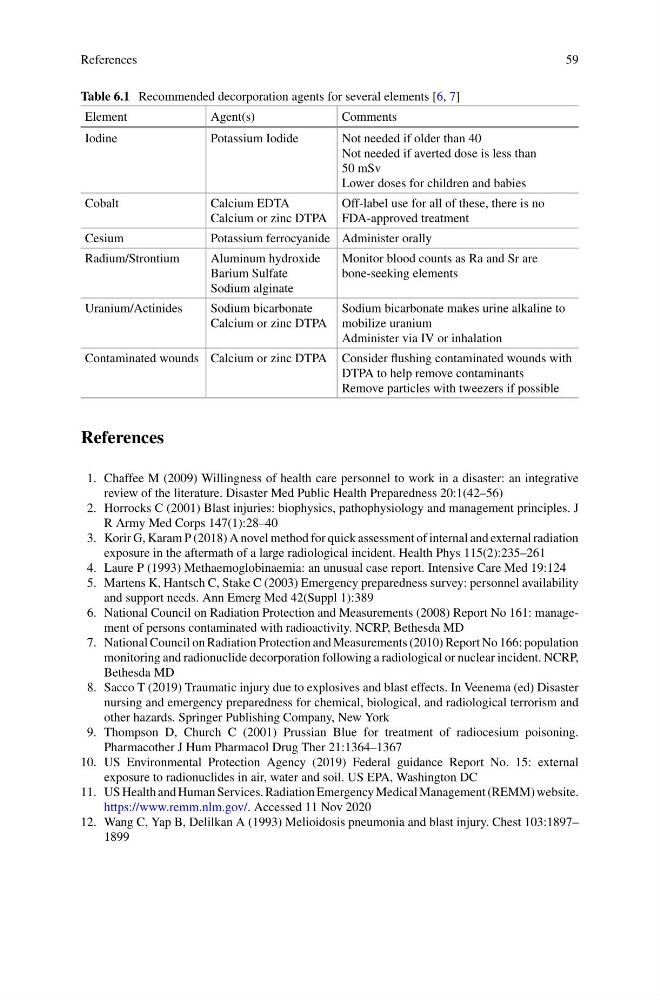
Table 6.1 Recommended decorporation agents for several elements [6, 7]
Element
Agent(s)
Comments
Iodine
Potassium Iodide
Not needed if older than 40
Not needed if averted dose is less than
50 mSv
Lower doses for children and babies
Cobalt
Calcium EDTA
Calcium or zinc DTPA
Off-label use for all of these, there is no
FDA-approved treatment
Cesium
Potassium ferrocyanide Administer orally
Radium/Strontium
Aluminum hydroxide
Barium Sulfate
Sodium alginate
Monitor blood counts as Ra and Sr are
bone-seeking elements
Uranium/Actinides
Sodium bicarbonate
Calcium or zinc DTPA
Sodium bicarbonate makes urine alkaline to
mobilize uranium
Administer via IV or inhalation
Contaminated wounds Calcium or zinc DTPA Consider flushing contaminated wounds with
DTPA to help remove contaminants
Remove particles with tweezers if possible
References
1. Chaffee M (2009) Willingness of health care personnel to work in a disaster: an integrative
review of the literature. Disaster Med Public Health Preparedness 20:1(42–56)
2. Horrocks C (2001) Blast injuries: biophysics, pathophysiology and management principles. J
R Army Med Corps 147(1):28–40
3. Korir G, Karam P (2018) A novel method for quick assessment of internal and external radiation
exposure in the aftermath of a large radiological incident. Health Phys 115(2):235–261
4. Laure P (1993) Methaemoglobinaemia: an unusual case report. Intensive Care Med 19:124
5. Martens K, Hantsch C, Stake C (2003) Emergency preparedness survey: personnel availability
and support needs. Ann Emerg Med 42(Suppl 1):389
6. National Council on Radiation Protection and Measurements (2008) Report No 161: management of persons contaminated with radioactivity. NCRP, Bethesda MD
7. National Council on Radiation Protection and Measurements (2010) Report No 166: population
monitoring and radionuclide decorporation following a radiological or nuclear incident. NCRP,
Bethesda MD
8. Sacco T (2019) Traumatic injury due to explosives and blast effects. In Veenema (ed) Disaster
nursing and emergency preparedness for chemical, biological, and radiological terrorism and
other hazards. Springer Publishing Company, New York
9. Thompson D, Church C (2001) Prussian Blue for treatment of radiocesium poisoning.
Pharmacother J Hum Pharmacol Drug Ther 21:1364–1367
10. US Environmental Protection Agency (2019) Federal guidance Report No. 15: external
exposure to radionuclides in air, water and soil. US EPA, Washington DC
11. US Health and Human Services. Radiation Emergency Medical Management (REMM) website.
https://www.remm.nlm.gov/. Accessed 11 Nov 2020
12. Wang C, Yap B, Delilkan A (1993) Melioidosis pneumonia and blast injury. Chest 103:1897–
1899
59
Table 6.1 Recommended decorporation agents for several elements [6, 7]
Element
Agent(s)
Comments
Iodine
Potassium Iodide
Not needed if older than 40
Not needed if averted dose is less than
50 mSv
Lower doses for children and babies
Cobalt
Calcium EDTA
Calcium or zinc DTPA
Off-label use for all of these, there is no
FDA-approved treatment
Cesium
Potassium ferrocyanide Administer orally
Radium/Strontium
Aluminum hydroxide
Barium Sulfate
Sodium alginate
Monitor blood counts as Ra and Sr are
bone-seeking elements
Uranium/Actinides
Sodium bicarbonate
Calcium or zinc DTPA
Sodium bicarbonate makes urine alkaline to
mobilize uranium
Administer via IV or inhalation
Contaminated wounds Calcium or zinc DTPA Consider flushing contaminated wounds with
DTPA to help remove contaminants
Remove particles with tweezers if possible
References
1. Chaffee M (2009) Willingness of health care personnel to work in a disaster: an integrative
review of the literature. Disaster Med Public Health Preparedness 20:1(42–56)
2. Horrocks C (2001) Blast injuries: biophysics, pathophysiology and management principles. J
R Army Med Corps 147(1):28–40
3. Korir G, Karam P (2018) A novel method for quick assessment of internal and external radiation
exposure in the aftermath of a large radiological incident. Health Phys 115(2):235–261
4. Laure P (1993) Methaemoglobinaemia: an unusual case report. Intensive Care Med 19:124
5. Martens K, Hantsch C, Stake C (2003) Emergency preparedness survey: personnel availability
and support needs. Ann Emerg Med 42(Suppl 1):389
6. National Council on Radiation Protection and Measurements (2008) Report No 161: management of persons contaminated with radioactivity. NCRP, Bethesda MD
7. National Council on Radiation Protection and Measurements (2010) Report No 166: population
monitoring and radionuclide decorporation following a radiological or nuclear incident. NCRP,
Bethesda MD
8. Sacco T (2019) Traumatic injury due to explosives and blast effects. In Veenema (ed) Disaster
nursing and emergency preparedness for chemical, biological, and radiological terrorism and
other hazards. Springer Publishing Company, New York
9. Thompson D, Church C (2001) Prussian Blue for treatment of radiocesium poisoning.
Pharmacother J Hum Pharmacol Drug Ther 21:1364–1367
10. US Environmental Protection Agency (2019) Federal guidance Report No. 15: external
exposure to radionuclides in air, water and soil. US EPA, Washington DC
11. US Health and Human Services. Radiation Emergency Medical Management (REMM) website.
https://www.remm.nlm.gov/. Accessed 11 Nov 2020
12. Wang C, Yap B, Delilkan A (1993) Melioidosis pneumonia and blast injury. Chest 103:1897–
1899