

21.1 Preparing for Reoccupancy
267
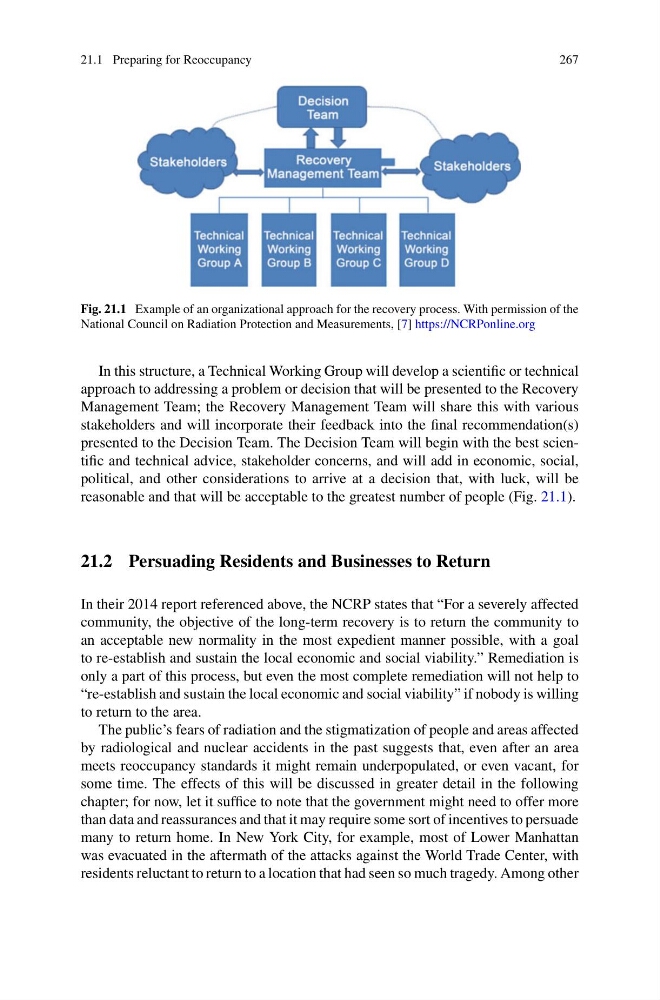
Fig. 21.1 Example of an organizational approach for the recovery process. With permission of the
National Council on Radiation Protection and Measurements, [7] https://NCRPonline.org
In this structure, a Technical Working Group will develop a scientific or technical
approach to addressing a problem or decision that will be presented to the Recovery
Management Team; the Recovery Management Team will share this with various
stakeholders and will incorporate their feedback into the final recommendation(s)
presented to the Decision Team. The Decision Team will begin with the best scientific and technical advice, stakeholder concerns, and will add in economic, social,
political, and other considerations to arrive at a decision that, with luck, will be
reasonable and that will be acceptable to the greatest number of people (Fig. 21.1).
21.2 Persuading Residents and Businesses to Return
In their 2014 report referenced above, the NCRP states that “For a severely affected
community, the objective of the long-term recovery is to return the community to
an acceptable new normality in the most expedient manner possible, with a goal
to re-establish and sustain the local economic and social viability.” Remediation is
only a part of this process, but even the most complete remediation will not help to
“re-establish and sustain the local economic and social viability” if nobody is willing
to return to the area.
The public’s fears of radiation and the stigmatization of people and areas affected
by radiological and nuclear accidents in the past suggests that, even after an area
meets reoccupancy standards it might remain underpopulated, or even vacant, for
some time. The effects of this will be discussed in greater detail in the following
chapter; for now, let it suffice to note that the government might need to offer more
than data and reassurances and that it may require some sort of incentives to persuade
many to return home. In New York City, for example, most of Lower Manhattan
was evacuated in the aftermath of the attacks against the World Trade Center, with
residents reluctant to return to a location that had seen so much tragedy. Among other
267
Fig. 21.1 Example of an organizational approach for the recovery process. With permission of the
National Council on Radiation Protection and Measurements, [7] https://NCRPonline.org
In this structure, a Technical Working Group will develop a scientific or technical
approach to addressing a problem or decision that will be presented to the Recovery
Management Team; the Recovery Management Team will share this with various
stakeholders and will incorporate their feedback into the final recommendation(s)
presented to the Decision Team. The Decision Team will begin with the best scientific and technical advice, stakeholder concerns, and will add in economic, social,
political, and other considerations to arrive at a decision that, with luck, will be
reasonable and that will be acceptable to the greatest number of people (Fig. 21.1).
21.2 Persuading Residents and Businesses to Return
In their 2014 report referenced above, the NCRP states that “For a severely affected
community, the objective of the long-term recovery is to return the community to
an acceptable new normality in the most expedient manner possible, with a goal
to re-establish and sustain the local economic and social viability.” Remediation is
only a part of this process, but even the most complete remediation will not help to
“re-establish and sustain the local economic and social viability” if nobody is willing
to return to the area.
The public’s fears of radiation and the stigmatization of people and areas affected
by radiological and nuclear accidents in the past suggests that, even after an area
meets reoccupancy standards it might remain underpopulated, or even vacant, for
some time. The effects of this will be discussed in greater detail in the following
chapter; for now, let it suffice to note that the government might need to offer more
than data and reassurances and that it may require some sort of incentives to persuade
many to return home. In New York City, for example, most of Lower Manhattan
was evacuated in the aftermath of the attacks against the World Trade Center, with
residents reluctant to return to a location that had seen so much tragedy. Among other