

8
2 Types of Radiation and Their Properties
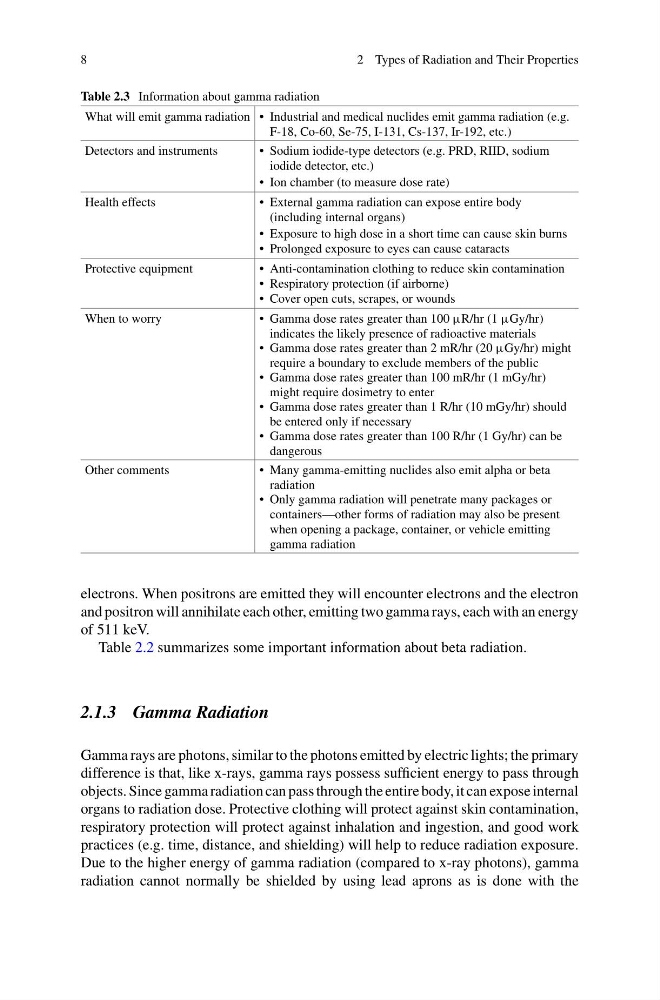
Table 2.3 Information about gamma radiation
What will emit gamma radiation • Industrial and medical nuclides emit gamma radiation (e.g.
F-18, Co-60, Se-75, I-131, Cs-137, Ir-192, etc.)
Detectors and instruments
• Sodium iodide-type detectors (e.g. PRD, RIID, sodium
iodide detector, etc.)
• Ion chamber (to measure dose rate)
Health effects
• External gamma radiation can expose entire body
(including internal organs)
• Exposure to high dose in a short time can cause skin burns
• Prolonged exposure to eyes can cause cataracts
Protective equipment
• Anti-contamination clothing to reduce skin contamination
• Respiratory protection (if airborne)
• Cover open cuts, scrapes, or wounds
When to worry
• Gamma dose rates greater than 100 μR/hr (1 μGy/hr)
indicates the likely presence of radioactive materials
• Gamma dose rates greater than 2 mR/hr (20 μGy/hr) might
require a boundary to exclude members of the public
• Gamma dose rates greater than 100 mR/hr (1 mGy/hr)
might require dosimetry to enter
• Gamma dose rates greater than 1 R/hr (10 mGy/hr) should
be entered only if necessary
• Gamma dose rates greater than 100 R/hr (1 Gy/hr) can be
dangerous
Other comments
• Many gamma-emitting nuclides also emit alpha or beta
radiation
• Only gamma radiation will penetrate many packages or
containers—other forms of radiation may also be present
when opening a package, container, or vehicle emitting
gamma radiation
electrons. When positrons are emitted they will encounter electrons and the electron
and positron will annihilate each other, emitting two gamma rays, each with an energy
of 511 keV.
Table 2.2 summarizes some important information about beta radiation.
2.1.3 Gamma Radiation
Gamma rays are photons, similar to the photons emitted by electric lights; the primary
difference is that, like x-rays, gamma rays possess sufficient energy to pass through
objects. Since gamma radiation can pass through the entire body, it can expose internal
organs to radiation dose. Protective clothing will protect against skin contamination,
respiratory protection will protect against inhalation and ingestion, and good work
practices (e.g. time, distance, and shielding) will help to reduce radiation exposure.
Due to the higher energy of gamma radiation (compared to x-ray photons), gamma
radiation cannot normally be shielded by using lead aprons as is done with the
2 Types of Radiation and Their Properties
Table 2.3 Information about gamma radiation
What will emit gamma radiation • Industrial and medical nuclides emit gamma radiation (e.g.
F-18, Co-60, Se-75, I-131, Cs-137, Ir-192, etc.)
Detectors and instruments
• Sodium iodide-type detectors (e.g. PRD, RIID, sodium
iodide detector, etc.)
• Ion chamber (to measure dose rate)
Health effects
• External gamma radiation can expose entire body
(including internal organs)
• Exposure to high dose in a short time can cause skin burns
• Prolonged exposure to eyes can cause cataracts
Protective equipment
• Anti-contamination clothing to reduce skin contamination
• Respiratory protection (if airborne)
• Cover open cuts, scrapes, or wounds
When to worry
• Gamma dose rates greater than 100 μR/hr (1 μGy/hr)
indicates the likely presence of radioactive materials
• Gamma dose rates greater than 2 mR/hr (20 μGy/hr) might
require a boundary to exclude members of the public
• Gamma dose rates greater than 100 mR/hr (1 mGy/hr)
might require dosimetry to enter
• Gamma dose rates greater than 1 R/hr (10 mGy/hr) should
be entered only if necessary
• Gamma dose rates greater than 100 R/hr (1 Gy/hr) can be
dangerous
Other comments
• Many gamma-emitting nuclides also emit alpha or beta
radiation
• Only gamma radiation will penetrate many packages or
containers—other forms of radiation may also be present
when opening a package, container, or vehicle emitting
gamma radiation
electrons. When positrons are emitted they will encounter electrons and the electron
and positron will annihilate each other, emitting two gamma rays, each with an energy
of 511 keV.
Table 2.2 summarizes some important information about beta radiation.
2.1.3 Gamma Radiation
Gamma rays are photons, similar to the photons emitted by electric lights; the primary
difference is that, like x-rays, gamma rays possess sufficient energy to pass through
objects. Since gamma radiation can pass through the entire body, it can expose internal
organs to radiation dose. Protective clothing will protect against skin contamination,
respiratory protection will protect against inhalation and ingestion, and good work
practices (e.g. time, distance, and shielding) will help to reduce radiation exposure.
Due to the higher energy of gamma radiation (compared to x-ray photons), gamma
radiation cannot normally be shielded by using lead aprons as is done with the