

252
20 Remediation
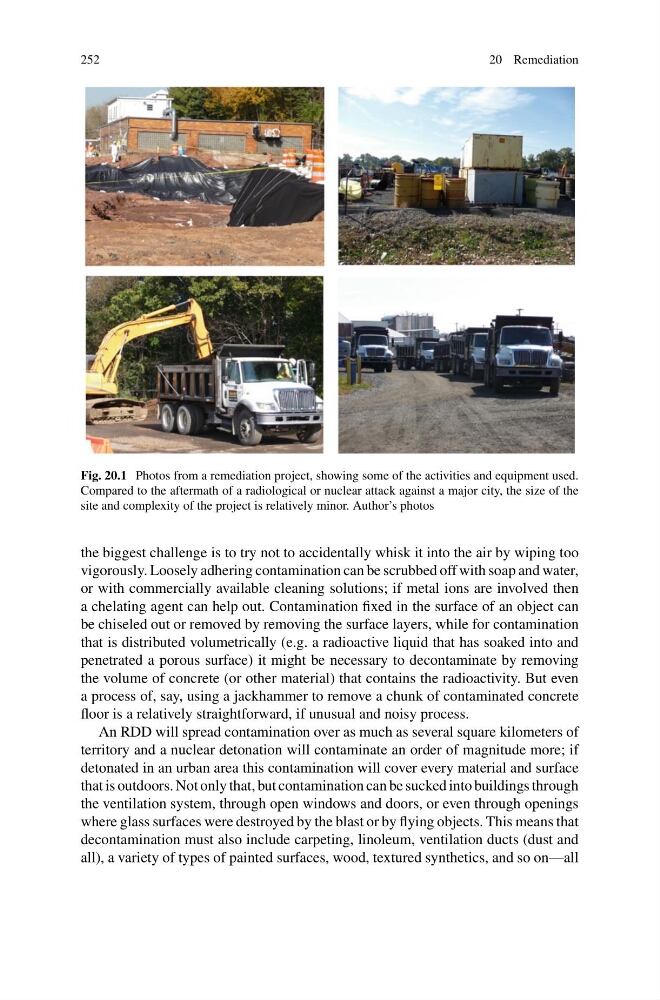
Fig. 20.1 Photos from a remediation project, showing some of the activities and equipment used.
Compared to the aftermath of a radiological or nuclear attack against a major city, the size of the
site and complexity of the project is relatively minor. Author’s photos
the biggest challenge is to try not to accidentally whisk it into the air by wiping too
vigorously. Loosely adhering contamination can be scrubbed off with soap and water,
or with commercially available cleaning solutions; if metal ions are involved then
a chelating agent can help out. Contamination fixed in the surface of an object can
be chiseled out or removed by removing the surface layers, while for contamination
that is distributed volumetrically (e.g. a radioactive liquid that has soaked into and
penetrated a porous surface) it might be necessary to decontaminate by removing
the volume of concrete (or other material) that contains the radioactivity. But even
a process of, say, using a jackhammer to remove a chunk of contaminated concrete
floor is a relatively straightforward, if unusual and noisy process.
An RDD will spread contamination over as much as several square kilometers of
territory and a nuclear detonation will contaminate an order of magnitude more; if
detonated in an urban area this contamination will cover every material and surface
that is outdoors. Not only that, but contamination can be sucked into buildings through
the ventilation system, through open windows and doors, or even through openings
where glass surfaces were destroyed by the blast or by flying objects. This means that
decontamination must also include carpeting, linoleum, ventilation ducts (dust and
all), a variety of types of painted surfaces, wood, textured synthetics, and so on—all
20 Remediation
Fig. 20.1 Photos from a remediation project, showing some of the activities and equipment used.
Compared to the aftermath of a radiological or nuclear attack against a major city, the size of the
site and complexity of the project is relatively minor. Author’s photos
the biggest challenge is to try not to accidentally whisk it into the air by wiping too
vigorously. Loosely adhering contamination can be scrubbed off with soap and water,
or with commercially available cleaning solutions; if metal ions are involved then
a chelating agent can help out. Contamination fixed in the surface of an object can
be chiseled out or removed by removing the surface layers, while for contamination
that is distributed volumetrically (e.g. a radioactive liquid that has soaked into and
penetrated a porous surface) it might be necessary to decontaminate by removing
the volume of concrete (or other material) that contains the radioactivity. But even
a process of, say, using a jackhammer to remove a chunk of contaminated concrete
floor is a relatively straightforward, if unusual and noisy process.
An RDD will spread contamination over as much as several square kilometers of
territory and a nuclear detonation will contaminate an order of magnitude more; if
detonated in an urban area this contamination will cover every material and surface
that is outdoors. Not only that, but contamination can be sucked into buildings through
the ventilation system, through open windows and doors, or even through openings
where glass surfaces were destroyed by the blast or by flying objects. This means that
decontamination must also include carpeting, linoleum, ventilation ducts (dust and
all), a variety of types of painted surfaces, wood, textured synthetics, and so on—all